

In brief
Organizations that develop or deploy AI agents – autonomous systems that can pursue goals and take actions with limited human intervention – are navigating a rapidly evolving US legal landscape that pulls agentic AI under laws that govern

In brief
Organizations that develop or deploy AI agents – autonomous systems that can pursue goals and take actions with limited human intervention – are navigating a rapidly evolving US legal landscape that pulls agentic AI under laws that govern

In brief
On 17 June 2026, the Brazilian Supreme Court (STF) concluded, its ruling on the motions for clarification filed in the cases that gave rise to Themes 987 and 533, concerning the civil liability of internet application providers for
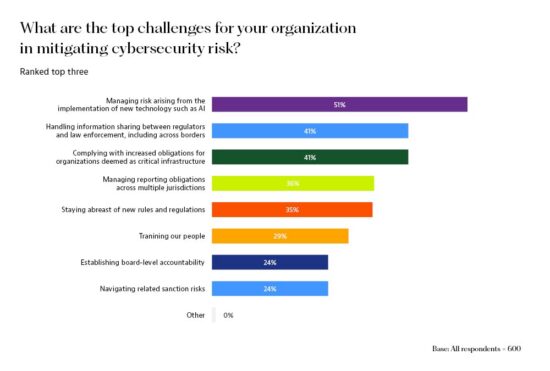
Rapid technological innovation and evolving regulations are outpacing the development of organizations’ cyber, data and AI risk frameworks, creating operational risk and cross-border reporting challenges.
Organizations now face a high-stakes and multifaceted risk landscape spanning enforcement, operational, reputational and dispute
This article is practically relevant for online service providers established in an EU Member State that find themselves confronted with national regulatory media or digital rules of another Member State (such as youth-protection or platform laws). In decision dated 16
In brief
On June 15, 2026, the Government of Canada tabled Bill C-36, Protecting of Privacy and Consumer Data Act (“Bill C-36”), which, if passed, would effectively replace Canada’s Personal Information Protection and Electronic Documents Act (PIPEDA) as the federal
This article was originally published by IAPP linked here.
The unexpected order highlights growing risk impact for multinational companies. Organizations should begin planning for potential AI model unavailability in workflows.
On 12 June, the U.S. Department of Commerce ordered
Key Takeaways for Businesses and AI Stakeholders
On June 4th, 2026, the Government of Canada released its refreshed and much-anticipated national AI strategy, AI for All (the “AI Strategy”). The AI Strategy sets out a comprehensive national framework for AI
On June 2, 2026, President Trump signed an executive order titled “Promoting Advanced Artificial Intelligence Innovation and Security” (the “Executive Order”). The Executive Order directs federal agencies to partner with the private sector to harden critical infrastructure systems against AI-enabled
This article was originally published by IAPP linked here.
Reports of foreign adversaries using commercially available cellphone location data to target U.S. troops could trigger early DOJ enforcement under its sensitive data rule and potentially spur new legislation.
Last
New contractual obligations and restrictions on their use.
In brief
On 15 May 2026, amendments to the Federal Labor Law and the Federal Copyright Law took effect, strengthening the protection of performing artists regarding the use of their voice, image,