In April 2026, Governor Evers signed into law two significant bills addressing per- and polyfluoroalkyl substances (PFAS). The Wisconsin Legislature, alongside the Wisconsin Department of Natural Resources (DNR), has worked on PFAS-legislation for the past decade, and on the newly
Environmental Law Section Blog | Environmental Law Section
The Environmental Law Section Blog, published by the State Bar of Wisconsin, covers legal issues related to environmental protection and natural resources within Wisconsin and beyond. Topics include constitutional environmental rights such as green amendments, regulatory developments affecting air and water quality, and the impact of federal and state policies on renewable energy projects like wind farms. The blog also addresses public health concerns linked to environmental contaminants, such as lead in drinking water and ozone pollution, and discusses legal frameworks like the Clean Air Act and the Lead and Copper Rule. It features perspectives from legal practitioners, government officials, and law students engaged in environmental law practice and policy.
Blog Authors
Latest from Environmental Law Section Blog | Environmental Law Section
A Narrow Strip of Sand, a Rocky Constitutional Question
Wisconsin public trust doctrine. Based on the ensuing fallout, many observers believe this dispute between
…
Green Amendments in Practice: What Wisconsin Can Learn from Other States
On April 16, 2025, a group of Wisconsin legislators announced their
…
Best Job in the World: A 3L’s Opinion on the Challenges and Thrills of Environmental Law
When I started law school, I wasn’t really sure what exactly I wanted to practice. To be honest, I wasn’t even sure at the time if I liked law. I was unsure of myself, I felt out of place in…
Wisconsin’s Wind Energy Future Uncertain After Executive Order
On his first day in office, Jan. 20, 2025, President Trump signed an executive order that was a shot across the bow to American wind energy production.The executive order includes the following directives:
- withdrawal from disposition all areas within the
…
Clearing the Air about Serious Ozone Nonattainment in Southeastern Wisconsin
On Jan. 16, 2025, the Environmental Protection Agency (EPA) reclassified several counties in southeastern Wisconsin from moderate to serious nonattainment for the 2015 ozone National Ambient Air Quality Standards (NAAQS).1 Ozone pollution is an ongoing challenge for the Greater…
EPA Improved Lead Rule to Facilitate Lead Pipes Replacement in the U.S.
On Oct. 8 2024, the Biden administration issued its long-awaited final rule, the “Lead and Copper Rule Improvements” (LCRI), requiring drinking water systems across the country identify and replace all lead water pipes within a 10-year period. The…
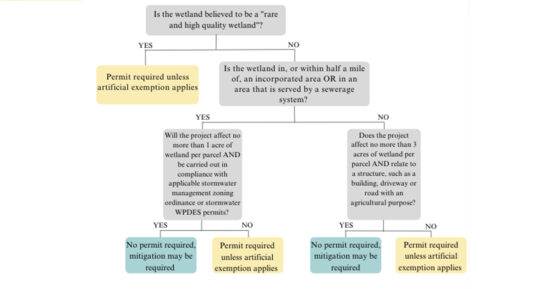
An Uncertain Future: 'Sackett's' Impact on the Nonfederal Wetland Exemption in Wisconsin
In the wake of the U.S. Supreme Court’s
Sackett v. EPA decision,1 the landscape of wetland protections in Wisconsin has changed. While Wisconsin boasts robust wetland protection statutes
compared to other states, a significant exemption to the permitting…
Implications of the EPA’s Proposed Rule Designating PFAS as Hazardous Substances
The recent proposal by the Environmental Protection Agency (EPA) to designate two per- and polyfluoroalkyl substances (PFAS) as “hazardous substances” under the federal Comprehensive Environmental Response, Contamination, and Liability Act (CERCLA or “Superfund”) promises to provide greater information concerning the…
History Judges Nitrate and Nitrite Standards a Scientific Failure
Nitrate and nitrite are about to reemerge as groundwater and drinking water chemicals of concern.Our new research reveals that current nitrate and nitrite drinking and groundwater standards do not reflect a true weight of evidence analysis of the peer-reviewed literature…