

Institutional investors’ rising ownership of publicly traded shares and its implications for corporate governance have prompted scrutiny in both the United States and Australia. In the U.S., shares are increasingly in the hands of the Big Three index funds: BlackRock,
Latest from The CLS Blue Sky Blog - Page 5
Cleary Gottlieb Discusses SEC’s Financial Reporting and Accounting Unit Within Enforcement Division
On August 5, 2026, the SEC announced the creation of a new Financial Reporting and Accounting Unit within the Division of Enforcement “to provide the dedicated expertise, focus, and capacity to pursue accounting and financial reporting cases as well as
How Does the SEC Respond to Reputation Shocks?
In April 2010, the Securities and Exchange Commission found itself in headlines no regulator wants. The agency’s Office of Inspector General revealed that 33 SEC employees and contractors had been regularly viewing pornography on government computers during work hours. More
Shadow SEC Statement No. 12: The SEC’s Retreat from Enforcement (and the Special Case of Mandatory Arbitration Clauses)
Since the Securities Act of 1933, Congress has created and carefully maintained a two-track enforcement system that relies on both public enforcement and private enforcement to prevent fraud and protect investors. Congress has at times adjusted the balance of advantage
Wachtell Lipton Discusses Delaware Decision Drawing Line Between Expert and Arbitrator in Earnout Disputes
Earnouts, working-capital adjustments, and similar price-adjustment mechanisms in private deals or public company carveouts routinely assign certain disputes to an independent accountant — a device parties favor for speed, expertise, and finality. But a perennial question drags those efficient dispute
When Is Information Public Under the European Market Abuse Regulation?
The Court of Justice of the European Union (the “ECJ”) recently delivered an important judgment on the interpretation of inside information under Article 7(1)(a) of the Market Abuse Regulation (“MAR”): Brännelius. The judgment addresses what should be understood as
Has Dodd-Frank Improved or Impeded Swap Markets?
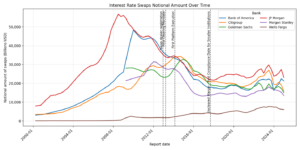
The G-20 nations committed to reform swap markets following the great financial crisis of 2007-08. In the U.S., these reforms were enacted under the Dodd-Frank Act. The interventions began to take effect at the very end of 2012, and new
Skadden Discusses Second Circuit Decision Expanding Loss Causation Pleading Requirements
Executive Summary
- What’s new: The Second Circuit affirmed dismissal of a securities fraud complaint, expanding loss causation pleading requirements when no immediate price decline follows corrective disclosure.
- Why it matters: The ruling appears to increase lead plaintiffs’ burden and district courts’ role
Insider Trading in Connected Firms During Trading Bans

Corporate insiders can earn abnormal returns by trading on private information about their firms. Because this informational advantage is especially pronounced before major releases of information—such as earnings announcements—regulators and firms impose trading bans, known in the UK as close
AI at Work Is a Global Governance Stress Test
Artificial intelligence at work is not merely a productivity story; it is a governance stress test. Unlike earlier waves of automation, which displaced routine, codifiable tasks, contemporary AI reaches into nonroutine, judgment-heavy work—drafting, summarizing, scheduling, retrieving information, maintaining code—the cognitive