

When a noncompete sentence trails off into an incomplete clause, is fixing it a permissible typo correction or an instance of “blue-penciling” that Virginia law does not allow? The Court of Appeals considered this issue last month in

When a noncompete sentence trails off into an incomplete clause, is fixing it a permissible typo correction or an instance of “blue-penciling” that Virginia law does not allow? The Court of Appeals considered this issue last month in
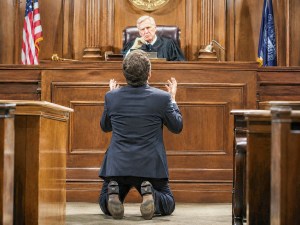
A party with an ironclad statutory or contractual right to attorney fees can still lose that right by failing to plead it correctly. That is the lesson of Pinnacle Flooring Solutions, LLC v. Premier Homes Group, LLC, Record No.

A party that performs services and incurs expenses does not automatically acquire an equitable claim for compensation. In certain circumstances, claims for unjust enrichment or quantum meruit may arise, but these claims require the claimant to prove the defendant either
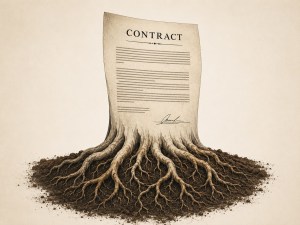
An often-invoked defense to an action for breach of contract is to claim that the contract cannot be enforced by a party who committed the first material breach. Significantly, the rule does not bar recovery unless the prior breach goes

Virginia courts apply the “source of duty” rule to distinguish contract claims from tort claims. A contracting party may recover in tort only if the breached duty arises independently under common law, not merely from the parties’ contract. If the

When drafting non-solicitation agreements, precision matters. Undefined terms and sweeping restrictions can render an entire covenant unenforceable. And in Virginia, courts won’t lift a finger to fix the problem. Employers drafting non-solicitation agreements need to define their key terms

Under Virginia’s business-conspiracy statute, a successful plaintiff may recover three times the actual damages caused by the conspiracy: “Any person who shall be injured in his reputation, trade, business or profession by reason of a violation of § 18.2-499, may
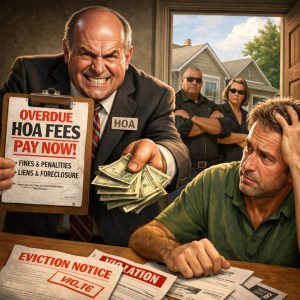
If your homeowners association has started levying assessments you never agreed to pay, you may have more legal recourse than you think. A recent Virginia Court of Appeals decision demonstrates that not all associations claiming HOA or POA status actually
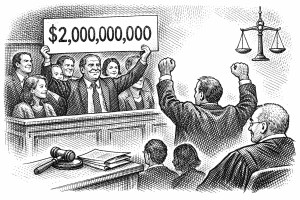
Proof of damages is an essential element to any claim for breach of contract. The plaintiff has the “burden of proving with reasonable certainty the amount of damages and the cause from which they resulted.” (See Sunrise Continuing Care, LLC

A common mistake many lawyers make is to assume that deadlines can be missed without consequence. Judges want to hear cases on the merits, the thinking goes, so as long as you file a motion after the missed deadline and