

A recent decision from the Western District of Virginia offers a clean illustration of a principle that decides many Virginia defamation cases at the outset: context and word choice often determine whether a challenged statement will be treated as a

A recent decision from the Western District of Virginia offers a clean illustration of a principle that decides many Virginia defamation cases at the outset: context and word choice often determine whether a challenged statement will be treated as a

In defamation cases where actual malice must be shown, a plaintiff must prove the defendant made a false statement with knowledge that it was false or with reckless disregard of falsity. “Reckless disregard” generally means a high degree of subjective

When a defamation defendant can invoke statutory reporting immunity, anti-SLAPP immunity, and common law qualified privilege all at once, one might expect an appellate court to resolve the case on one of those defenses. In Wang v. Taylor,

Several years ago, this blog covered Garnett v. Remedi SeniorCare of Virginia, LLC, 892 F.3d 140 (4th Cir. 2018), in which the Fourth Circuit held that an employer could not be held vicariously liable for a coworker’s crude and

When we think of defamation, we typically think of words: a slanderous remark, a libelous article, a defamatory social media post. But in Hopkins v. Ryan, Record No. 1192-25-3 (Va. Ct. App. June 23, 2026), the Court of

In a decision that should give comfort to political commentators everywhere, the Court of Appeals of Virginia reversed a $1,000,000 defamation verdict against a citizen who called a local school board chairman a “SEXUAL PREDATOR/HARASSER” on Facebook. The case is
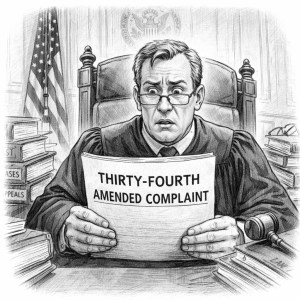
The relation-back doctrine is a procedural mechanism that allows an amended pleading filed after the expiration of a statute of limitations to “relate back” to the filing date of the original complaint. The doctrine treats the amended pleading as if

In a recent decision underscoring the limits of defamation law in political contexts, a federal district court dismissed defamation claims brought by the American Conservative Union and its foundation against former employees who allegedly linked the organizations to George Soros,

The ecclesiastical abstention doctrine traces its roots to Supreme Court precedent holding that the First Amendment secures a sphere of institutional autonomy for religious organizations. Under this jurisprudence, churches enjoy freedom from secular intrusion in matters central to their identity,

Truthful statements are generally not actionable as defamation. A substantially true statement that is factually accurate in all material respects and that does not imply any undisclosed defamatory message is not something upon which a defamation lawsuit may be brought.