

Most victims of a Mild Traumatic Brain Injury recover fully within one year of their injury. But, sometimes, victims can be left with long-term cognitive problems that affect both their jobs and 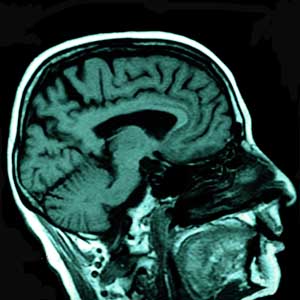 their family lives for years to come. Despite the potentially devastating effects of a mild brain trauma — also known as a ” concussion ” — the injury seldom appears on X-Rays, CT scans, or other common imaging techniques. Without such objective proof, the wrongdoer who caused the injury invariably argues that its victim suffered no brain injury at all, and that the victim is simply making up his symptoms.
One sure way to prove that a victim suffered a brain injury is to prove that the accident caused the victim to lose consciousness, or “black out.” Though an accident victim can suffer a brain injury even without losing consciousness, doctors agree that if an accident causes a victim to lose consciousness, however briefly, brain injury has always resulted. Unfortunately, many victims who black out never realize it, and so insist to paramedics or doctors at the hospital that they did not. Therefore, the first challenge for a lawyer representing the victim of a Mild Traumatic Brain Injury is proving that the brain injury even exits.
Brain specialists can help. A neurologist can conduct sophisticated tests, such as PET scans and SPECT studies. These studies may show an impairment in brain functioning that doesn’t appear on an MRI. A neuropsychologist can administer objective tests of memory, attention, problem-solving, sensory perception, planning, organization, and other cognitive functioning. The results of such testing can sometimes prove that the accident victim, does, in fact, suffer from a brain injury.
When confronted with proof — from either cognitive test results or PET/SPECT studies — that there is a brain injury, wrongdoers argue that the victim’s symptoms are attributable to a previous accident and not the one that they caused. And, in fact, many of those who suffer long term effects from a Mild Traumatic Brain Injury have a prior concussion in their medical history. However, research shows that one concussion — even if it caused the victim no lasting symptoms — leaves the victim at risk of permanent symptoms should he receive another concussion. That is why professional football players retire after receiving multiple concussions despite “feeling fine”, and why boxers who don’t retire eventually become “punch drunk.”
To prove that the victim had fully recovered from the prior injury, and that it was the most recent concussion that caused the symptoms, it can be helpful for family, friends, and employers to testify. These witnesses can frequently establish that the victim exhibited no changes in his behavior, mood, or cognitive abilities until after the most recent injury.