

Town and Country Foods of Greene, ME, is recalling about 2,057 pounds of ground and mechanically tenderized beef that may be contaminated with E. coli O157:H7, the U.S. Department of Agriculture’s Food Safety and Inspection Service (FSIS) announced Wednesday.
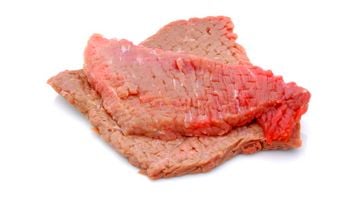
The company’s own lab testing confirmed a positive result for E. coli O157:H7, according to the news release, but FSIS said the firm had already distributed the beef before the test results were received.
FSIS said it has received no reports of illnesses associated with the beef.
The potentially contaminated beef was produced between April 4 and 10, 2012 and shipped to wholesale and retail establishments in Maine.
The recall is for:
– 5- and 10- lb. boxes of 2-, 2.6-, 3-, and 4- oz. “Town & Country Foods XL Hamburg Patties”
– 5- and 10- lb. boxes of 2-, 2.6-, 3-, and 4- oz. “Town & Country Foods Hamburg Patties”
– 10- lb. box containing variously weighted bags of “Town & Country Beef for Stewing”
– 6-, 8-, and 10- oz. “Town & Country Beef Sirloin Filets”
– 5- and 10- lb. boxes containing variously weighted bags of “Town and Country Hamburg”
– 5- and 10- lb. boxes containing variously weighted bags of “Town and Country XL Hamburg”
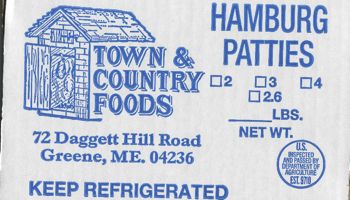
Each case has the establishment number EST. 9710 inside the USDA mark of inspection. The packaging codes affected are 10952, 10962, 10972, 11002 and 11012.
E. coli O157:H7 is a potentially deadly bacterium that can cause bloody diarrhea, dehydration, and in the most severe cases, kidney failure.
Because the harmful bacteria can be introduced into the center of beef when it is tenderized, FSIS recommends that needle- or blade-tenderized beef be cooked to an internal temperature of 160 degrees, just like hamburger. The only way to confirm that beef is cooked thoroughly enough to kill harmful bacteria is to use a food thermometer, preferably a tip-sensitive digital thermometer.
Food safety advocates have asked FSIS to require that mechanically tenderized beef be labeled with appropriate safe-cooking information.