

Every company sourcing products from China should register a trademark in China for any logo or brand name appearing on its goods or packaging. China is a first-to-file country, and companies that do not register their own trademarks are just laying out the welcome mat for relinquishing their trademark. For more on the need to register your trademarks in China, check out the following:
- China Manufacturing: China Trademarks are the Most Important Thing of All
- China’s New Trademark Environment
- WHEN to Apply for a China Trademark.
But it’s also important to be realistic.
Companies should register marks they are certain (or fairly certain) they will use and for products they are certain (or fairly certain) they will be sourcing. Registering trademarks in China is not cheap. And even though China will grant trademark protection to a brand that has never been used in commerce by the applicant, failing to use a registered Chinese trademark in commerce for three uninterrupted years puts that trademark at risk of cancellation for non-use.
The safest and most comprehensive China trademark strategy is to register a separate trademark for every logo and brand name you intend to use in China. If you register a trademark that solely consists of a visual device (e.g., the Nike “Swoosh”), you can use that device in any size, in any color, and in any layout. Similarly, if you register a trademark that solely consists of a phrase (e.g., “Nike”), you can use those words in any size, in any font, in any color, and in any layout. If you register both a visual device and a phrase (e.g., separate trademarks for the Nike “Swoosh” and the word “Nike”), you can use them singly in any combination, size, arrangement, or alignment. As a general rule, registering both is what we recommend to our clients that employ both words and visual devices as part of their branding.
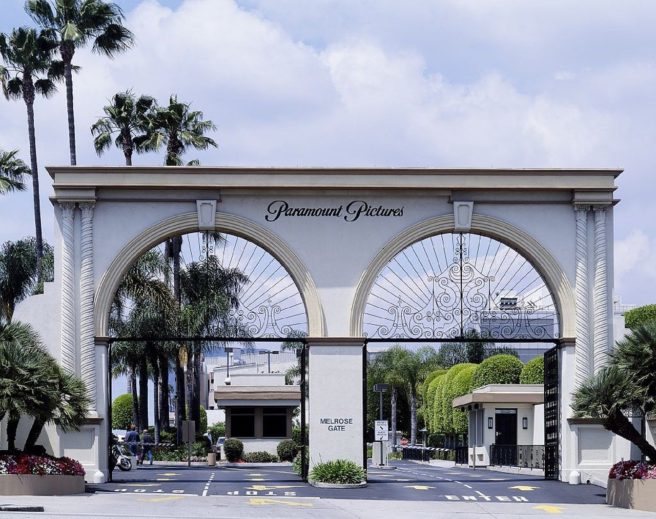
But for some clients, another method may be more cost-effective. If you have a logo that combines a visual device and words, registering just that logo will get you exactly the same protection as if you had filed separate trademarks for the visual device and each phrase. Take the logo for motion picture studio Paramount Pictures: a graphic of a mountain, with the words “Paramount” above and the phrase “A Viacom Company” below (and, for the rest of 2012, the phrase “100 years” in the middle). If Paramount were to register this logo in China as a trademark — and solely this logo — it would gain protection for the graphic of the mountain, the word “Paramount,” and the phrase “A Viacom Company.”
However, to maintain protection for all of the elements in a logo, you must use the exact logo as registered at least once every three years or your China trademark for that logo will be at risk of cancellation. And if the underlying trademark is cancelled, the protection for the individual logos and words will go away too. Note that exact means exact: same font, same size, same alignment, same everything. To return to the example of the Paramount logo, because the current logo will not be used after 2012, it would not be wise to trademark only the current logo without also trademarking the words “Paramount” and “Viacom.” (I couldn’t resist checking, and all three have in fact been trademarked in China.)
Another risk in solely registering a logo (as opposed to separately registering the words and the visual device) is that the words in the logo will only be protected to the extent that the Chinese trademark examiner who handles your application can read the words and is diligent about accurately recording them on the registration certificate. Given the volume of China trademarks being processed, and the lack of English fluency on the part of the examiners, this is a legitimate concern. And this applies to all trademarks filed in China: a quick check of Paramount Pictures’ trademarks in China reveals that for one trademark, the word on their logo had been registered as “Parmount,” and for another trademark, the phrase “Star Trek” had been registered as “Startrek.” Not sure if these misspellings were due to a filing error on the part of Paramount’s international trademark attorney or an examiner’s error, but either way, this sort of thing happens way too often with China trademarks. Have you checked your China trademark lately?
In happier news (at least, for fans of Maverick and Ron Burgundy), last month Paramount applied for U.S. trademarks for both “I Feel the Need The Need for Speed” and “I’m Kind of a Big Deal,” as slogans to be emblazoned on t-shirts. En garde, Zazzle!