

A few weeks back, Steve discussed Apple’s recent applications to register a trio of non-verbal trademarks, shown below:
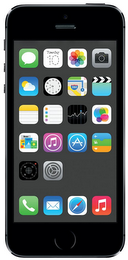
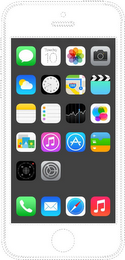
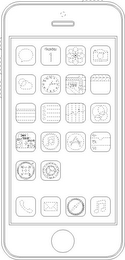
(Each image links to the corresponding application on file with the U.S. Patent and Trademark Office – USPTO).
Spoiler alert:
This post contains the USPTO’s ultimate decision regarding the registrability of the design and layout of various application icons as part of a computer operating system, using rectangular geometric figures in rows. However, it isn’t a spoiler for Apple’s applications referenced above (those applications have yet to be assigned to an examining attorney).
No, instead, I’m referring to a since-abandoned application that provides some interesting contrast with Apple’s applications. In 2012, Microsoft filed an intent-to-use application for the mark shown below:
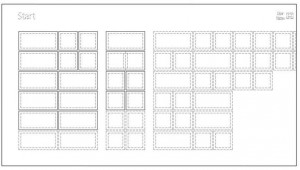
The USPTO examining attorney initially refused registration requiring a new drawing due to a potential for the existence of a phantom element of a mark, namely, the appearance of the “start” button and the “user name” element. The examiner also advised that, upon submission of evidence of use, the mark may be refused on the ground that it was merely ornamental and failed to serve any source identifying feature.
Microsoft submitted a substitute drawing and amended the mark to make clear that the “start” button and the “user name” element were not claimed as a feature of the mark. The examining attorney issued a subsequent refusal based on the presence of phantom elements in the mark, claiming that the mark contained “changeable elements.” After Microsoft failed to respond, the application was deemed abandoned. (Note that it appears there may be some issues with the examiner’s refusal, as a refusal for a “phantom element” normally requires that the phantom element be claimed in some way as a feature of the mark.).
It appears that Apple may have taken a few pointers from Microsoft’s unsuccessful efforts. Compare Microsoft’s description of its mark:
The mark consists of two groups of tiles arranged in at least five rows. In the first group, the first and second rows are comprised of a rectangle followed by two squares and the third, fourth and fifth rows are comprised of two adjacent rectangles. In the second group, the first row is comprised of a rectangle and the third, fourth and fifth rows are comprised of two adjacent squares. The second row comprises a rectangular boundary surrounding a rectangle formed from two combined squares. The borders of the mark, the rectangle formed from two combined squares, the terms “Start” and “User Name”, and other matter shown in broken lines are not part of the mark.
With Apple’s:
The mark consists of the configuration of a rectangular handheld mobile digital electronic device with rounded edges and an arrangement of twenty-two icons consisting of squares with rounded edges arranged in six rows on the screen of the device. The matter shown in broken lines is not part of the mark.
Apple’s description is much more concise. It also does not contain open-ended terminology such as “at least five rows.” Apple was also careful not to include any discernible words, like “Start” or “User Name,” in the drawing. Microsoft also included a number of additional tiles that were not claimed as a feature of the mark, but appeared identical to those icons which were claimed. In contrast, Apple specified its claim to reference all 22 icons, rather than only claim a portion of the icons.
Note that in two of three applications, Apple included the shape of the phone as well. Perhaps Apple feared that the mere layout of square icons might face the same fate as Microsoft’s application. Will this, along with the other changes, be sufficient for Apple to push the applications through to registration?
My immediate reaction is that, if you take away the shape of the phone and the content of the icons, I’m not convinced I would notice the difference between an iOS operating system, Microsoft Windows / Tiles, or an Android. It’s hard to imagine, but read through the mark descriptions and try to envision the layout with only the features claimed, with no other content. In my head, that just looks like a computer screen, regardless of whether its the size of a phone, Hardy Boys book, or a Trapper Keeper.
Apple certainly appears to have put some thought into their application strategy, though. I’m sure they’ve mapped out responses to potential refusals as well. Even if Apple is unsuccessful at registering these marks, at least they’ll have successfully given us something to talk about here, which I’m sure would be a wonderful consolation prize.