

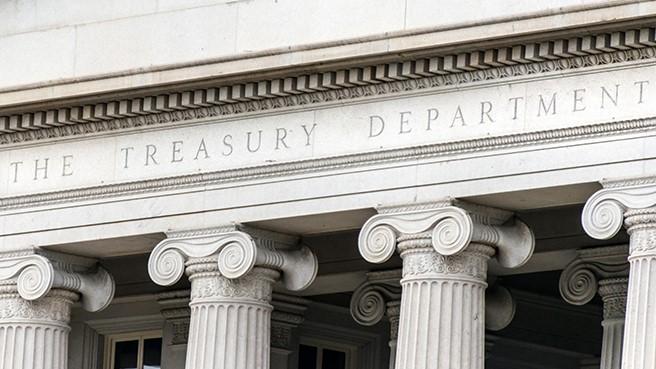
The Treasury Department has issued amendments (T.D. 9793, November 10, 2016) to the regulations governing the reporting of discharges of indebtedness that will impact the filing of Forms 1099-C by member banks for the 2016 calendar year. In summary, the Treasury Department has repealed the presumption that a Form 1099-C must be filed if a creditor (such as a financial institution) has not received a payment on an indebtedness during a 36-month testing period.
As member banks are aware, Section 6050P of the Internal Revenue Code generally requires an “applicable entity”, which includes a financial institution, which discharges, in whole or in part, an indebtedness to file a Form 1099-C with each of the Internal Revenue Service and the debtor to report the discharge. To provide some certainty for a financial institution as to what constitutes a reportable “discharge”, the governing regulations dictate that the Form 1099-C needs to be filed only if an “identifiable event” has occurred. The regulations then define a set of eight “identifiable events”, including: (i) a discharge of indebtedness under Title 11 of the United States Code (i.e., a bankruptcy); (ii) a cancellation or extinguishment of an indebtedness that renders a debt unenforceable in a receivership, foreclosure or similar proceeding; or (iii) a discharge of indebtedness pursuant to an agreement between the financial institution and a debtor to discharge the indebtedness at less than full consideration.
One of the other “identifiable events” outlined in the regulations is the “expiration of the non-payment testing period.” As defined by the regulations, there is a rebuttable presumption that an “identifiable event” is deemed to have occurred during a calendar year if a financial institution has not received a payment on an indebtedness at any time during a “testing period” ending at the close of that calendar year. The testing period is a 36-month period increased by the number of calendar months during all or part of which the financial institution was precluded from engaging in collection activity by a stay in bankruptcy or similar bar under state or local law. The presumption can be rebutted if the financial institution (or a collection agency on its behalf) has engaged in “bona fide collection activity” during the calendar year, or if facts and circumstances existing as of January 31 of the calendar year following expiration of the 36-month period indicate that the indebtedness has not been discharged.
The “36-month” rebuttable presumption has been the subject of sharp criticism since its adoption. Financial institutions rightly questioned how the rule was to be applied, and noted that the rule indirectly imposed burdensome recordkeeping requirements on a bank. Most importantly, critics challenged the reasoning behind the rule, as it requires the filing of a Form 1099-C even though the applicable financial institution has not discharged the debt. The disconnect between when a Form 1099-C must be filed and the actual date of the discharge is further exacerbated because, once the Form 1099-C is filed pursuant to the 36-month rule, the financial institution is not required to file a second Form 1099-C once the discharge does, in fact, occur.
As a result of the foregoing issues, in 2014 the Treasury Department published a notice of proposed rulemaking proposing to remove the 36-month rule. The Treasury Department now has issued amendments to the Section 6050P regulations that repeal the 36-month rule, effective for Forms 1099-C due after December 31, 2016. Accordingly, for purposes of filing Forms 1099-C for the 2016 calendar year (which are due in 2017), member banks need no longer apply the 36-month rule when determining when a Form 1099-C must be filed. The other seven “identifiable events” remain in effect for determining when a Form 1099-C must be filed.