
If the mood at one of the final sessions of last week’s Food Safety Summit near Chicago said anything, it said federal menu labeling might be “A Bridge Too Far.”
Panelists acknowledged they thought about canceling the session after the Food and Drug Administration opted to again delay enforcement of the regulations, this time for a full year.
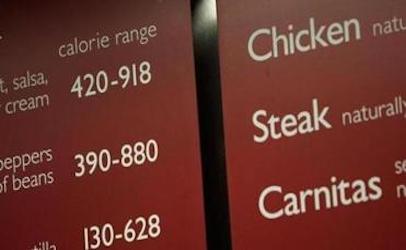 For panelist Al Baroudi, vice president for quality assurance and food safety for The Cheesecake Factory Inc., moving the enforcement date forward by another year meant there were decisions to make. Baroudi agreed to go ahead with the Summit session, but he opted to pull new menu labeling that was ready to go at 194 Cheesecake Factory restaurants.
That was the decision also being made for the nation’s one million restaurants with their 14.7 million employees who help their owners generate $799 billion in annual revenue. It’s not too much to say that if you poke the nation’s restaurant industry the wrong way, you could depress the entire economy. The federal menu labeling rule is suppose to apply to chain restaurants with 20 or more locations; supermarkets; convenience stores; and other outlets.
The National Restaurant Association (NRA) is a big supporter of federal menu labeling because its pre-empts state and local versions it fears would end up in a maze of confusion. Thanks to NRA, a single-location restaurant could register with the federal menu labeling system, and thereby escape any state and local menu laws.
But the reason federal menu labeling now hangs by a slender thread is that congressional authority is not found in a very safe place. Quite the opposite. Public health advocates put federal menu labeling in the now highly unstable Affordable Care Act of 2010. Whether the Act will even exist when menu labeling is now scheduled to become effective — May 7, 2018 — is anybody’s guess.
Lynn Szybist, team leader for FDA’s labeling regulations implementation team, told the Food Safety Summit audience that if Obamacare is dead and buried by then, the agency will look to “the administration” for guidance on what’s next.
 As a concept, menu labeling once held out the prospect that if customers were presented with the calorie counts, people would opt for choices with lower calorie counts and all those individual decisions would eventually help bend the obesity curve. That does not get as much attention now, and restaurant executives like Baroudi are expressing support for menu labeling as part of an overall transparency policy, which they know customers like.
But for other than chain restaurants, menu labeling has very much been opposed. Pizza restaurants asks whey they need to spend $500 to $2000 posting calorie counts in their stores, when virtually all their business is done by home delivery. And supermarkets, C-stores, and bakeries say its all too complicated and expensive for them. They also express concerns about enforcement — like what if a kid making a pizza does not stick to the recipe and builds a more calorie-ladened pie?
FDA says it will welcome new public comments through July with its ears open for ideas that reduce regulatory burden or increase flexibility for calorie postings for places like grab-and-go food stations and buffets or how to best provide calorie information outside a menu board.
Menu labeling critics have already won House passage of the Common Sense Disclosure Act, which puts menu labeling on a diet. Putting the enforcement date for menu labeling off to 2018 means Congress will have time, if not the inclination, to rework the issue. The Trump Administration’s last minute delay means more calorie information was posted by restaurant chains that opted not just to wait to see what happens.
(To sign up for a free subscription to Food Safety News, click here.)