Skip to content

Menu

LexBlog, Inc. logo
NetworkSub-MenuBrowse by SubjectBrowse by PublisherJoin the NetworkGet StartedSubscribeSupportContact
Search
Close

Can a Word Which Means a Lot (Aloha) Mean Almost Nothing in Trademark?

By Kyle Kroll on July 13, 2018
Email this postTweet this postLike this postShare this post on LinkedIn
lrgDCL412

Hawaii seems to be on the mind here at DuetsBlog lately. Last week, I had the pleasure of visiting three Hawaiian islands for the first time. While there, I quickly became acquainted with Hawaiian life and language. It’s a beautiful place; I recommend everyone visit.

When I first landed on Kauai, the “garden island,” I was quickly greeted with “Aloha,” in sound, sight, and mind. Although most understand “Aloha” to be a friendly greeting, the word has much greater meaning. It also means love, affection, peace, compassion, and mercy. In one word, it embodies Hawaii–and, indeed, the State of Hawaii has declared that Aloha is its official spirit. It is “more than a word of greeting or farewell or a salutation. . . . ‘Aloha’ means mutual regard and affection and extends warmth in caring with no obligation in return. ‘Aloha’ is the essence of relationships in which each person is important to every other person for collective existence. ‘Aloha’ means to hear what is not said, to see what cannot be seen and to know the unknowable.” Haw. Rev. Stat. § 5-7.5(a). All government employees are instructed to “contemplate and reside with the life force and give consideration to the ‘Aloha Spirit.'” Haw. Rev. Stat. § 5-7.5(b). I guess they don’t call it the “Aloha State” for nothing!
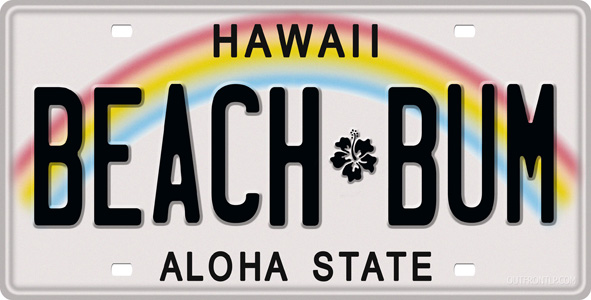
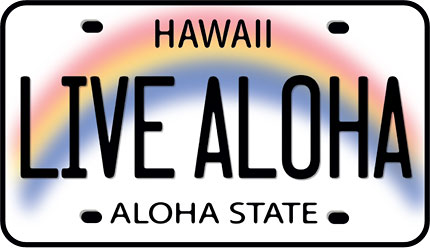
With such importance to native Hawaiians, citizens of Hawaii, and the state themselves, it is no wonder that “Aloha” has also become a popular company, place, product, and service name on the islands. Throughout my journey there, I began to notice Aloha almost everywhere I went. See, for example, the following:

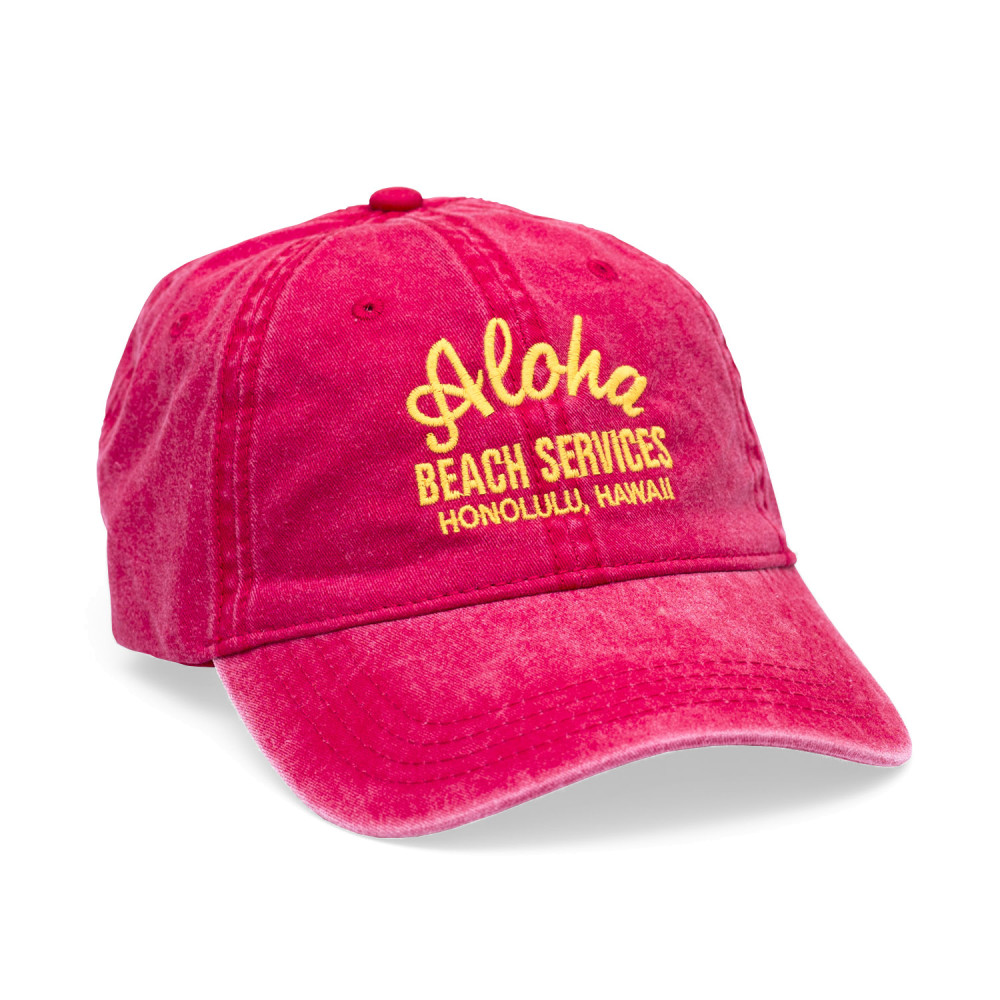
And the list goes on… In fact, a basic USPTO search revealed almost 500 live Aloha marks, and a search on the Hawaii Department of Commerce and Consumer Affairs revealed over 10,000!

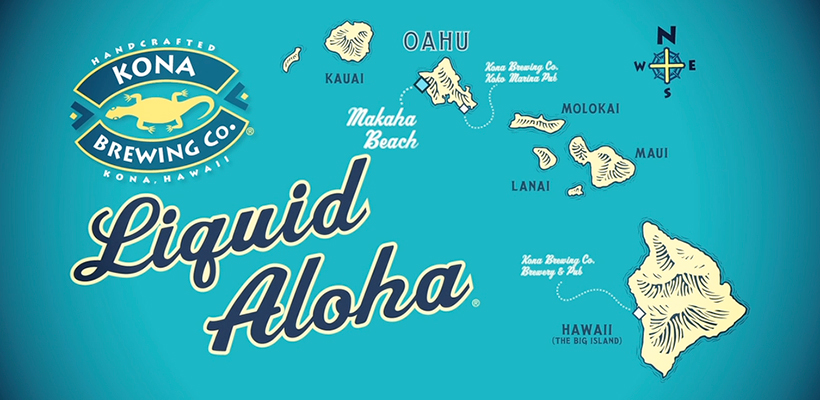
Seeing Aloha used so frequently caused me to ponder the potential risks of choosing a word like ‘Aloha’ for use in a brand. On the one hand, the word used in connection with most goods, services, and places is arbitrary or fanciful. What is, for example, “Aloha Tofu?” And the word may be suggestive or descriptive of Hawaiian roots. But on the other hand, the word “Aloha” is so ubiquitous that it can hardly be said to be inherently distinctive. Its common use, standing alone, does not immediately identify a single source and seemingly undermines the ability to develop secondary meaning in the minds of at least a Hawaiian public constantly bombarded with the word. Tying additional words to Aloha (e.g., “Aloha Fridays” or “Liquid Aloha”) might create more distinctiveness. But there seems to be an overarching risk that the mark’s initial generic non-distinctiveness will never be overcome. This risk is akin to genericide, but not due to expropriation–rather, widespread appropriation.

I enjoy the Aloha spirit and hope it spreads far and wide. But its ubiquitous adoption could turn a word which means quite a bit (see above), into a word which means very little when it comes to trademark law.

Kyle Kroll

View my professional biography

For me, creativity has always been a way of standing out from the crowd, doing the unexpected, and adding passion to my work. My parents nurtured my creative side from an early age, gifting me Legos, subscribing me to…

View my professional biography

For me, creativity has always been a way of standing out from the crowd, doing the unexpected, and adding passion to my work. My parents nurtured my creative side from an early age, gifting me Legos, subscribing me to Popular Science, and encouraging me to get involved in school activities with an artistic angle. I remember creating a hoverboard using a leaf blower in fifth grade, winning the science fair in sixth, and joining my small-town high school newspaper shortly thereafter. Soon, I began designing beautiful centerfolds, reporting on the latest tech topics, and writing poems and short stories. I also began to apply my creative skills to my schoolwork, adding unexpected pizzaz to my assignments.

In college, I continued to develop my creative skills. I taught myself how to code websites, crafted logos for non-profits, tried my hand at techie DIY projects (parabolic wi-fi dish, anyone?), and began painting abstract art. I also continued to apply my creative design and writing skills to the classroom and leadership positions in student government. Creativity helped me stand out in these venues and present my ideas in compelling ways. Furthermore, infusing imagination into everything I did made tasks fun and fulfilling. This strategy also worked well for me in law school, where I developed my love for all things intellectual property: patents, copyrights, trademarks, trade secrets, right to publicity, you name it. That passion continued to develop after law school as a clerk to a federal judge in the District of Minnesota.

Join me on this blog as I return to my journalist roots, discuss contemporary topics in intellectual property, and add creative commentary to the marketplace of ideas.

Email
Show more Show less
  • Posted in:
    Intellectual Property
  • Blog:
    DuetsBlog
  • Organization:
    Winthrop & Weinstine, P.A.
  • Article: View Original Source

Call us at 1-800-913-0988 or email sales@lexblog.com.

Facebook LinkedIn Twitter RSS
The Library at LexBlog
  • About LexBlog
  • The Field We Built
  • Library at LexBlog
  • Our Beliefs
  • Our Team
  • Contact LexBlog
  • Disclaimer
  • Editorial Policy
  • Terms of Service
  • Get Started
  • Publishing Solutions
  • Compass
  • Submit a Request
  • Support Center
  • System Status
Copyright © 2026, LexBlog, Inc. All Rights Reserved.
Law blog design & platform by LexBlog LexBlog Logo