

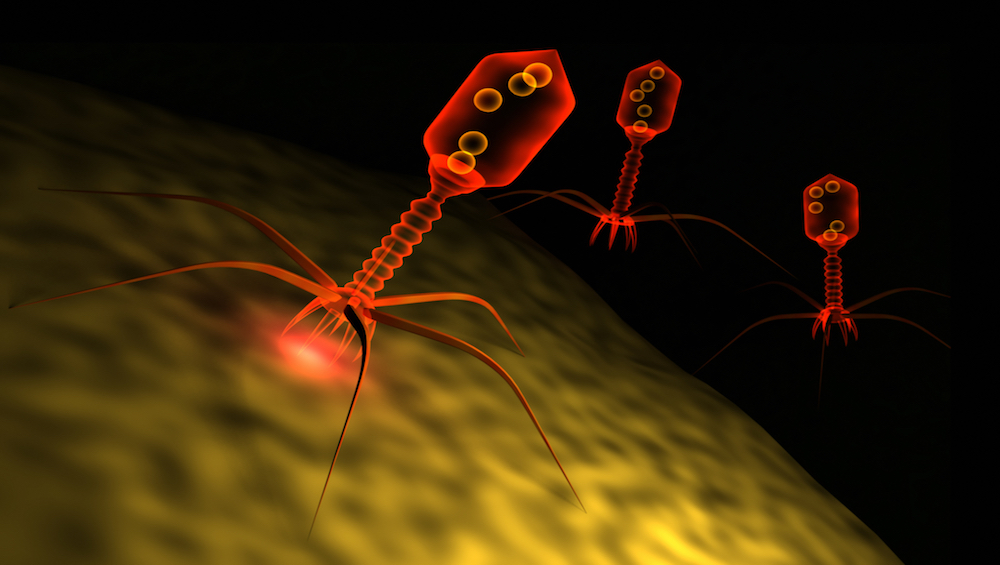
A novel cocktail of six lytic bacteriophages is proving effective enough against Shiga toxin-producing E. coli in broth, milk and meat in the laboratory to spur commercial interest.
Produced by a team of researchers, mostly from Argentina’s Rosario National University (UNR), and explained in the current issue of the peer-reviewed journal Food Microbiology, the unique mix is being seen as a promising intervention that might be rewarded by the marketplace.
Increases in both the number and types of interventions have, in recent years, been deployed by the beef industry to control foodborne pathogens such as E. coli O157:H7.
A bacteriophage is a bacterial virus that multiples within a cell and destroys the host. The research team described the new antimicrobial cocktail as “an additional hurdle” that could be used to control pathogens in food. The discussion of the six bacteriophage cocktail cites these highlights:
- Lytic activity was evaluated. Lysis or dissolution of the cell may occur after an infection of a bacterium by a bacteriophage.
- The cocktail was effective against pathogenic E. coli strains in milk and meat, especially at room and abusive temperatures.
- Phages remained viable at high numbers after challenges in food matrices.
- The tested cocktail might be applied as an additional hurdle for foodborne pathogen control in food.
The Argentine scientists involved are David Tomat, Cecilia Casabonne, Virginia Aquili, Claudia Balague, and Andrea Quiberoni. All but Quiberoni are associated with UNR, a public research university. Quiberoni serves on the faculty of Chemical Engineering at the Institute of Industrial Lactology in Santa Fe.
Rosario National is one of Argentina’s larger universities with about 65,000 students. It is organized with 12 colleges housed in a 68,000 square meter campus about 200 miles northeast of the capital city of Buenos Aires.
The abstract says “phages are potentially useful as antimicrobial agents in food, especially cocktails of different phages which may prevent the development of bacterial resistance.” The synopsis continues here with a summary of the scientific data.
(To sign up for a free subscription to Food Safety News, click here.)