

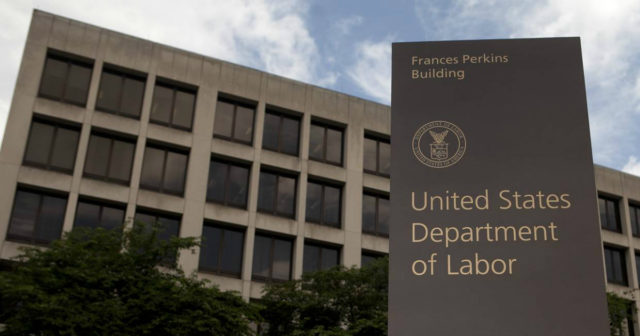
 The Department of Labor (DOL) has released its much-anticipated final rule on the often-litigated “joint employer” issue under the Fair Labor Standards Act and its statutory requirements relating to minimum wage and overtime obligations. This final rule represents the first significant revisions to DOL’s regulations on this subject in more than 50 years. As expected, the final rule represents good news for retailers and other employers, as it sets forth a standard that is more difficult for plaintiffs to meet. The final rule becomes effective March 16, 2020. The DOL’s Fact Sheet is found here. The final rule, as published in the Federal Register, is found here.
As expected, the final rule is mostly unchanged from the text that DOL initially proposed for “notice and comment” in April 2019. It introduces the use of a four-factor balancing test to determine joint employer status. It also explains the level of association between separate businesses required for joint employer status when these businesses employ a worker to work separate sets of hours in the same workweek. And the rule provides guidance that certain business arrangements do not, just by their very nature, establish joint employer relationships.
First, DOL is establishing a balancing test that examines whether the putative joint employer that also benefits from the employee’s work (1) has the power to hire and fire the employee, (2) supervises or controls the employee’s work schedule or conditions of employment, (3) determines the employee’s wage rate and method of payment; and (4) maintains the employee’s records of employment that relate to the first three factors. It is not necessary for all four factors to exist for a joint employer relationship to exist, and the appropriate weight to give each factor will vary depending on the circumstances. Thus, a company could reserve the right to control the employee’s working conditions, but that right of control – while relevant to the analysis – would not dictate the outcome of the joint employer analysis if the company did not actually exercise that control. In addition, DOL provides that the fourth factor, i.e., the maintenance of employment records, will not by itself demonstrate joint employer status. Additional factors “may be considered,” according to DOL, but “only if they are indicia of whether the potential joint employer exercises significant control over the terms and conditions of the employee’s work.” This new multi-factor test stands in sharp contrast to the 2016 effort by the Obama DOL Wage Hour Division, which set forth a broad interpretation of an FLSA regulation from the late 1950s that allowed for a joint employer finding when two employers are not “completely disassociated” from each other in relation to the employee(s) at issue.
Second, the new regulation sets forth an analysis of the factors that will influence whether two companies that engage an employee to work separate sets of hours in the same work week are “sufficiently associated with respect to the employment of the employee” to warrant a finding of joint employer status. This part of the proposed rule triggered little input during the comment period, and it was adopted as initially proposed.
Third, the new regulation discusses various business settings and practices that will not, in and of themselves, influence the joint employer analysis. The examples discussed in the regulation include the following: (a) the existence of a franchisee-franchisor relationship, even if the franchisor provides its franchisees a sample employee handbook; (b) one company allowing another company to perform business on its property (in the absence of other indicia of control), (c) one company requiring its business partners to maintain compliant policies regarding sexual harassment prevention and workplace safety (but this principle does not extend to the setting of minimum wage “floors” by the direct employer); (d) one company allowing another company’s employees to participate in its apprenticeship program; (e) one company enforcing another company’s compliance with quality control standards to ensure the consistent quality of a work product or brand; and (f) one company offering employees of another the right to participate in its health and retirement plans. DOL concluded that its myriad examples “will allow parties to make business decisions and enter into business relationships with more certainty and clarity regarding what actions will result in joint liability under the Act.”
The DOL’s new balancing test, and its guidance about factors that should (and should not) enter the joint employer analysis, represent welcome news for businesses that are most often challenged as joint employers under the FLSA, including retail franchisors. Yet to be determined, however, is whether the final rule will be challenged in court and, assuming it would survive such a legal challenge, the weight that courts will give it as they address this heavily-litigated issue. Retailers and other employers should continue to exercise caution in this area if they benefit from the work of persons whom they do not treat as their employees.