

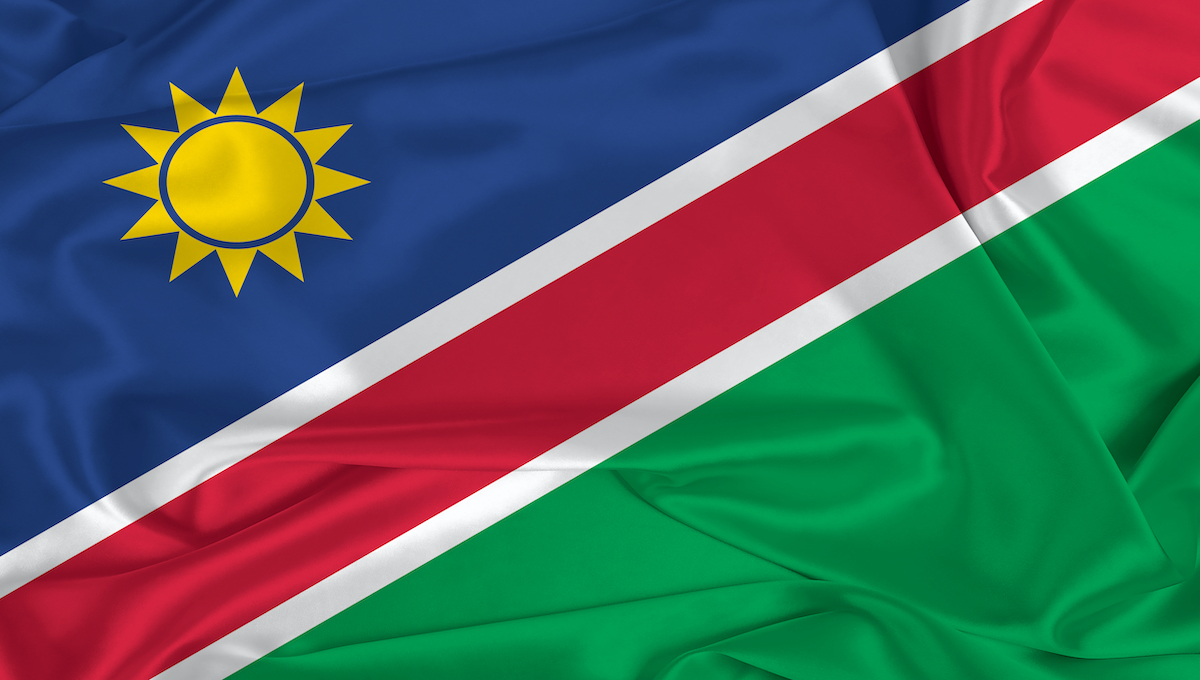
USDA’s Food Safety and Inspection Service sent it’s auditors to Namibia this past September to conduct a foreign equivalency audit for the country’s raw beef exports to the United States. And on one level, it was a fairly simple assignment.
But, it also ended up being historic because it was the audit that last month actually resulted in the first shipment of 25 tons of chilled Namibian beef to Philadelphia. Namibia is the first African nation to export beef to the United States.
Subjected to the historic audit were Namibia’s Directorate of Veterinary Services or DVS, the “central competent authority,” Namibia’s Central Veterinary Laboratory (CVL), and the beef slaughter and processing establishment Meatco Windhoek, which made the beef shipment to Philadelphia. All located in Namibia’s capital of Windhoek.
Over four days, from Sept. 23, 2019, to Sept. 27, 2019, FSIS auditors came up with an “action plan” for Namibia to follow in addressing the audit findings. The audit, which determined that Namibia’s beef inspection is equivalent to that of the United States, was just released to the public on Feb. 21. Two days earlier, the Meat Corp. of Namibia (Meatco) made its first shipment to the United States.
The audit found Namibia’s official Samonella sampling by government inspection personnel uses gauze pads, not sponges as preferred. Namibia promised to take corrective action no later than April, according to the action plan prepared by FSIS.
All other “corrective actions” suggested by FSIS have been implemented by Namibia. These included:
- Hold and test requirements for livestock carcasses and their parts are being subjected to residue testing under official chemical residue testing programs.
- Namibia’s veterinarians will not issue an export certificate for beef intended for export to the United States for meat products produced from carcasses that were held and tested until acceptable results are obtained.
- Namibia’s office of the Chief Veterinarian has re-trained CVL on quality management standards, involving sample receiving and handling procedures that prescribe laboratory rejection of government verification samples submitted with inadequate information. Samples with inadequate information are rejected and a state veterinarian is assigned full time to be in charge of sample receiving.
- N60 sampling for E. coli O157:H7 and non-O157 Shiga toxin-producing E.coli (STEC) was implemented by CVL.
For enrichment of Raw beef trim CVL has adopted the manufacturer’s recommended and validated dilution factors for both TSB and MP media. Both will be used depending upon availability.
At Meatco Windhoek, auditors observed:
- A hose attached to the splitting saw was contacting the inedible trough and subsequently contacting edible exposed carcasses. The carcasses were not used for United States production.
- A carcass was observed entering the final wash after post-mortem inspection with significant bruising remaining on the ribs. In discussion with inspection personnel, the carcass had been retained, and the retain tag had been removed by the establishment allowing it to re-enter production without further inspection. The carcass was diverted from the domestic market.
- Official Salmonella sampling collected by government inspection is utilizing gauze pads instead of sponges, which are prescribed by Circular 19/2008.
“This was a routine ongoing equivalence verification audit,” the report says, “The audit objective was to determine whether the food safety system governing raw intact beef remains equivalent to that of the United States, with ability to export products that are safe, wholesome, unadulterated, and correctly labeled and packaged.”
Namibia remains free to export raw intact beef products to the United States, including carcasses, including halves or quarters, cuts, edible offal, and other intact primal and subprimal.
The Republic of Namibia is in southwest Africa with a coast on the Atlantic Ocean. It has a population of 2.4 million. Its livestock industry generates N$ 3.9 billion annually.
Before the on-site equivalence verification audit, FSIS reviewed and analyzed Namibia’s responses and supporting documentation. During the audit, the FSIS auditor conducted interviews, reviewed records, and made observations to determine whether Namibia’s food safety inspection system governing meat is being implemented as documented in the country’s SRT responses and supporting documentation.
Namibia approached the U.S. about exporting beef as early as 2002. FSIS has audited the country’s inspection systems since 2009, and prior to the current audit most recently 2017. It actually earned the eligibility to export beef in 2016.
The Namibia beef exports to the U.S. are duty-free under the African Growth and Opportunity Act. Meatco is permitted to export up to 5,700 tons of beef per year.
(To sign up for a free subscription to Food Safety News, click here.)