

A court of appeal upheld the City of Madera’s interpretation of a municipal code provision requiring “a five-sevenths vote of the whole of the [City] Council” as mandating the approval of five councilmembers, rather than a five-sevenths vote of the councilmembers voting on the matter. Lateef v. City of Madera, No. F076227 (5th Dist., Feb. 14, 2020).
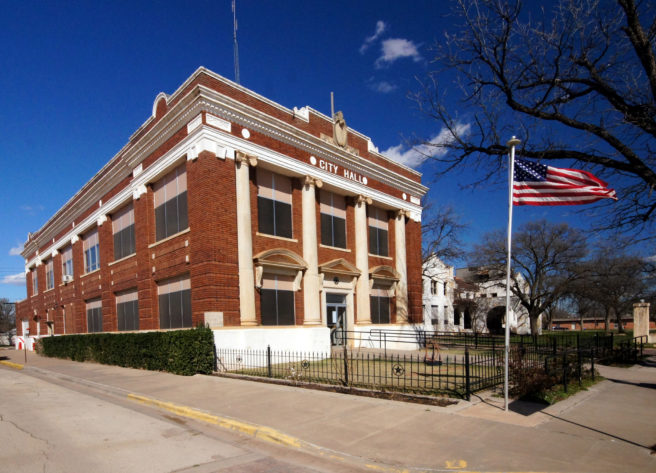 Plaintiff appealed to the City Council after his application for a conditional use permit to sell alcohol at a convenience store was denied by the Planning Commission. The City has a seven-member City Council. At the time of the hearing on plaintiff’s application, one council seat was vacant, and one councilmember recused himself from voting. Thus, only five councilmembers were present and eligible to vote. The City Council voted four to one to overturn the Planning Commission’s decision. The City Clerk initially announced that the motion had passed, but the City ultimately determined that the motion failed to meet the requirement in Municipal Code that “five-sevenths vote of the whole of the Council shall be required to grant, in whole or in part, any appealed application denied by the Commission.”
Plaintiff filed suit, arguing (1) the City was required to grant his appeal because the Municipal Code requires a five-sevenths vote of the councilmembers present and voting, and (2) he was denied a fair trial because the recused councilmember and vacant seat were improperly included in counting the number of votes needed to grant his appeal.
The appellate court disagreed with both contentions. Using established principles of statutory interpretation, the court reasoned that the plain meaning of the five-sevenths requirement was clear. Nothing in the municipal code indicated that the “whole of the council” meant those present and voting. The court reasoned that the word “whole” must mean something and could not be ignored as mere surplusage. Thus, although plaintiff received the votes of five-sevenths of the voting councilmembers, he did not receive the required five-sevenths vote of the entire City Council.
Plaintiff contended that this interpretation would lead to absurd consequences because (1) only four councilmembers are needed to be present and voting for a quorum; and (2) even though four councilmembers were present, an appeal of a Planning Commission decision would automatically be denied because it would be impossible to obtain five votes. The court declined to adopt plaintiff’s interpretation, observing that courts did not have the power to rewrite an ordinance to make it conform to a presumed intent that differed from the plain and direct import of the words used.
Lastly, the court held that because the City had correctly interpreted its code, plaintiff was not denied a fair hearing by the inclusion of the recused councilmember and vacant seat in determining the number of necessary votes. The court also noted that plaintiff could have requested a continuance of the hearing until the vacant seat was filled.