

The speaking circuit has come to a grinding halt, as it should, to slow the virus spread. My hope is to share some of that in-person content with each of you here.
Now more than ever, we need to receive nourishment, so if you don’t receive Seth Godin’s daily posts, you’re really missing out, he’s truly an inspiration of calmness.
All, please be healthy, safe, and do stay inspired, during these challenging times.
And, let’s not forget to keep a sense of humor, as difficult as that might be now.
One friend, with college kids back, described their home as having the feel of a modern hippie commune, with parents working from laptops, and kids online.
With that, recall this previous image about the continued brandverbing trend?
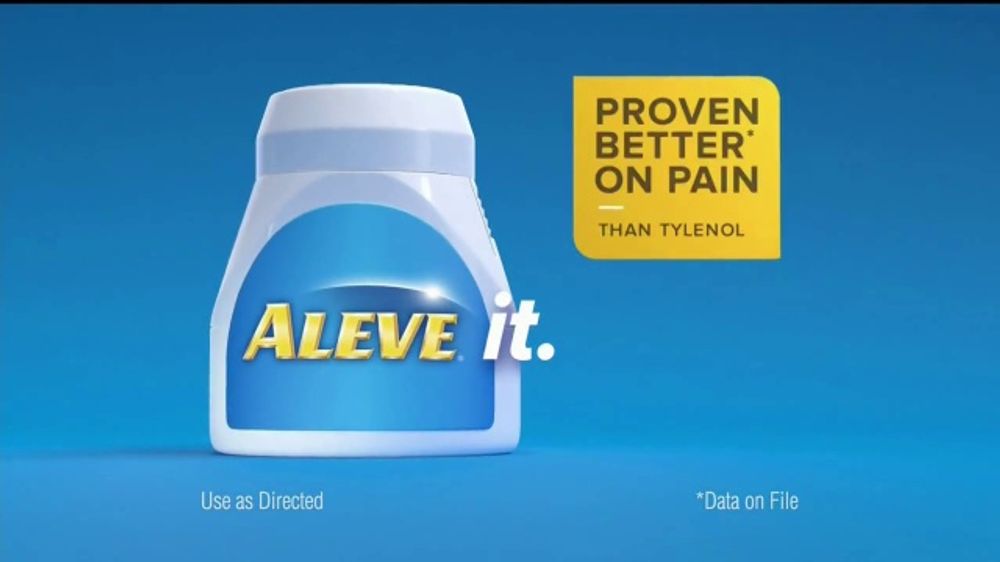
It has application today too (even without any commune pain), as it raises the issue of nominative fair use of the Tylenol brand name by the makers of Aleve.
Another context where the issue of nominative fair use presents is with private label store brands that ask consumers to “compare” them to a leading brand:

Other contexts calling out for nominative fair use treatment involve repair services for branded products and the sale of products compatible with other brands.
As you may recall, nominative fair use protects lawfully referential trademark uses of others’ marks — uses that are non-infringing and not likely to cause confusion.
Nominative fair use has been developing over the last almost three decades, without any guidance from the Supreme Court, despite a 2016 request to do so.
Many want the Supreme Court to address nominative fair use of trademarks, so that was to be my contribution to The 2020 AIPLA Spring Meeting in San Antonio.
Yet, my focus here is not to address the present split in the various circuit’s differing treatment of nominative fair use, but instead to focus on one aspect of it.
The ad for Aleve above makes a comparative reference to competing pain reliever brand Tylenol, using only the word in smaller type; what if it had used the logo?
In other words, under what circumstances is it fair game to utilize another’s logo in making a nominative referential use of another in advertising or on packaging?
As I’m sure you appreciate, the answer is highly fact dependent/context specific.
Most nominative fair use tests expect the user to exercise some level of restraint to avoid uses of another’s mark that would suggest sponsorship or endorsement.
In fact, the first case to create the nominative fair use doctrine offered a footnote hinting that using another’s logo may go too far, as it may create likely confusion:
“Thus, a soft drink competitor would be entitled to compare its product to Coca-Cola or Coke, but would not be entitled to use Coca-Cola’s distinctive lettering. See Volkswagenwerk, 411 F.2d at 352 (“Church did not use Volkswagen’s distinctive lettering style or color scheme, nor did he display the encircled ‘VW’ emblem”);”
New Kids on the Block v. News Am. Pub., Inc., 971 F.2d 302, 308 fn7 (9th Cir. 1992).
This hypothetical hint has caused plenty of confusion itself, leading some cautious trademark types to say “no” to using another’s logo under any circumstances.
What some haven’t appreciated is that the hint constituted dicta, meaning the statement went beyond the issue to be decided by the court, so it’s not the law.
The statement about distinctive lettering/logo use wasn’t at issue in New Kids or in the VW case in the footnote, so it’s really double-dicta, or dicta-within-dicta.
Indeed, the leading trademark scholar Professor Thomas McCarthy agrees that, despite the dicta of footnote 7 in New Kids, there is no per se rule against the nominative fair use of others’ logos, making context key to the fair use defense:
“For example, most people would agree that a business magazine or web site illustration could properly use the logos of companies whose economic performance is being discussed. The same will be true with many parodies and expressive criticisms of the owner of a trademark. Whether logo use is more than necessary is a highly factual intensive issue that must be determined on a case by case basis.”
Even if the unique context of independent auto repair shops in the VW example may suggest using auto logos goes too far, this does not require similar treatment in other contexts devoid of the same consumer experiences and expectations.
After all, the driving principle underlying nominative fair use is that significant meaningful discourse essentially would be curtailed if infringement or dilution arose whenever a trademark is used to reference another’s product/company.
In some contexts, use of logos may be fair game, so long as confusion is unlikely.
Marketing has evolved over the last 30 years since New Kids with the proliferation of websites, online sales, digital advertising, and hand-held devices with little visual “real estate,” resulting from the limited screen size to view online content.
In fact, there are social media brands that facilitate the use of their logos in others’ signage and advertising to improve engagement with users and consumers.
This evolution has not gone unnoticed by consumers or those who design logos.
So, when evaluating the context and strength of a nominative fair use defense, it is important to consider why a logo exists separate and apart from a word mark.
For this level of analysis, I’m reminded of the shared insights from Design Matters: Logos 01, authored by Capsule, led by renown design thought-leader Aaron Keller:
- “Just as ancient ancestors communicated through visual icons, modern brands speak to customers through imagery.”
- “Brands use logos to impress values, functions, and hierarchies on millions of people.”
- “Visual icons communicate basically and directly — which is perfect for branding, when the goal is to convey a message with minimum time or strain on the audience.”
- “Logo design . . . is about cutting the message to the quick.”
- “Logos identify ownership, first and foremost, and often end up doing much more.”
- “Logos send messages of all sorts to mixed audiences.”
- “They shorten the communication of a complex statement to something simple, clear, and concise.”
- “They replace written language when audiences don’t have the time or will to read.”
So, when context invites “cutting the message to the quick” or tapering to make it “simple, clear, and concise,” this may facilitate non-infringing logo fair uses.
Clearly, it will be important to assess the actual reasons for using another’s logo.
Trademark singularity may play a role in the fair use analysis too. For example, use of a logo, instead of a brand name may be the most accurate, clear and efficient nominative reference, especially for a shared word like Delta (faucets and airlines).
What other contexts and examples have you noticed where another’s logo is being used without the apparent express permission from the brand owner?
In the end, whether nominative fair use is a viable defense in a particular context requires a careful fact specific analysis, to be decided on a case-by-case basis.