

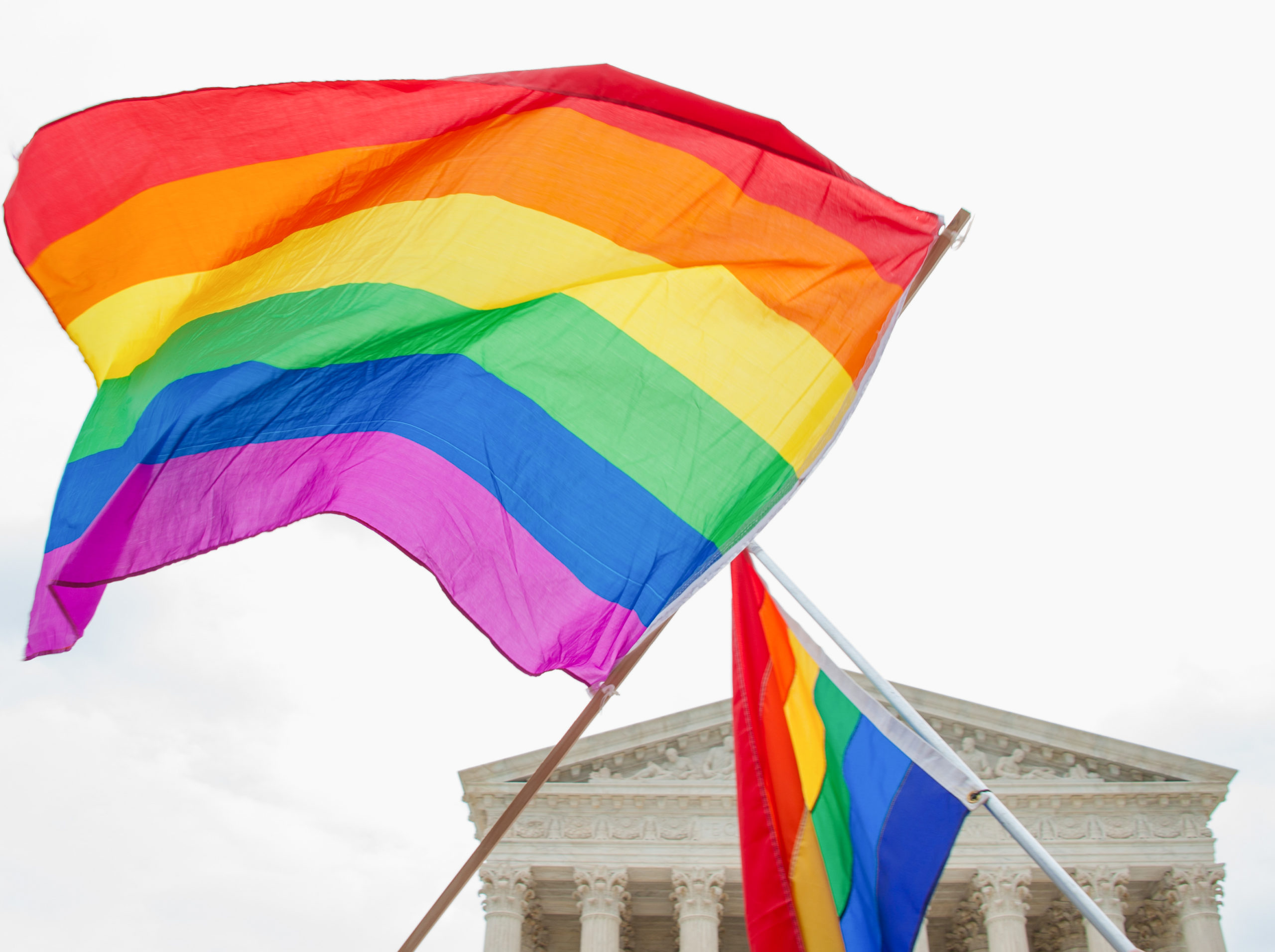
In October 2019, we published a blog post covering a series of three cases taken up by the U.S. Supreme Court that addressed the question of whether discrimination based upon sexual orientation and gender identity is illegal under Title VII of the 1964 Civil Rights Act (“Title VII”). Today, we follow up with this post to announce that the Supreme Court, by a vote of 6-3, ruled that Title VII’s prohibition on discrimination on the basis of sex includes discrimination based on gender identity or sexual orientation.
Two of the cases (Bostock v. Clayton County, Georgia and Altitude Express, Inc. v. Zarda) involved gay male plaintiffs who claim they were fired due to their sexual orientation. The third case (R.G. & G.R. Harris Funeral Homes, Inc. v. EEOC) involved a female plaintiff who was fired after she disclosed her status as transgender and refused to wear a suit and tie. In each of the cases, an employer terminated a longtime employee for no reason other than his or her status as a gay or transgender individual. All three plaintiffs argued that such discrimination is illegal under Title VII because the law expressly prohibits discrimination on the basis of “sex.” The Court agreed.
Writing on behalf of the Court, recently-appointed Justice Neil Gorsuch acknowledged that, when Congress enacted the Civil Rights Act, it likely was not contemplating that it would lead to the protection of LGBTQ individuals. However, in the years since the enactment of the Civil Rights Act, the Court has been called upon to determine other issues that also were not addressed by the drafters of the Act, such as whether it covers discrimination on the basis of motherhood or whether it bans sexual harassment of male employees. As Gorsuch noted, “the limits of the drafters’ imagination . . . supply no reason to ignore the law’s demands.”
Until now, states have acted in a patchwork manner to extend protections based on sexual orientation and gender identity. For instance, it has been illegal in Minnesota to discriminate against an individual on the basis of either sexual orientation or gender identity. However, while Wisconsin was the first state to ban employment discrimination based on sexual orientation, the law did not extend to prohibit discrimination based on gender identity. Because fewer than half of the fifty states currently ban discrimination on sexual orientation and gender identity on a statewide level, this decision is considered a landmark victory for LGBTQ employees across the country.