

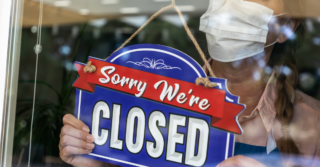
 A large part of my law practice deals with “takings”—a situation where a government authority with the power to condemn, or a private entity with the power to condemn, has taken private property. Takings falls primarily into one of two large categories:
- “Direct takings,” which is when a government or private entity, like a utility, files a lawsuit to acquire private property through the court system; and
- “Inverse” or indirect condemnation, which is when a government or private entity has taken private property without using the court system.
In the case, Orlando Bar Group, LLC d/b/a The Basement, The Attic and the Treehouse v. DeSantis, the Fifth District Court of Appeal decided that Governor DeSantis’s executive orders from March 2020 did not amount to a taking of private property. Even though Governor DeSantis’s executive orders:
- suspended all sales of alcoholic beverages by entities deriving more than fifty percent of their gross revenue;
- suspended the sale of such beverages for on-premises consumption;
- limited the operation of bars to seated service; and
- restricted operational capacity to half of the typical occupancy previously permitted,
the Fifth DCA determined that those executive orders did not amount to a taking of private property.
As stated in the decision,
[u]nder the Florida Constitution, private property cannot be taken by the government unless it is for public use and the owner of the property is fully compensated.”
The Fifth DCA analyzed the factual situation under a variety of legal tests. Ultimately, the Fifth DCA determined that no physical taking of private property occurred, and determined that the limitation on the businesses was only temporary and, therefore, “not a complete or permanent loss of the ability to do business” and “the impact of the COVID orders does not amount to a compensable taking.”
The decision begs the question, “How long is temporary?” In different circumstances, perhaps the Fifth DCA would have ruled differently. Time is valuable. The bar owners apparently think so, also, and have appealed to the Florida Supreme Court.