

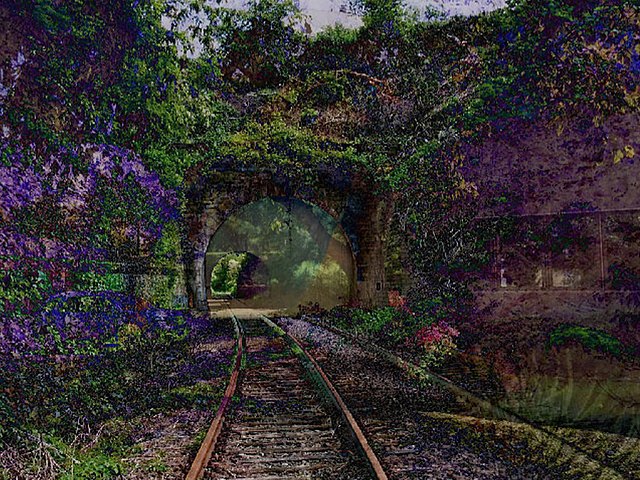
In what appears to be the first court opinion to weigh in on the copyrightability of AI-generated art, the District of D.C. has blessed the Copyright Office’s position to date: only works created by humans deserve protection under the U.S. Copyright Act. Thaler v. Perlumtter, Case No. 22-cv-1564 (D.D.C. Aug. 18, 2023).
As we discussed in a prior post, The Copyright Office issued guidance earlier this year in connection with attempted registration of a comic book entitled “Zarya of the Dawn.” Using a legal framework established by the 1884 U.S. Supreme Court case Burrow-Giles Lithographic Co. v. Sarony, the office refused registration of the portions of the comic book that were purely generated by AI. Unlike the creative choices a photographer made in Burrow-Giles, the Copyright Office concluded, generative AI is based purely on machine-generated outputs that are not controlled by the human user.
The same issue came up in Thaler, where the plaintiff sought to register for copyright protection a piece of visual art called “A Recent Entrance to Paradise” generated by an AI computer system called the “Creativity Machine:”
But in contrast to Zarya of the Dawn, which was a composite of human-generated and AI-generated material, Thaler’s “Creativity Machine” was the sole claimed author. (Even so, Thaler indicated that he was entitled to claim copyright, because “A Recent Entrance to Paradise” was a work-for-hire he commissioned through the Creativity Machine.)
On February 14, 2022, the Copyright Office issued a final refusal to register the work on the basis that it was not created by a human.
Thaler challenged the decision in district court under the Administrative Procedure Act, alleging that the Copyright Office’s decision was “arbitrary, capricious, an abuse of discretion, or otherwise not in accordance with the law.” Both parties moved for summary judgment.
Ultimately, the court affirmed the Copyright Office’s position that the although “[c]opyright is designed to adapt with the times… human creativity is the sine qua non at the core of copyrightability, even as that human creativity is channeled through new tools or into new media.” Citing to Burrow-Giles as well as to the famed “monkey selfie” case out of the Ninth Circuit, Naruto v. Slater, 888 F,3d 418 (9th Cir. 2018), the court concluded that the Copyright Act was designed to protect only humans.
At bottom, an “image autonomously generated by plaintiff’s computer system was never eligible for copyright,” the court held.