

Since the pandemic, legal marketing has become much more open to the changes brought by the digital world. Promoting legal businesses online using different tactics no longer raises objections from lawyers and attorneys unlike before.
But now that the legal industry has finally caught up with digital marketing, what are the potential changes in store for its future? And how should law firms like yours prepare for them? I’ve compiled marketing trends your law firm should watch out for to help it overcome the challenges they bring.
1. Building a Brand For Your Firm is Paramount
The continued rise of artificial intelligence (AI) has made building a brand much easier for law firms for the worse. LinkedIn has announced an AI tool similar to ChatGPT that allows users to generate text for their posts and grow their online visibility. While the idea has good intentions, it also puts brands at the risk of homogenization.
The widespread use of AI across all platforms (not just LinkedIn) makes content read and feel the same. This won’t normally happen if users make an effort to edit the generated text and impose their brand into it. But the ease of letting AI steer the wheel for them is too tempting and convenient, and those who fall into this trap simply cannot establish a law firm brand.
In this case, personalization is a crucial component for developing your brand. AI tools are designed to help communicate your law firm to your target audience much easier, not to replace your efforts altogether. So how do you do that?
E-E-A-T For Attorneys Grows in Importance
In search engine optimization (SEO), Google refers to E-E-A-T (experience, expertise, authority, and trust) as a component of its Search Quality Rater Guidelines. The more evident the E-E-A-T is on a brand or website, the higher its likelihood of ranking on search results.
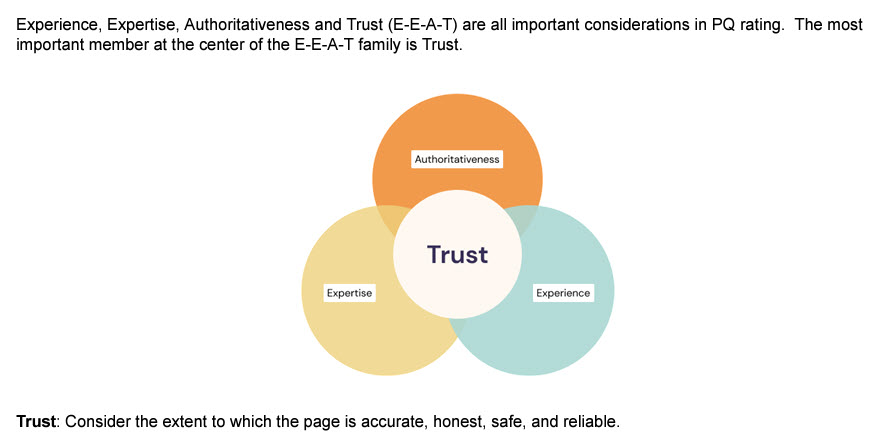
As a lawyer, you must use the experience and expertise acquired through the years to establish your online brand and reputation. While AI content becomes cheap and easy to produce, your first-hand experience in the legal industry becomes more valuable because it’s something that AI can never replicate.
You can observe E-E-A-T for your brand by publishing case studies, listing your awards and recognitions on your site’s About page, and getting more positive customer reviews, to name a few. Outside of SEO, take advantage of E-E-A-T by answering legal questions on social media and Q&A sites, attending bar association events, and applying for board membership in non-profit organizations (NGOs).
All these help you not only increase your visibility on search results. They also gain the trust of your target audience, turning you into their go-to source for legal counsel or their legal representative for their upcoming case.
2. Marketing is All Digital
Promoting your business requires a full-scale law firm marketing strategy. Traditional marketing tactics like event sponsorships (44%), print (24%), and direct mail (11%) are still some of the most effective techniques in getting more people to know about your brand, according to the American Bar Association’s 2023 Profile of the Legal Profession.
However, digital channels comprise most of the tactics legal businesses use to promote their business. LinkedIn (51%), email (40%), and Facebook (27%) help law firms connect with potential clients and generate more cases. Therefore, focusing on growing your engagement and lead generation on online platforms will be most beneficial for your business.
But before you launch a full-blown digital marketing strategy, you must set up a website, which will be the central online hub for your business. By designing a site that aligns with your brand and creating compelling content that resonate with your audience’s pain points, you strengthen the foundation of your online presence, from which your other channels will draw strength.
3. Increased Use of AI Tools to Automate Tedious Tasks
As mentioned, AI tools work best for developing and executing your marketing strategy.
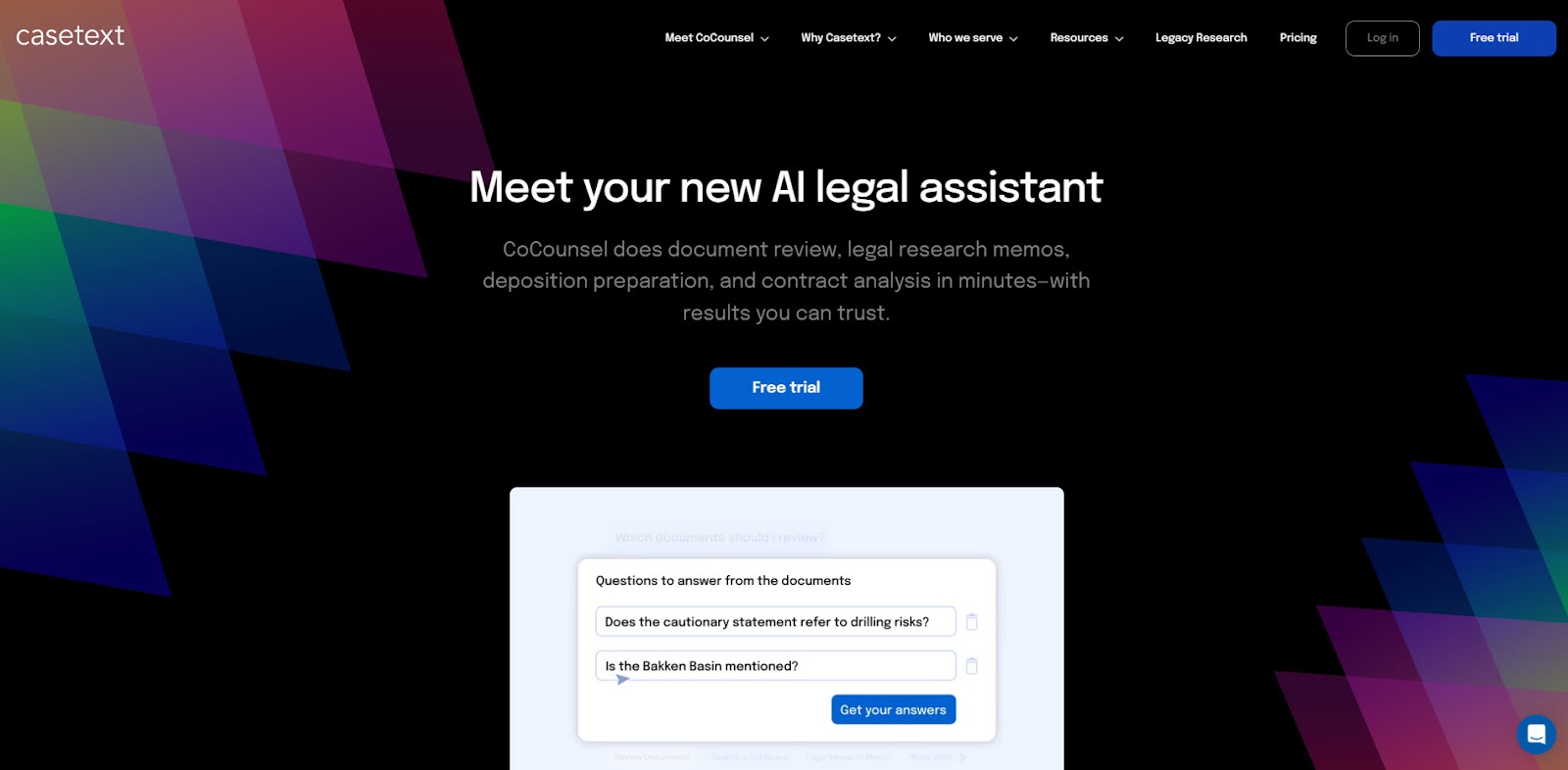
For instance, lawyers spend a fifth of their time at work (17%) on legal research, according to the same ABA survey above. But with an AI tool like CaseText, they can free up more time during the day to complete other important tasks for the case.
Despite AI’s benefits to your legal business, you must also know its drawbacks. Therefore, walking the tightrope concerning AI usage for your law firm will determine how efficient and productive your business will be moving forward.
4. SEO Will Still Power Lead Generation
There’s a reason why SEO in the legal industry is even more competitive now. For starters, the percentage of the population using search engines has grown from 43% in 2015 to 59.26% in 2022. The ever-growing percentage is also a testament to the quality of leads search engines generate for business. In particular, they have a 14.6% close rate compared to 1.7% from outbound marketing.
The key to generating high-quality leads from Google to your law firm website starts with keyword research. Find search queries people use to find your business and determine why people search for them–are they looking for answers to their questions or surveying different legal services? Then, develop a content creation campaign optimized for its keyword intent.
By providing content people want to see from the keyword they searched for, your firm can effectively bring them to your marketing funnel and eventually convert them into new clients.
5. Omni Channel Marketing
Remember that not one online channel can propel your law firm to marketing success. For instance, 11% of respondents in a survey by the American Bar Association don’t have a social media presence. However, only 24% of customers visited a company’s social media page before purchasing from said company.
This makes it the eighth most popular channel for converting prospects into customers, which is below visiting a company website (56%), receiving an email from the company (37%), and having an in-person interaction with the company’s sales rep (32%).
Therefore, launching a strategy that uses multiple marketing channels to engage with your target audience allows your law firm to land more cases. In this case, using webinars, email marketing, chatbots, video marketing, and content marketing on top of your social media marketing efforts helps increase your brand’s visibility and attract more highly qualified leads.
The beauty of an omnichannel approach in your marketing plan is scalability and iteration. You can monitor the results of your marketing campaigns and determine which ones you should focus on. This way, you can pour your resources into channels that produce the most leads and clients.
6. More B2B Partnerships
The rise of Search Generative Experience (SGE) provides instant, AI-generated answers to user’s search queries that appear on top of search results. While this innovation creates a great user experience, SGE can be bad news for your law firm’s organic traffic. It pushes down organic results, making your site pages much harder to see, which means reduced clicks and traffic.
Returning to omnichannel marketing, consider partnering up with relevant businesses for referrals. These can be a boon for your law firm if done correctly–there’s a 5x growth in revenue within two years if a B2B referral system is in place. This means incentivizing referrers, following up on referrals, and analyzing referral data, among others.

For instance, personal injury lawyers can partner with osteopathic and rehabilitation doctors whose patients may have legitimate personal injury claims. In this case, these doctors can refer them to these firms for potential legal action. You will then have to reward these doctors for every successful referral they make for their troubles.
Having this process in place allows your law firm to not depend solely on generating cases from organic search and expand your sources for new leads.
7. Integration of Content Authenticity Tech
56% of law firms with at least one lawyer are creating content for their law firm website, which is up from 40% in 2019. But thanks to tools like ChatGPT that make content creation even easier expect more law firms to develop and execute a content strategy for their sites.
However, too much dependence on AI in content creation may risk law firms deceiving their audience. Aside from generating robotic-sounding and impersonalized content, AI may sometimes hallucinate and produce inaccurate content, affecting your brand’s reputation and ability to establish thought leadership in your industry.
That’s why 60% of CMOs will put measures in place to prevent AI from producing deceptive content. One of these measures is content authenticity.
By tracking the content creation process using AI with features like stylometry in text and lens identification for photos and images, you can verify the authenticity of the content and protect your brand from proliferating incorrect information and stolen media.
8. A Mix of In-House Marketing Professionals and Outside Consultants
Having an in-house marketing team develop your strategies for you lets you save costs and maximize revenue. But if their campaign results reach a plateau and your business growth comes to a standstill, you must consider getting outside help.
This doesn’t mean you have an ineffective team, but freelance consultants gets to see your marketing performance with a fresh set of eyes. Their insights enables you and your team to see things you weren’t able to catch before. At best, hire a marketing agency to provide the strategy and campaigns your team must execute to help grow your law firm further.
Hire a Forward-Looking Marketing Partner
When it comes up to outside consultants, you can go wrong with On The Map Marketing. We have helped hundreds of law firms in various practice areas launch data-driven marketing campaigns that perform well in the digital age and beyond, resulting in more leads and clients. Reach out to us to learn how we can make this happen for your law firm.