

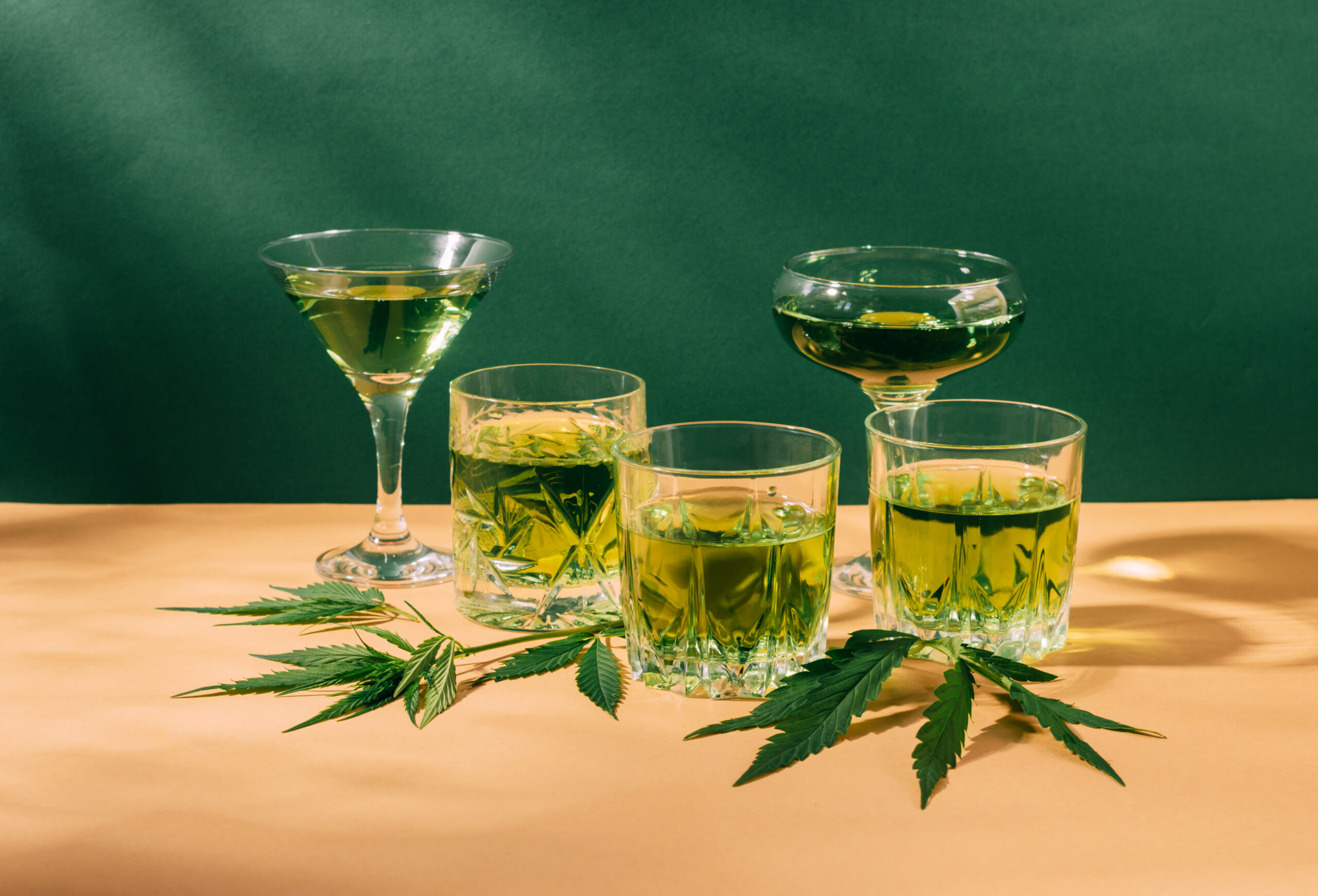
In November of last year, we wrote about how Total Wine & More jumped into the cannabis drinks arena in Minnesota. Since then (and probably before that), there’s been an influx of “THC Beverages” hitting the marketplace, and I don’t mean the state-licensed cannabis marketplace either. At this point, you can buy these drinks online or in person at a number of retail outlets and locations that don’t have any kind of state cannabis licensing at all (here’s one in Alabama, for example). How, you may be asking, is this legally possible and why are these libations picking up great speed with consumers?
Link to The “How” of THC Beverages The “How” of THC Beverages
A lot of these “THC beverages” fall into the hemp-derived cannabinoid category. It’s a little misleading this day and age due to state-by-state cannabis legalization, but almost all of these drinks are composed of cannabinoids that come from hemp rather than having heaps of Delta-9 THC infused into them. In turn, it’s not unusual to see a product labeled as a THC drink or THC-infused when it’s got hemp-derived CBD, Delta-8, Delta-10, or THCa as the main attraction.
Due to the passage of the 2018 Agricultural Improvement Act (the “Farm Bill“), hemp and all of its derivatives (containing no more than .3% THC) are no longer illegal schedule I controlled substances pursuant to the Controlled Substances Act (CSA) (even arguably if they contain other intoxicating cannabinoids). Note though that synthetically derived intoxicating cannabinoids remain illegal controlled substances on the CSA; we’re only addressing naturally occurring intoxicating cannabinoids. Right or wrong, the Farm Bill technically allows for hemp-derived intoxicating cannabinoids (HDICs) so long as the pre-harvest hemp contains less than .3% THC. As a result, enterprising hemp product makers and businesses quickly took advantage of this seeming oversight while states are just now playing catch up on the regulatory side. And some states are regulating these products while others aren’t doing anything. And some states are treating these HDICs as illegal substances anyway.
Link to Why Consumers Are Loving HDIC Drinks Why Consumers Are Loving HDIC Drinks
Our hypothesis (and we don’t think we’re alone in this) is that consumers are buying these “THC Beverages” in great volume for a few reasons:
- the hemp-derived cannabinoids with which they are infused are intoxicating (making Delta-9 THC products a bit of an after thought with this sector of consumers);
- it’s likely easier to nail the precise dosing of these HDICs through the beverage medium, giving consumers the mellow to ratcheted high they seek;
- these products can apparently move through interstate commerce without consequence (at least from the Feds and unless a state takes issue with enforcement (which they haven’t really so far except for Texas and the Carolinas very recently)); and
- they’re widely available (including via the internet) with an incredible amount of variety and effects. But it’s getting rockier for this segment of the industry when it comes to the states.
Link to Certain States Lean in While Others Try to Ban Certain States Lean in While Others Try to Ban
Interestingly, certain states (like Minnesota) decided to embrace the current status of HDICs by regulating them to a degree. And other states took the opposite approach by trying to ban the same (like California, Maryland, and Alaska), mainly because those states see these products as a public health and safety issue that are wholly unregulated by the federal government and in direct competition with the state-licensed cannabis industry. Certain states that banned these substances are now in litigation with hemp business plaintiffs and the results from courts have been somewhat mixed. There’s also healthy debate in legal and academic circles about whether these HDICs are an enemy of the state-licensed industry (and there’s been at least some legal challenges by state licensed cannabis companies against these HDIC operators). One thing is for sure though, and it’s that the overwhelming majority of businesses selling HDICs are doing so without the same state licensing red tape, draconian federal tax consequences, and inability to access banking like their struggling state-licensed cannabis brethren.
Link to The Future of “THC Beverages” The Future of “THC Beverages”
As states catch up to these issues of essentially unregulated HDICs, it appears that the middle ground will be state regulation to control them (Minnesota really is a fine example of how to proceed correctly here to avoid stakeholder litigation, comply with federal law, and still be business-friendly). In turn, states could end up forcing sellers of HDICs, including “THC Beverages”, to comply with the same rules as state-licensed cannabis businesses (Connecticut and Washington State are examples here). That will obviously make the prospect of undertaking one of these businesses less attractive. However, IRC 280E still won’t apply to them and they should still be able to secure a bank account (unless a state successfully bans the practice altogether).
Link to What To Do if You’re Contemplating Entry into the “THC Beverages” Space What To Do if You’re Contemplating Entry into the “THC Beverages” Space
First, understand that this a precarious legal area not without risk. States, on the whole, are not happy with the technicalities of the Farm Bill here, and enforcement in certain states could be aggressive and even lead to criminal prosecution, right or wrong. Second, pick your state of business wisely. Again, there are states that are completely hostile to HDICs and that’s unlikely to change. Similar to cannabis, you want to choose a state that has sensible regulation that won’t break the bank (state by state enforcement is the largest concern here given the technicalities of the Farm Bill). Third, you want to develop a compliance plan that takes into account current state regulation for HDICs while keeping an eye on future versions of the Farm Bill to see if HDICs go back on the CSA in some form. Fourth, do not ignore the Food and Drug Administration (FDA) and the Food, Drug & Cosmetic Act. Just because HDICs aren’t regulated under the Farm Bill doesn’t mean you have free to reign to say or put just anything on or in the final product (in fact, the FDA has already started to go after businesses selling products with Delta-8 for containing unsafe food additives and/or being manufactured to be attractive to children). Fifth, make sure all of your commercial agreements are sensitive to this evolving area of law and regulation–your normal boilerplate won’t cut it on issues of representations, warranties, indemnities, and compliance burdens between parties.
Link to Contact us Contact us
Husch Blackwell’s Cannabis team has the experience to assist companies in navigating the complex and evolving federal legal landscape surrounding the cannabis industry. Contact Hilary Bricken, Brent Salmons, or your Husch Blackwell attorney.