

When people think of domestic abuse, physical violence often comes to mind first—bruises, broken bones, and clear-cut evidence of harm. However, domestic abuse is far more insidious, encompassing a range of behaviors designed to exert control over another person. The Domestic Abuse Project (DAP) of Minnesota, in collaboration with practitioners and survivors, played a pivotal role in identifying these dynamics. One of their most impactful contributions is the Power and Control Wheel, a tool that has transformed how professionals and survivors alike understand abuse.
First developed in the 1980s by the Domestic Abuse Intervention Project (DAIP) in Duluth, Minnesota, the Power and Control Wheel was based on interviews with survivors and remains one of the most widely used frameworks in domestic violence education today. It highlights that abuse is not just about physical and sexual violence but includes emotional, financial, and psychological manipulation that traps victims in a cycle of fear and dependency.
Link to Understanding the Power and Control Wheel Understanding the Power and Control Wheel
The Power and Control Wheel serves as a visual representation of abusive tactics beyond physical and sexual violence. While these two forms of abuse often accompany other tactics, they are usually part of a larger pattern of domination and coercion.
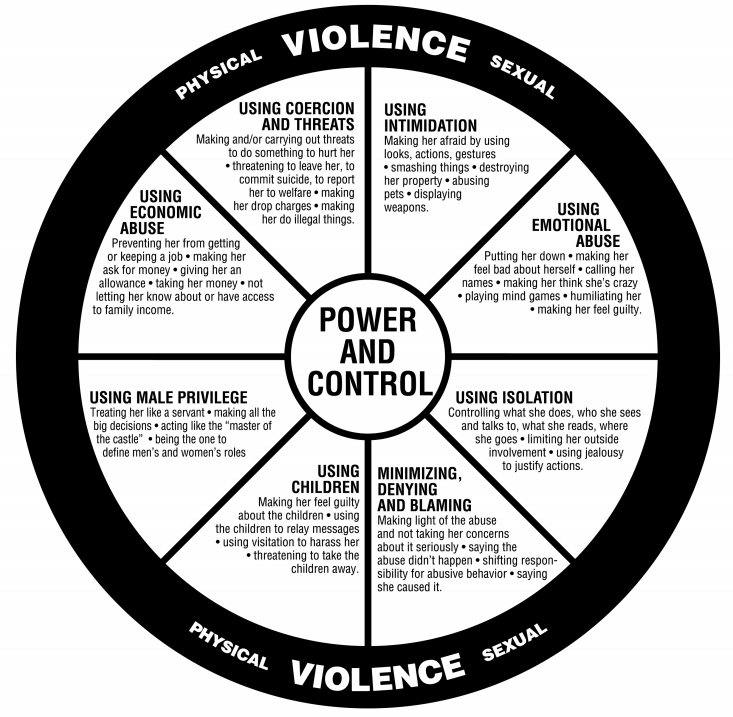
The wheel is divided into several sections, each representing a different method of exerting power over a victim.
Link to 1. Using Intimidation 1. Using Intimidation
Abusers use intimidation to instill fear and compliance. This can include:
- Destruction of property
- Displaying weapons
- Threatening body language
- Stalking or monitoring behavior
- Harassing phone calls or messages
Even if no physical harm occurs, the constant threat of violence keeps the victim controlled, making them less likely to resist or leave.
Link to 2. Emotional Abuse 2. Emotional Abuse
Emotional abuse erodes a victim’s self-worth, making them feel worthless, unlovable, or incapable of escaping. Common tactics include:
- Name-calling and insults
- Humiliation, especially in front of others
- Gaslighting (manipulating reality to make the victim doubt their own perception)
- Making the victim feel guilty for things beyond their control
- Extreme jealousy and possessiveness
This form of abuse is particularly damaging because it breaks down the victim’s confidence, making them dependent on their abuser for validation and security.
Link to 3. Isolation 3. Isolation
One of the most effective tools of an abuser is cutting the victim off from support systems such as friends, family, and colleagues. This can happen through:
- Restricting communication or movement
- Moving to a remote location to limit outside contact
Isolation makes it harder for victims to seek help or recognize that they are in an abusive relationship.
Link to 4. Minimizing, Denying, and Blaming 4. Minimizing, Denying, and Blaming
Abusers often refuse to take responsibility for their actions, instead shifting blame onto the victim. This includes:
- Denying that the abuse happened
- Making light of violent or controlling behavior
- Accusing the victim of exaggerating or overreacting
- Blaming the victim for the abuse (e.g., “You made me do this”)
By distorting reality, abusers keep their victims trapped in a cycle of self-doubt and confusion, making it harder for them to leave.
Link to 5. Using Children 5. Using Children
Children are often used as emotional leverage in abusive relationships. This can take many forms, such as:
- Threatening to take the children away
- Undermining the victim’s parenting
- Using visitation to harass the victim
- Forcing children to take sides
This manipulation can have long-lasting effects on both the survivor and the children, creating a toxic environment of fear and instability.
Link to 6. Economic Abuse 6. Economic Abuse
Financial dependency is a powerful way to trap a victim in an abusive relationship. Abusers may:
- Prevent the victim from working or pursuing education
- Control all financial resources
- Give an “allowance” and monitor spending
- Accumulate debt in the victim’s name
Without financial independence, leaving an abuser becomes significantly more challenging.
Link to 7. Using Male Privilege (or Gender-Based Control) 7. Using Male Privilege (or Gender-Based Control)
The Power and Control Wheel was originally developed based on heterosexual relationships, where traditional gender roles often reinforced abuse. This section includes:
- Treating the victim like a servant
- Making all major decisions unilaterally
- Defining gender roles in a way that limits the victim’s autonomy
While this framework is not exclusive to male perpetrators or female victims, gendered expectations often reinforce abusive dynamics.
Link to 8. Using Coercion and Threats 8. Using Coercion and Threats
Finally, abusers use threats to maintain dominance, including:
- Threatening harm to the victim, children, or pets
- Threatening suicide to manipulate the victim into staying
- Coercing the victim into illegal activity
- Forcing the victim into sex or unwanted physical interactions
These threats create a climate of fear, making resistance seem impossible.
Link to The Power and Control Wheel’s Lasting Impact The Power and Control Wheel’s Lasting Impact
Since its creation, the Power and Control Wheel has been widely used by advocates, law enforcement, therapists, and educators to help explain the complexity of domestic abuse. It has also been adapted for different populations, including:
- LGBTQ+ relationships
- Elder abuse
- Immigrant and refugee survivors
- Teen dating violence
Its continued relevance underscores the importance of understanding domestic violence beyond physical and sexual abuse—it’s about power, control, and the systematic dismantling of a person’s autonomy.
Link to Why This Matters Why This Matters
For those experiencing abuse, recognizing these patterns is often the first step toward seeking help. Many survivors may not initially realize they are in an abusive relationship because they associate domestic violence solely with physical harm. The Power and Control Wheel provides clarity, naming behaviors that survivors may have normalized over time.
For professionals and advocates, this tool remains invaluable in intervention, education, and prevention efforts. By addressing these non-physical forms of abuse, we can help survivors break free and regain control over their lives.
Link to Resources for Help Resources for Help
If you or someone you know is experiencing abuse, there are resources available:
- Domestic Abuse Project of Minnesota (DAP) – www.domesticabuseproject.com
- National Domestic Violence Hotline – Call 800-799-SAFE (7233) or text “START” to 88788
- The Minnesota Coalition for Battered Women (MCBW) – www.mcbw.org
- Local Shelters and Support Groups – Many communities have organizations offering shelter, counseling, and legal advocacy.
The Power and Control Wheel has stood the test of time as a crucial tool in understanding the full spectrum of domestic abuse. By recognizing that abuse extends far beyond physical and sexual violence, we can better support survivors, educate the public, and ultimately work toward a future where power and control have no place in relationships.
If you found this article helpful, consider sharing it to raise awareness. Domestic abuse thrives in silence—but knowledge and support can break the cycle.