
The Seoul Administrative Court (2024GuHap3647) held that a manufacturing company’s payment of special allowances (bonus-like payments) to non-striking employees is not an unfair trade practice under Korea’s Trade Union and Labor Relations Adjustment Act. The decision overturned a retrial ruling by the Korean Central Labor Relations Commission. For addtional articles on Korean Employment Law, see: IPG Legal’s Employment & Labor Law Archive.
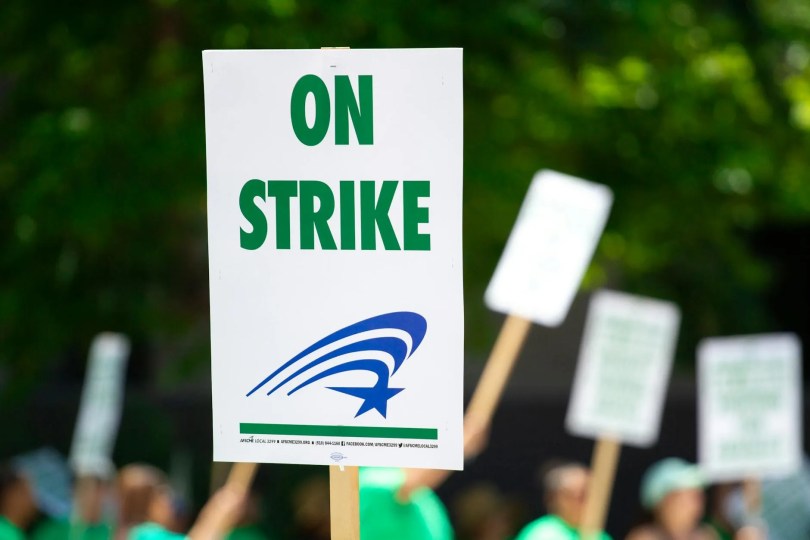
Bonuses Paid to Non-Stricking Workers Not Deemed Union Busting by Seoul Admin Court
Facts
- Company’s union engaged in a strike. Not all workers joined the strike.
- Company classified non-striking workers into six categories and claimed to pay overtime and special, since employees were working more hours and had increased job duties.
- The Union and Striking Workers claimed these special bonus-like payments constituted an unfair labor practice, since the actions were alleged to discourage union activity and thus was union interference and/or a union busting activity.
- The Stricking Workers filed a lawsuit to Ulsan Regional Labor Relations Commission. The Commission found “type 4 workers” received illegal allowances, noting only minimal changes in work location and work intensity and, thus, the intent was likely to interfere with the Union’s strike.
- Company filed a rehearing (appeal) to the Central Labor Relations Commission noting that Type 4 workers had also experienced a substantial increase in workload. The appeal was dismissed and Company appealed to the Seoul Administrative Court.
Seoul Administrative Court’s Decision
The Seoul Administrative Court overturned the Korean Central Labor Relations Commission’s ruling and held that the special allowances paid to Type 4 workers were justified and lawful. The Court noted, in short, that: “It is insufficient to view this as an attempt to induce non-participation in the strike or as a promise of unfair benefits to workers who did not participate. . .There appears to be no element that could undermine the union’s autonomy,” and no evidence exists to conclude that Company had an “intention to dominate or interfere with the Union.”
The Court determined that the allowances did not amount to an unfair labor practice, emphasizing several key findings:
1. Type 4 Workers experienced a significant increase in work “intensity.”
2. Inexperienced replacement workers led to additional work, burden and strees for the Type-4 Workers.
3. Allowances were inline wuth Korean Labor Standards Act Norms and Principles (Not Excessive Compensation).
4. No demonstrable evidence existed establishing a violation of law.
Key Takeaways for Employers in Korea
- Compensation for increased workload during a strike is permissible, provided it reflects actual work intensity or additional work and no evidence exists to indicated the additonal payments were motivated by an anti-union intent.
- Courts shall examine objective work conditions, including shift adjustments, increased hours, and the practical burden placed on workers.
- Employers should ensure that any additional payments:
- are documented,
- follow consistent standards,
- are not exessive; and
- are based on legitimate operational needs.
IPG Legal Law Firm’s Korean Employment, Labor & Compensation Team
IPG Legal’s Employment, Labor & Compensation Practice Team is recognized as one of Korea’s leading labor law groups for advising both multinational companies and executives on complex labor, employment, and executive compensation matters. The team of lawyers provides comprehensive Korean legal services covering Korean employment contracts, workplace policies, disciplinary actions, collective bargaining, terminations, wage and working hour compliance, and employment disputes before Korean courts and administrative agencies. With extensive experience representing foreign employers and senior executives, IPG Legal’s lawyers deliver pragmatic, risk-focused guidance tailored to Korea’s rapidly evolving labor environment.