
In a ruling that is important for technology companies, multinational employers, and cross-border R&D stakeholders, the Supreme Court of Korea (Third Criminal Division, January 15, 2025, 2025Do13231) held that the crimes of acquiring, using, and disclosing trade secrets under the Unfair Competition Prevention and Trade Secret Protection Act of Korea must be independently examined rather than analysed as a single course of conduct.
This decision, arising from a high-profile semiconductor trade secret case involving a former Samsung Electronics executive and the alleged leakage of 18nm DRAM process technology to a Chinese semiconductor company, signals a stricter approach by Korean courts. For foreign-invested companies, technology ventures, and executives operating in Korea’s advanced manufacturing sectors, this ruling materially alters litigation strategy, compliance structuring, and risk exposure.
The present ruling reflects the present Korean Supreme Court’s continuing trend toward heightened protection of national core technologies.
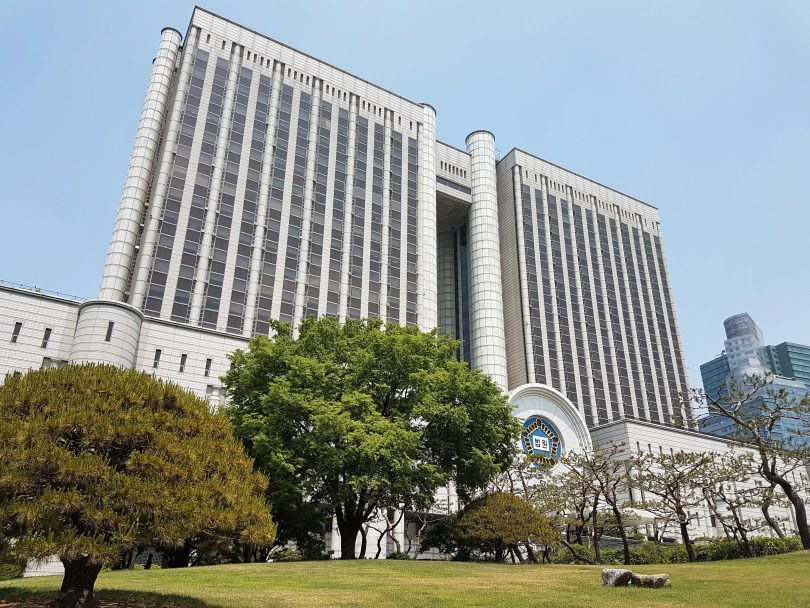
Leakage of National Core Semiconductor Technology to a Chinese Company
- The defendants were indicted in December 2023 for unlawfully leaking Samsung Electronics’ 18nm DRAM semiconductor process information, which was classified as a key national technology. The leaked information was allegedly utilized in product development by Changxin Memory Technology (CXMT), a Chinese semiconductor manufacturer.
- A co-defendant was further accused of conspiring in 2022 to leak semiconductor equipment design technology belonging to a partner company affiliated with Samsung Electronics.
- The prosecution’s theory was grounded not only in traditional trade secret misappropriation, but also in the strategic transfer of high-value industrial technology across borders – an issue that Korean courts have increasingly treated as implicating national economic security interests.
Lower Court Holdings: A Narrow View of “Disclosure” and “Acquisition”
Court of First Instance
- The court of first instance sentenced the primary defendant to seven years’ imprisonment and a KRW 200 million fine, while another defendant received two years and six monthsimprisonment.
- The court acquitted the defendants on certain counts relating to the acquisition and disclosure of trade secrets. The court noted that:
- The exchange of data between accomplices was characterized as internal sharing for mutual use
- The court concluded that such exchange did not amount to disclosure to a “third party”
- It also declined to recognize independent acquisition where the trade secrets were already circulating within the conspiratorial group
This interpretation effectively treated acquisition, use, and disclosure as part of a single integrated conduct.
Korean Appellate Court
The appellate court reduced the principal sentence to six years while maintaining the fine. It also gave weight to mitigating circumstances, including employment abroad following termination and alleged livelihood concerns.
The appellate court upheld the acquittal on several trade secret acquisition and disclosure counts, thereby affirming the lower court’s interpretation of the offenses.
Korean Supreme Court’s Holding
The Supreme Court of Korea overturned the acquittal portions and remanded the case to the Seoul High Court, emphasizing a doctrinally critical point:
The crimes of acquiring, using, and disclosing trade secrets are legally distinct offenses and must be examined separately under the Unfair Competition Prevention Act.
The Court opined that:
- Acquisition of trade secrets can constitute a standalone offense
- Use of trade secrets is independently punishable
- Disclosure of trade secrets is not legally subsumed into use or acquisition
- Each act must be evaluated based on its own elements and intent
This approach aligns Korean jurisprudence more closely with a granular interpretation of intellectual property crimes, particularly in technologically sensitive industries.
Attempted Use vs. Completed Offense
A particularly nuanced aspect of the ruling concerns the legal treatment of attempted violations under Article 18 of the UCPA.
The Supreme Court of Korea noted:
- If trade secrets are exchanged, and the actor proceeds toward use but the use is not fully realized, the offense may constitute an attempted crime
- Attempted violations can result in reduced sentencing under general criminal law principles
- However, mere sharing of trade secrets without a conspiracy to use does not automatically qualify for mitigation
This reasoning directly addresses a potential sentencing issue. The Court expressed concern that a doctrinal framework treating all acts as incomplete or preparatory could result in lighter penalties for those who actively initiate industrial espionage schemes. From a compliance standpoint, this signals that even preparatory conduct involving strategic technology transfer may trigger criminal liability, regardless of whether commercial utilization is ultimately completed.
Implications for Multinational Corporations and Executives
1. Heightened Risk in Cross-Border Employment Transitions
The case underscores a growing enforcement trend in Korea: scrutiny of engineers and executives who transition to foreign competitors, particularly in semiconductors, batteries, and AI-related industries. Employment abroad, even for personal or economic reasons, is unlikely to mitigate liability where trade secret transfer is alleged.
2. Internal Data Sharing is No Longer a Safe Harbor
The lower courts’ logic that intra-group sharing does not constitute disclosure has been effectively overturned. Companies must now assume that:
- Sharing trade secrets among collaborators can independently satisfy disclosure elements
- Possession and transmission within a conspiratorial structure may still constitute “acquisition”
This is particularly relevant for joint ventures, research consortia, and partner ecosystems.
3. Expanded Prosecutorial Leverage
By recognizing independent crimes for acquisition, use, and disclosure, prosecutors can now pursue cumulative charges rather than a single bundled offense. This increases:
- Potential sentencing exposure
- Negotiation pressure in criminal proceedings
- Corporate investigation complexity
National Core Technology and Policy Context
This ruling cannot be viewed in isolation. Korea has systematically strengthened protection of “national core technologies,” especially in semiconductors. Courts in Korea have increasingly framed trade secret violations not merely as private economic harm, but as conduct affecting national industrial competitiveness.
Where national core technology is involved, sentencing trends demonstrate:
- Reduced tolerance for mitigation arguments
- Longer prison sentences
- Aggressive prosecutorial posture
Foreign companies recruiting Korean engineers in high-tech sectors should treat this as a high-risk legal environment.
IPG Legal Analysis
From a legal risk management perspective, the Korean Supreme Court’s ruling represents a structural shift rather than a narrow case-specific correction. The decision signals that Korean courts will no longer permit defense strategies that lump acquisition, use, and disclosure into a single evidentiary narrative.
For corporate counsel and compliance officers, this means internal investigations must separately analyze:
- How the data was obtained
- Whether it was accessed or retained unlawfully
- Whether any transmission occurred
- Whether actual or attempted use can be demonstrated
Failure to compartmentalize these elements may expose both individuals and corporations to layered criminal liability under the UCPA.
IPG Legal’s Compliance Recommendations
Companies operating in Korea – especially in technology, manufacturing, and R&D should immediately reassess:
- Trade secret access control systems
- Employee exit protocols
- Cross-border hiring due diligence
- Data logging and forensic traceability
- Partner and subcontractor confidentiality governance
In the post-2025 enforcement environment, weak governance over technical data flows is increasingly treated by regulators and courts in Korea as a substantive compliance failure rather than a mere internal management issue.
Conclusion
The Supreme Court’s remand in Case 2025Do13231 establishes a clear doctrinal rule: acquisition, use, and disclosure of trade secrets are not interchangeable legal concepts but independently punishable criminal acts under Korean law.
For technology companies and multinational employers, the ruling significantly elevates legal exposure in trade secret disputes in Korea, particularly those involving cross-border technology transfer and national core technologies. The decision also reflects Korea’s broader policy direction – the aggressive protection of strategic industrial assets through criminal courts.
About IPG Legal
IPG Legal is a leading international law firm focused on cross-border legal matters involving Korea, including trade secret disputes, employment law, corporate investigations, data protection, and regulatory compliance. The firm regularly advises multinational corporations, foreign investors, and executives navigating complex Korean legal and regulatory frameworks, particularly in high-risk sectors such as technology, manufacturing, and international business operations.
About Sean Hayes
Sean Hayes has extensive experience advising foreign companies, executives, and investors on Korean legal risk, corporate governance, employment disputes, and regulatory compliance. A former law professor, former Korean government officer, and seasoned international lawyer, he has represented clients in complex cross-border matters involving trade secrets, labor issues, and corporate liability, and is widely recognized for his practical, business-oriented approach to Korean legal strategy.
Sean’s profile may be found at Sean C. Hayes. To schedule a call with Sean Hayes, please click: Schedule a Call with Sean Hayes. Media inquiries welcomed.