

The Supreme Court of Korea ruled that Hanwha Ocean (formerly Daewoo Shipbuilding & Marine Engineering)’s performance-based bonuses should not be considered wages for the calculation of severance payments under Korean Law. For additional articles on Korean Employment & Labor Law, see: IPG Legal’s Labor & Employment Law Archive
On March 12, 2026, the Korean Supreme Court (2025da210219) upheld a lower court’s ruling in favor of the defendants in a lawsuit filed by 972 current and former Hanwha Ocean employees seeking severance pay based not only on salary but also on performance-based bonuses.
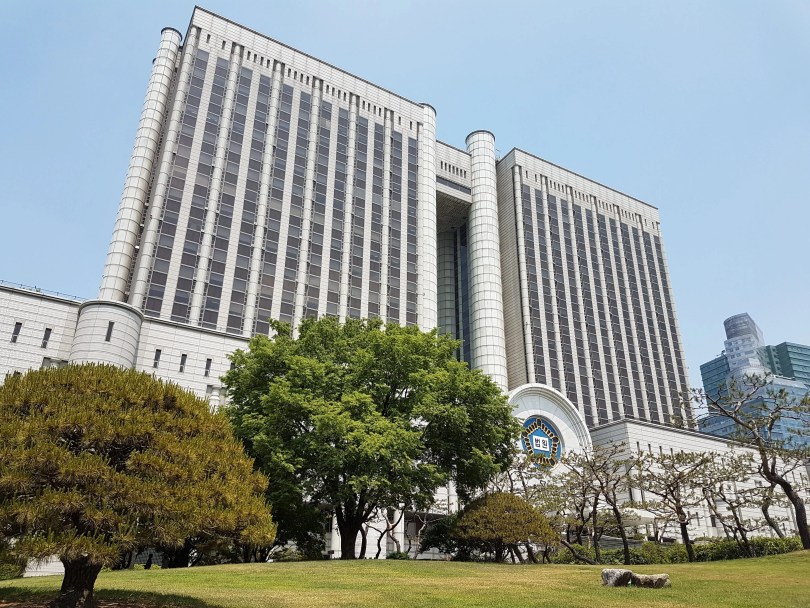
Calculation of Severance Payments Based on Performance-Based Bonuses
Facts
- Hanwha Ocean paid “performance-based bonuses” from 2001 to 2014 and “performance-based compensation” from 2018 to 2020.
- Hanwha Ocean excluded performance bonuses in the “average wage calculation” utilized for severance pay and interim severance pay purposes.
- The plaintiffs objected to the calculation and filed a lawsuit in December 2021.
- The court of first instance dismissed the plaintiffs’ complaint, ruling that the performance bonus was merely a distribution of business profits and not closely related to the provision of labor. The appeals court upheld the decision.
Korean Supreme Court
The Supreme Court of Korea dismissed the plaintiffs’ appeal and upheld the original court’s (appellate) judgment. The Supreme Court ruled, “The performance-based pay in this case is based on financial indicators such as operating profit or current profit, making it difficult to view it as related to the labor provided. Therefore, the performance-based pay cannot be considered a wage that serves as the basis for calculating average wages.”
IPG Legal Commentary
IPG Legal notes that the decision reinforces the Korean courts’ consistent distinction between wages directly tied to the provision of labor and profit-sharing or management-determined incentive payments. Under Korean labor law, severance pay is calculated based on an employee’s average wage, which generally includes remuneration paid in return for work performed on a regular and predictable basis. Payments that depend primarily on a company’s financial performance, such as operating profit or net income, are more likely to be characterized as profit distributions rather than wages.
The Korean Supreme Court’s ruling confirms that where performance-based bonuses are contingent on corporate profitability rather than individual or fixed labor contributions, they may be excluded from the average wage calculation used for severance pay. For employers, the judgment underscores the importance of clearly structuring and documenting bonus schemes, particularly by defining their basis (e.g., corporate financial indicators) and discretionary nature.
At the same time, IPG Legal cautions that not all bonuses will be treated the same way. In prior Korean cases, courts have included certain bonuses in the average wage calculation where they were paid regularly, uniformly, and as compensation for labor. As a result, companies operating in Korea should carefully review compensation policies and bonus structures to ensure they align with current Korean jurisprudence and minimize the risk of future severance disputes.
by Sean Hayes
Sean’s profile may be found at: Sean C. Hayes. If you would like a consultation with an attorney, please Schedule a Call.