

Your divorce page reads like a law review article. Your criminal defense content explains procedural nuances with footnoted case citations. Your personal injury practice area page assumes readers understand tort law terminology.
This is all wrong.
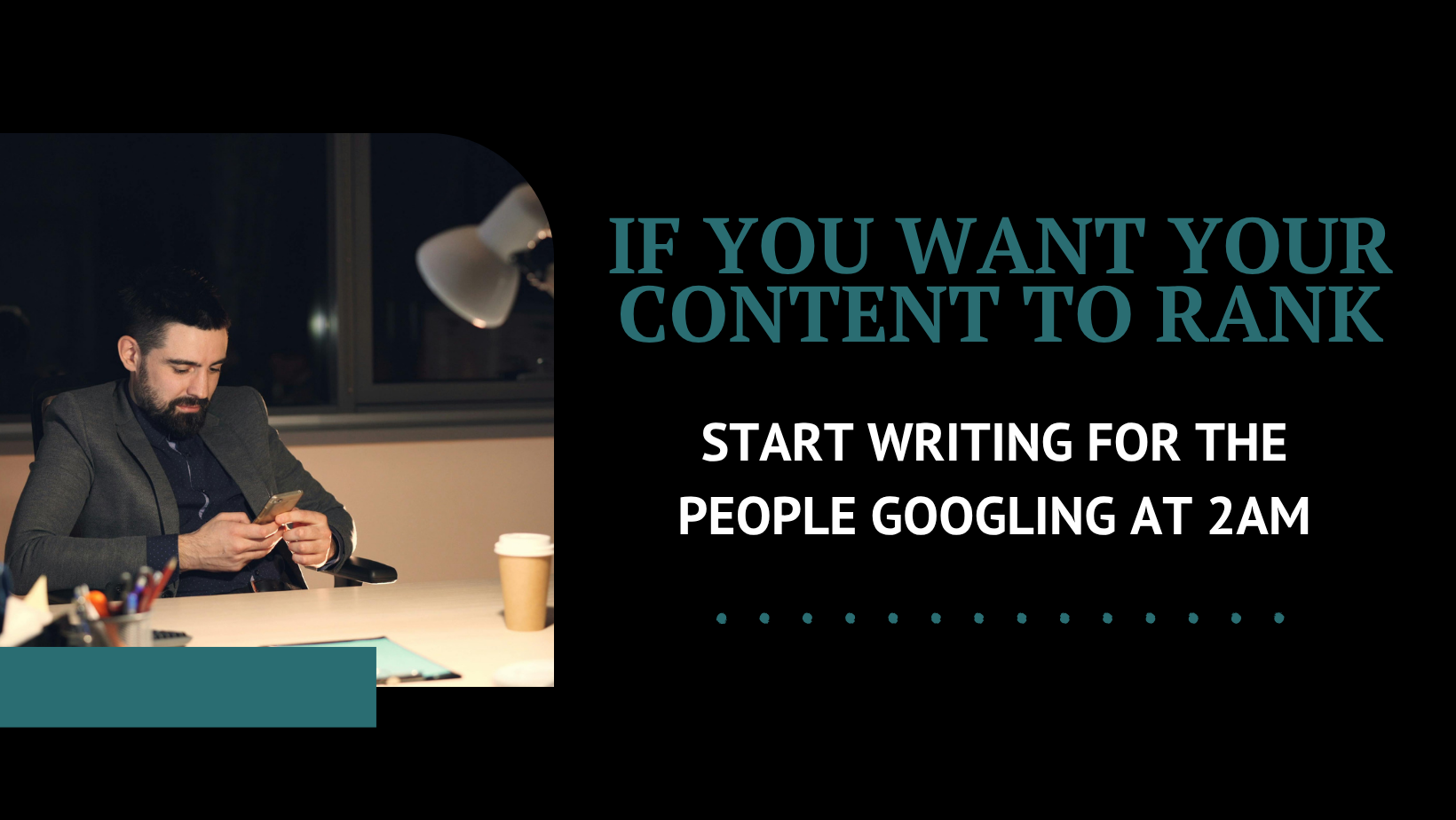
Your prospects aren’t reading at 9 AM from their office desks. They’re reading at 2 AM on their phones, scared and confused about what’s happening to their lives. Research shows over half of US adults read at an 8th-grade level or below, and web users spend an average of six seconds looking at written content. Your attorney-written content is losing clients before they finish the first paragraph.
Link to Who’s Actually Reading Your Website? Who’s Actually Reading Your Website?
She’s searching “can my ex take my kids” at midnight after an argument. He’s Googling “arrested for DUI what happens next” from a holding cell bathroom. They’re reading on cracked phone screens, distracted, emotionally overwhelmed, and scanning for one thing: does this lawyer understand what I’m going through?
Studies consistently show that nearly half of people experiencing civil legal problems report stress-related illness or other negative health consequences. Your website visitors aren’t calmly evaluating legal strategy, they’re in crisis mode looking for someone who gets it.
Your competition is writing the same technical content you are. The firms winning are the ones writing for the actual humans in actual distress who land on their pages. Nielsen Norman Group research confirms that even highly educated audiences benefit from simpler language and clearer structure, readability isn’t about intelligence, it’s about cognitive load during stress.
Link to What Attorney-Written Content Gets Wrong What Attorney-Written Content Gets Wrong
Most lawyers write legal content the way they write briefs. Research shows this creates a major readability problem: legal writing averages a college reading level or higher, while effective web content should target 8th-grade readability.
Here’s what attorney-written content typically does wrong:
- Uses legal terminology without explanation – “subpoena,” “discovery,” “motion to dismiss” mean nothing to civilians
- Buries the answer – putting background before practical guidance when users need answers immediately
- Writes in passive voice – “it has been determined” instead of “the judge decided”
- Creates walls of text – dense paragraphs that mobile users can’t scan
- Assumes legal literacy – explaining procedure without explaining why it matters to the reader’s life
The attorney writing your content knows custody law inside out, which is exactly why they can’t write effective client-facing content. They’ve lost the ability to remember what it felt like not to understand these concepts.
Link to Write Like You’re Explaining to Your Scared Neighbor Write Like You’re Explaining to Your Scared Neighbor
The best legal content sounds like an experienced attorney explaining things clearly at a kitchen table. Not dumbed down—just human. Web Content Accessibility Guidelines note that clear, accessible writing benefits everyone, especially users under stress or with cognitive differences.
Here’s the framework that works:
Link to Lead With What They’re Feeling Lead With What They’re Feeling
Start by acknowledging their emotional state, not with legal definitions. “Divorce is overwhelming” connects better than “Colorado is an equitable distribution state.” Show them you understand their situation before explaining the law.
Link to Use “You” and “We” Language Use “You” and “We” Language
Write as the firm speaking to the client. “We help Denver families navigate custody disputes” feels warmer than “This firm provides representation in custody matters.” Make it conversational, like you’re sitting across from them.
Link to Answer the Obvious Questions First Answer the Obvious Questions First
What happens next? How long does this take? What does this cost? These aren’t the most legally sophisticated questions, but they’re what your prospects need to know before they’ll read anything else.
Link to Keep Paragraphs Punchy Keep Paragraphs Punchy
Web users scan in an F-pattern, spending 74% of their time in the first two screenfuls of content. Two to four sentences per paragraph. Headers every 150-200 words. Bullets for lists. Make scanning effortless.
Link to Explain Legal Terms Immediately Explain Legal Terms Immediately
If you must use legal terminology, define it in the same sentence. “Mediation—where you and your spouse work with a neutral third party to reach agreements—typically costs less than litigation.” Don’t make them guess or Google.
Link to The Structure That Converts The Structure That Converts
Effective legal content follows a predictable pattern that respects how scared people actually read. Open with empathy showing you understand their situation. Follow with clear explanation of what the legal process actually looks like—steps, timeline, what to expect. Close with specific next steps and easy contact options.
Your call-to-action shouldn’t be buried in the footer. Give them multiple ways to connect throughout the content, phone numbers, “contact us online” links, chat options. Users make decisions about websites in fractions of a second, so remove every barrier between “I need help” and “I’m contacting this firm.”
Link to Test Your Content’s Readability Test Your Content’s Readability
Free tools like Hemingway Editor will score your content’s reading level immediately. Paste in your practice area pages and see what grade level they hit. If you’re above 8th grade, simplify. Cut long sentences. Replace legal jargon. Break up paragraphs.
Or if you’d rather hand it off to specialists, Lexicon Legal Content writes law firm content at the right reading level from the start.
This isn’t about writing down to your audience, it’s about respecting that they’re reading under stress on small screens while emotionally overwhelmed. Even your smartest potential clients benefit from clarity during a crisis.
Link to Stop Sounding Like a Lawyer, Start Sounding Human Stop Sounding Like a Lawyer, Start Sounding Human
The firms dominating local search aren’t winning because they have better SEO. They’re winning because someone reading at 2 AM on their phone actually understands what they’re saying and feels like this lawyer gets their situation.
Stop writing for other lawyers. Stop trying to sound impressively legal. Write for the scared person Googling from their car, the confused parent researching from their kid’s bedroom, the overwhelmed defendant searching from a holding cell bathroom. That’s your client. Write for them.