

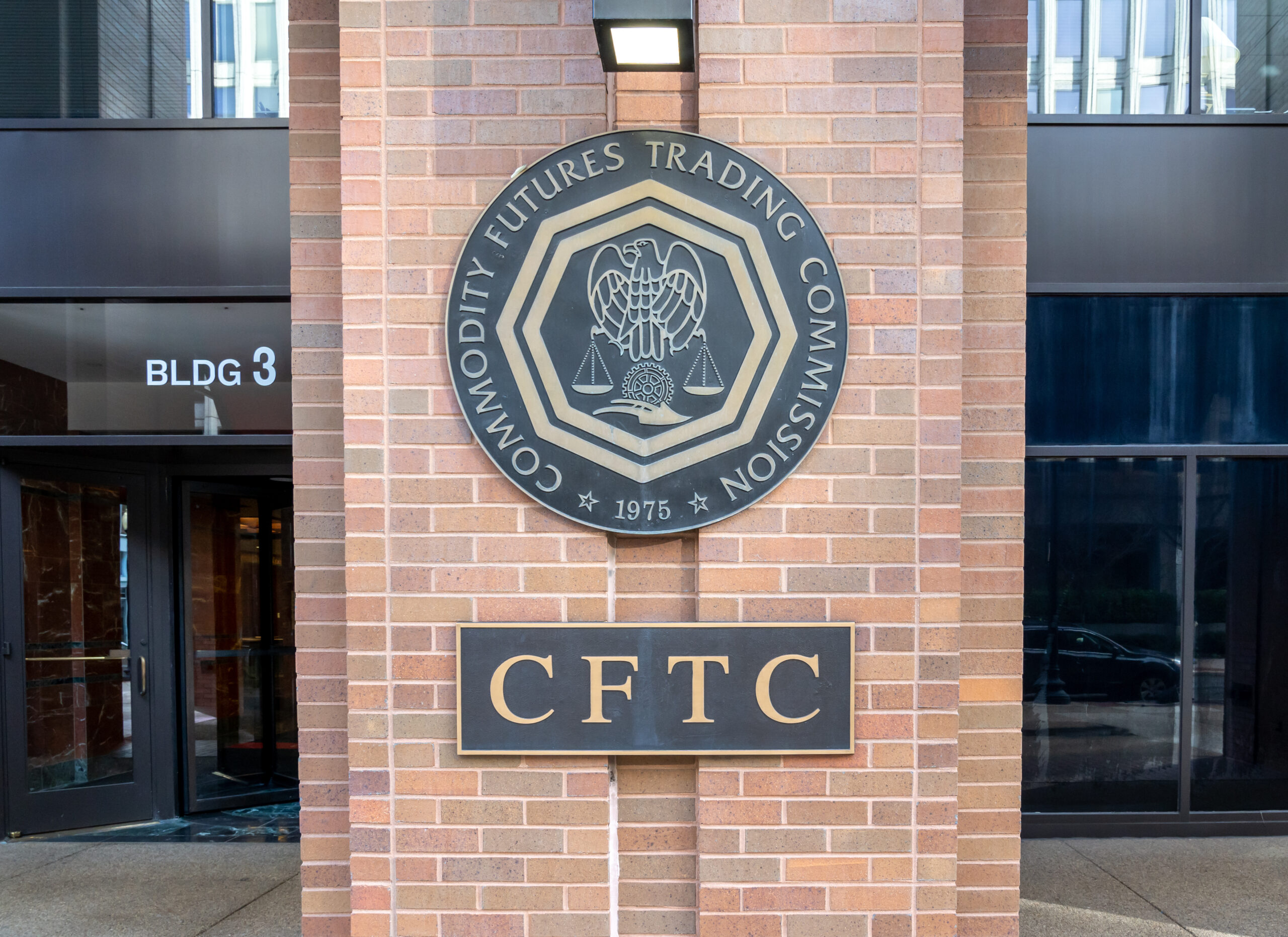
Amid recent high-profile incidents of suspicious activity on prediction markets, as well as pressure from Congress, the CFTC has signaled in unmistakable terms that prediction markets are squarely within its enforcement crosshairs and that it will use every tool at its disposal—including artificial intelligence surveillance.
Congressional Pressure: The Comer Investigation
On May 22, 2026, the House Committee on Oversight and Government Reform Chairman James Comer opened an investigation into how users of prediction market platforms potentially use nonpublic information to engage in insider trading.
The Committee requested documents and information from the platforms to better understand how they implement identity verification for domestic and international account holders, enforce geographic restrictions, and detect anomalous trading activity to prevent insider trading across their global platforms.
The Committee’s letters to prediction markets requesting granular disclosures about know-your-customer (KYC) protocols, geo-fencing enforcement, and algorithmic detection capabilities have put every prediction market operator on notice: the era of hands-off oversight is over.
The investigation was not launched in a vacuum. According to a recent New York Times investigation cited in the Committee’s letter, more than 80 Polymarket users placed suspiciously timed bets, including wagers made hours before undisclosed U.S. and Israeli military operations against Iran, raising concerns that users were misusing nonpublic information.
In addition, recent high-profile cases have increased the scrutiny on the use of nonpublic information by users in prediction markets. Gannon Ken Van Dyke, a U.S. Army soldier, was charged for an alleged scheme in which he used sensitive classified information to make wagers on Polymarket related to United States Military action in Venezuela. He allegedly bet approximately $33,034 across 13 trades while in possession of classified nonpublic information about Operation Absolute Resolve, ultimately profiting approximately $409,881. Following his successful trading, Van Dyke allegedly attempted to conceal his identity by sending proceeds to a foreign cryptocurrency vault and asking Polymarket to delete his account under a false pretext.
In another recent case, Michele Spagnuolo, a Google engineer, was charged for allegedly breaking insider trading laws because of several bets he placed through Polymarket. Spagnuolo allegedly used information he had early access to through his work at Google to make bets that saw him accumulate $1.2 million in winnings. According to the government’s allegations, the FBI linked his multiple pseudonymous accounts by tracing one he had opened using an Italian identification card.
The CFTC’s AI Surveillance Toolkit
The CFTC’s enforcement posture has shifted markedly under Chairman Michael Selig. While the agency is increasing staff, it also announced that it will use automated tools that analyze trading patterns and flag potential manipulation. The agency’s arsenal includes proprietary systems and third-party blockchain tracing tools like Chainalysis for digital asset platforms, and market abuse detection software including Nasdaq Smarts for centralized markets.
The scope of this surveillance is deliberately broad. Investigations are not limited to federally regulated exchanges, and the CFTC is surveilling the markets on a global basis. The jurisdictional reach of that effort is similarly expansive: where the CFTC cannot bring a case directly, it refers matters to foreign regulators. Offshore platforms should not assume that U.S. enforcement is a remote concern.
Platform Self-Policing
Prominent prediction markets have recently announced efforts to catch wrongdoing on their platforms. Kalshi recently announced that it has suspended and penalized customers flagged for insider trading. Prediction markets are increasingly deploying AI and third-party analytics tools to flag suspicious activity.
Implications for Market Participants
For prediction market operators, the Comer investigation and CFTC surveillance expansion translate directly into heightened compliance obligations. Platforms should expect pressure to demonstrate robust KYC and anti-money-laundering (AML) frameworks, enforce geographic restrictions with verifiable rigor, and maintain audit-ready records of anomalous trading detection. Offshore structuring will not provide cover: the CFTC has confirmed it is surveilling markets globally, and its coordination with foreign regulators means that an operator’s jurisdictional footprint matters far less than the nationality or location of its users.
For users and traders, the deterrent signal from recent enforcement is direct and intentional. Blockchain’s inherent traceability combined with on-chain attribution tools means that pseudonymous trading affords far less protection than users may assume.
Practical Takeaways
- Prediction market operators may wish to consider reassessing their KYC/AML programs against the categories requested by the Comer letters: identity verification, geographic restrictions, and anomalous trading detection.
- Futures Commission Merchants also may want to reassess their KYC/AML programs as well as supervision of account protocols.
- Crypto and fintech firms that handle event-driven contracts or operate platforms that offer participants access to material nonpublic information may want to evaluate whether current compliance frameworks adequately address commodity law obligations.
- Corporate employers may benefit from revisiting insider trading and acceptable use policies to address prediction markets explicitly.
- Market participants operating in or adjacent to prediction markets may wish to consider retaining counsel proactively. Legislative action on prediction market regulation remains a live possibility.
Written with the assistance of C.J. Pfanstiel and Andrew Nordberg, summer associates in Husch Blackwell’s Kansas City office.