

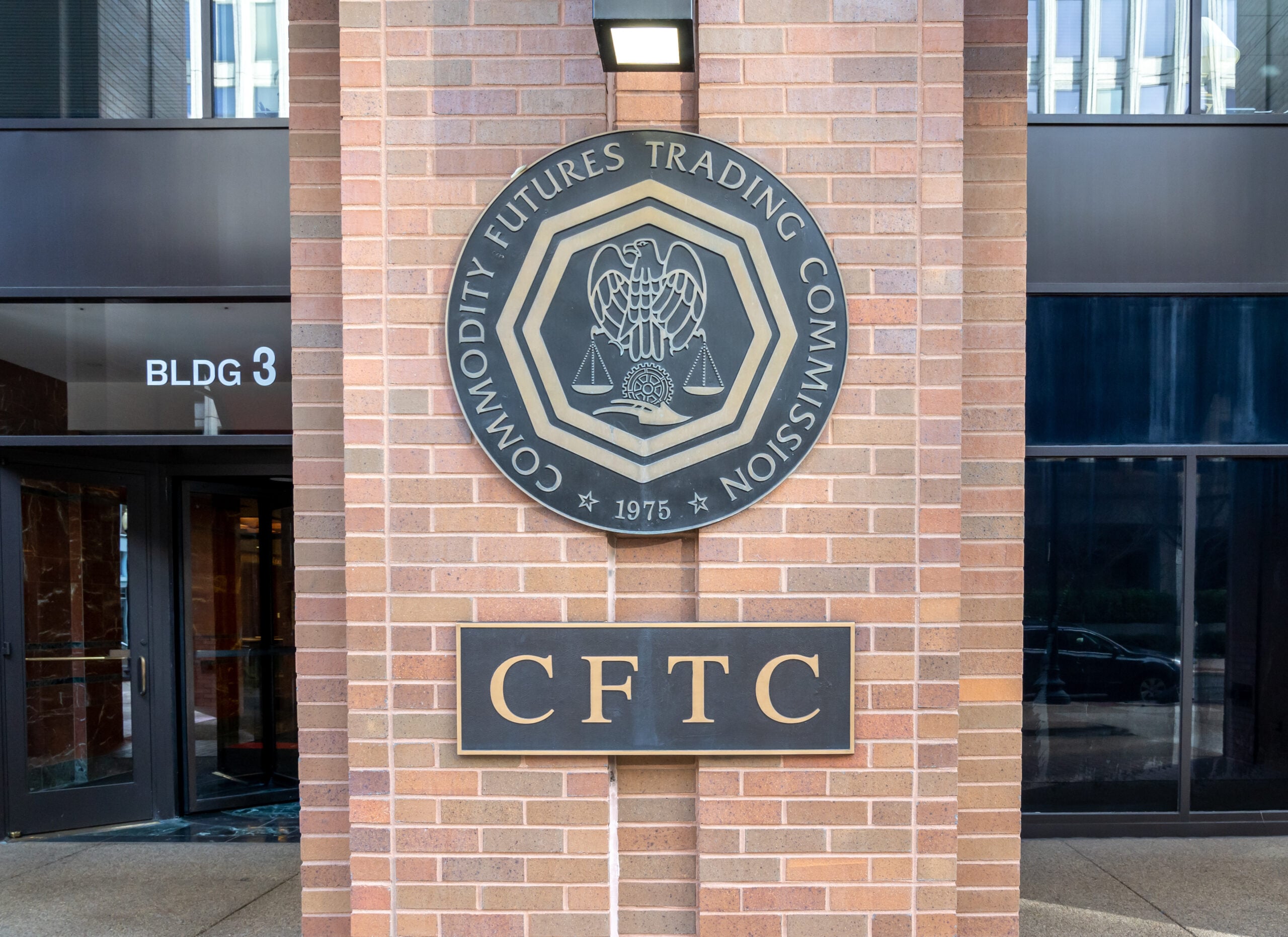
The first eight months of 2026 brought significant changes to securities and commodities regulation and enforcement. This update rounds up key developments stakeholders should monitor for the remainder of the year.
Historic Cooperation Between the SEC and CFTC
In March, the U.S. Securities and Exchange Commission (SEC) and U.S. Commodity Futures Trading Commission (CFTC) signed a new Memorandum of Understanding (MOU) confirming their intent to coordinate across key enforcement areas. As covered in a previous update, the MOU does not expand either agency’s enforcement authority, but it signals intent to coordinate at a high level, including by conducting joint enforcement and examinations. Stakeholders should be prepared for parallel action from both regulators, as a “one agency” enforcement response may no longer suffice.
Shifting Enforcement Priorities
In reports on 2025 enforcement activity, both the SEC and CFTC signaled a shift away from “regulation by enforcement” and toward prioritizing wrongdoing with defined investor harm. The SEC identified key violations including offering fraud, market manipulation, insider trading, issuer disclosure violations, and breaches of fiduciary duty. The CFTC highlighted five enforcement priorities: (1) insider trading; (2) market manipulation; (3) market abuse; (4) retail fraud; and (5) willful violations of Anti-Money Laundering (AML) and Know-Your-Customer (KYC) laws.
Both agencies also rescinded long-standing “gag rules” governing enforcement settlements. On May 18, 2026, the SEC rescinded Rule 202.5(e), a policy dating back to 1972 that conditioned settlement on the defendant’s agreement not to publicly deny the SEC’s allegations. The CFTC followed on June 3, 2026, rescinding its parallel policy in Appendix A to Part 10 of its Rules of Practice. Both agencies framed the change as aligning with the broader federal enforcement landscape, and the practical impact is that market participants can now speak publicly about resolved matters without fear of unraveling their settlements.
Prediction Markets
The CFTC made clear that event contracts and prediction markets remain a high priority, filing lawsuits against six states in April and May arguing that the agency has “exclusive jurisdiction” over prediction markets. The agency has also moved from ad hoc enforcement toward a formal rulemaking framework. In March, the CFTC issued an Advanced Notice of Proposed Rulemaking requesting public input on event contract regulations, and followed up in June with a Notice of Proposed Rulemaking (NPRM) proposing amendments to Regulation 40.11 and a new appendix to part 40. The proposed changes create a multifactor test for determining when an event contract is contrary to the public interest under Section 5c(c)(5)(C) of the Commodity Exchange Act. The NPRM identified several types of contracts the CFTC believes fall outside this prohibition, including contracts based on financial indicators, foreign exchange rates, political election results, outcomes of honor or award contests, and certain sports activities.
The CFTC has also issued advisories to designated contract markets (DCMs) on the applicability of existing regulations to event contract listings and self-certification obligations. On June 18, the SEC and CFTC jointly published a Request for Comment on opportunities to “update, clarify, and harmonize certain derivatives product definitions.”
On the SEC side, the agency paused 24 prediction-market ETFs in July that were nearing the end of the 75-day fast-track review window, requesting more information on product mechanics and investor risk. Those filings covered outcomes tied to the 2028 U.S. election, tech-sector layoffs, and recession odds.
Digital Assets
In 2026 the CFTC and SEC began building a regulatory regime for digital assets even as Congress’s own effort stalled in the Senate. On March 17, the SEC issued a landmark interpretation of how federal securities laws apply to crypto assets. The interpretation, which has been joined by the CFTC, lays out a token taxonomy (digital commodities, digital collectibles, digital tools, stablecoins, and digital securities) and formally adopts the position that a crypto asset itself is generally not a security; only the transaction (the investment contract) may be, and an asset can “separate” from a securities-law wrapper over time. SEC Chairman Paul Atkins framed the release as correcting the prior administration’s refusal to recognize that most crypto assets are not securities, while CFTC Chairman Michael Selig described it as ending a decade of uncertainty. On May 29, the CFTC approved the first U.S.-regulated bitcoin perpetual futures contract, listed by Kalshi, paired with guidance on 24/7 trading and clearing that acknowledged the distinct risks continuous markets pose for surveillance, margin calibration, and collateral availability.
Stablecoins now have a statutory home. The GENIUS Act, enacted in July 2025, created the first federal framework for “payment stablecoins,” imposing reserve, redemption, and Bank Secrecy Act compliance obligations and excluding compliant payment stablecoins from both the “security” and “commodity” definitions. The SEC’s March interpretation confirmed that conforming stablecoins will fall outside securities law. Market participants operating across spot, derivatives, and tokenized products should expect continued jurisdictional line-drawing even as the broad direction favors regulatory accommodation.
Finally, on August 18 the SEC proposed a new regulatory framework for crypto assets. The proposed rules carve out certain crypto companies and offerings from the U.S. securities regime. Specifically, the SEC has proposed a “safe harbor” that would prevent a crypto asset from being deemed an investment contract (and therefore under the SEC’s purview) under certain circumstances. The SEC has also proposed a one-time exemption for crypto companies to issue up to $5 million in crypto tokens during a four-year period. Companies that provide financial statements and meet regulator reporting requirements will have the option of executing offerings of up to $75 million during each 12-month period.
AI Integration
Artificial intelligence is rapidly reshaping securities and commodities markets. While no AI-specific statute governs financial markets, the SEC, CFTC, and DOJ have each made clear that AI-related misconduct is a standalone enforcement priority.
Both agencies have confirmed that existing regulatory frameworks apply with full force to AI-enabled activities. Historically, the CFTC’s December 2024 Staff Advisory on AI reminded registered entities of their obligations under the CEA and CFTC regulations as they implement AI, while making clear that compliance expectations are themselves evolving. On the SEC side, the agency’s FY 2026 Examination Priorities stated that the Division of Examinations “remains focused on registrants’ use of certain products and services, such as automated investment tools, AI technologies, and trading algorithms,” and will review the accuracy of registrant representations regarding AI capabilities.
One of the most significant enforcement developments has been the rise of “AI washing” cases. Beginning with the SEC’s 2024 settlements with two investment advisors, the agency has since brought actions against a restaurant-technology company (January 2025) and, in April 2025, parallel civil and criminal actions against the former CEO of a tech startup, who allegedly raised more than $42 million on false AI claims. In April 2026, the DOJ unsealed a 10-count indictment against the former CEO and CFO of a Nasdaq-listed company. The SEC has institutionalized this focus through the Cyber and Emerging Technologies Unit (CETU), created in February 2025, which is specifically tasked with investigating AI washing.
Looking ahead, one of the most consequential questions involves AI agents that autonomously execute trades. The launch of Robinhood’s Agentic Trading platform has crystallized questions about investment-adviser and broker-dealer status for autonomous systems, and how antifraud provisions requiring proof of intent apply when no individual formed the relevant mental state. The CFTC faces parallel challenges: the Commodity Exchange Act’s (CEA) anti-spoofing and manipulation prohibitions presuppose a person capable of forming intent, yet research has shown that AI trading models can independently discover manipulative strategies without the designer’s knowledge. In early 2026, Chairman Selig launched an Innovation Task Force focused on developing regulatory frameworks for AI and autonomous systems.
Key Takeaways
Both the SEC and CFTC have pivoted away from “regulation by enforcement” and toward cases with defined investor harm—meaning fraud, market manipulation, insider trading, and breaches of fiduciary duty. The rescission of both agencies’ no-deny settlement policies gives defendants new flexibility to speak publicly about resolved matters. Market participants should expect coordinated, parallel enforcement under the agencies’ new MOU and may choose to calibrate compliance programs to the CFTC’s five stated enforcement priorities and the SEC’s renewed focus on retail investor protection.
Prediction market operators and prospective DCM applicants face an evolving but rapidly crystallizing regulatory framework. The CFTC’s proposed public interest test for event contracts, its assertion of exclusive federal jurisdiction over prediction markets, and its advisories on DCM compliance obligations all signal that platforms should be attentive to core principle compliance, self-certification procedures, and insider trading controls. On the SEC side, the pause on prediction-market ETFs and the request for comment on novel ETFs indicate that event-contract products seeking a registered-fund wrapper will face heightened scrutiny on mechanics, valuation, and investor disclosure.
The joint SEC-CFTC crypto asset interpretation, the GENIUS Act’s stablecoin framework, and the approval of bitcoin perpetual futures collectively establish the clearest regulatory landscape digital asset participants have had to date. Market participants may decide to map their products to the new token taxonomy, assess whether the GENIUS Act’s reserve, redemption, and BSA obligations apply to their stablecoin activities, and monitor ongoing jurisdictional line-drawing between the SEC and CFTC as Congress considers market structure legislation.
The CFTC’s December 2024 advisory and the SEC’s FY 2026 examination priorities appear to supply the operative compliance roadmap for market participants deploying AI. Companies should consider ensuring that public statements about AI capabilities are accurate and substantiated, reviewing compliance programs against the DOJ’s updated ECCP framework, and monitoring the CFTC Innovation Task Force and SEC AI Task Force for emerging guidance on autonomous systems.
If you have questions about how these new rules may impact your organization, please contact one of the authors of this article or your Husch Blackwell attorney.
For more information on the topics covered in this update, see the following posts on the Government Enforcement, Compliance & Investigations Report:
• SEC Charges Former Executives of Subprime Auto Lender Over Alleged $1.9 Billion ABS Fraud
• SEC Proposes Regulation Crypto Assets: A New Offering Regime for Token Issuers
• How to Obtain a Declination: Understanding the CFTC’s New Self-Reporting and Cooperation Policy
• Corporate Insider Trading on Prediction Markets: United States v. Spagnuolo
• Prediction Markets Under the Microscope: The CFTC’s AI-Driven Pivot to Insider Trading Enforcement
• CFTC Proposes Public Interest Framework for Prediction Markets: What Stakeholders Need to Know
• Bans, Fees, and Felonies: The Growing Patchwork of Prediction Market Regulation
• CFTC’s “Crypto Sprint” Kicks Off New Chapter in Crypto and Digital Asset Regulation
• No Harm, No Foul? Not Anymore: What Sripetch Means for SEC Defendants
• Hot Topics in Securities and Commodities Regulation and Enforcement (Webinar)