

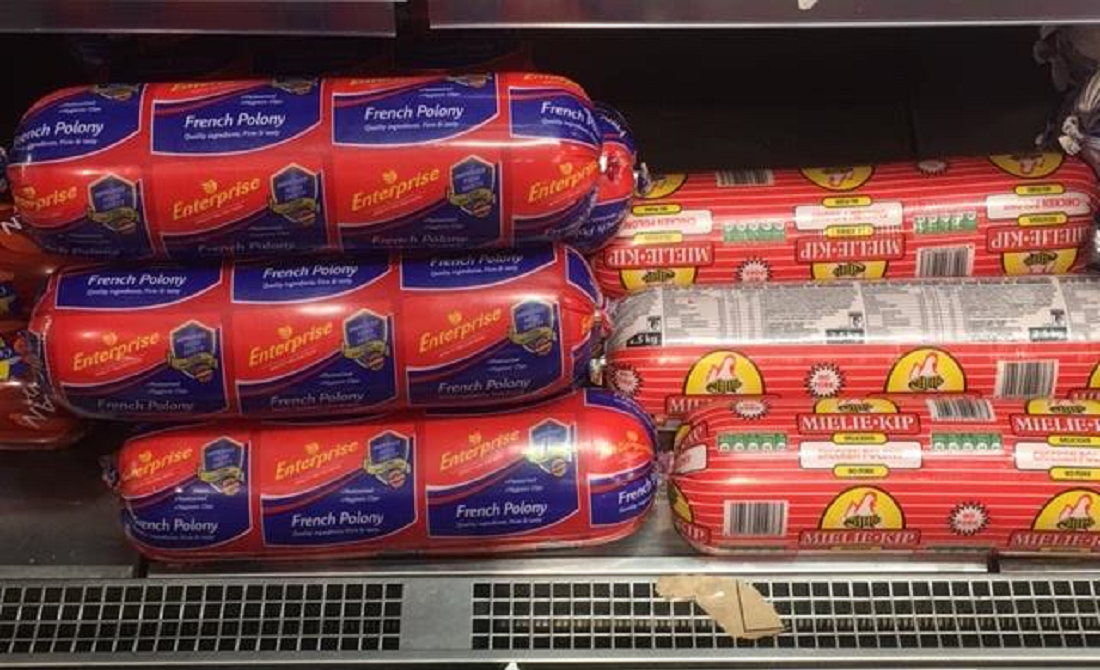
Rwanda has lifted a ban on some South African food products that was put in place in 2017 because of a Listeria outbreak that sickened more than 1,000 people.
The Ministry of Agriculture and Animal Resources said the sanctions had the aim of safeguarding public health from Listeria monocytogenes.
A notice suspending the import of meat, dairy and milk products, fruits and vegetables from South Africa was issued in December 2017.
The listeriosis outbreak began in 2017 and was declared over in September 2018, with 1,065 confirmed cases and at least 218 deaths.
People became infected after eating a contaminated ready-to-eat meat product called polony, made at a factory in Polokwane by Enterprise Foods. Polony is similar to bologna. At the time, Enterprise Foods was owned by Tiger Brands, but the business was sold in 2020.
At least 12 countries recalled the implicated processed meat products and banned imports, while three nations also suspended imports of other food products.
Class action situation
The Ministry of Agriculture and Animal Resources said the ban was removed after thorough verification and confirmation by relevant authorities of the listeriosis situation in South Africa.
The agency added it appreciated the cooperation of importers, traders, and the public during the precautionary measure.
Earlier this year, Tiger Brands made an undisclosed settlement offer to certain victims of the listeriosis outbreak. The conditional deal was made without admission of liability.
Offers were to members of specific classes of claimants who suffered damage as a result of listeriosis caused by a certain genotype. This included claimants who contracted — or whose mothers contracted — listeriosis caused by sequence type (ST) 6. Other classes were claimants whose legal breadwinners, on whom they were legally dependent, died of listeriosis caused by ST6; and claimants whose legal dependents, who were in their care, and who contracted listeriosis caused by ST6.
In February 2025, Tiger Brands offered interim relief in the form of advance payments to claimants with urgent medical needs. The company also said it was exploring a resolution to the entire class action.
(To sign up for a free subscription to Food Safety News, click here)