

Virginia courts apply the “source of duty” rule to distinguish contract claims from tort claims. A contracting party may recover in tort only if the breached duty arises independently under common law, not merely from the parties’ contract. If the

Virginia courts apply the “source of duty” rule to distinguish contract claims from tort claims. A contracting party may recover in tort only if the breached duty arises independently under common law, not merely from the parties’ contract. If the

In a decision that should give comfort to political commentators everywhere, the Court of Appeals of Virginia reversed a $1,000,000 defamation verdict against a citizen who called a local school board chairman a “SEXUAL PREDATOR/HARASSER” on Facebook. The case is

When drafting non-solicitation agreements, precision matters. Undefined terms and sweeping restrictions can render an entire covenant unenforceable. And in Virginia, courts won’t lift a finger to fix the problem. Employers drafting non-solicitation agreements need to define their key terms

Under Virginia’s business-conspiracy statute, a successful plaintiff may recover three times the actual damages caused by the conspiracy: “Any person who shall be injured in his reputation, trade, business or profession by reason of a violation of § 18.2-499, may
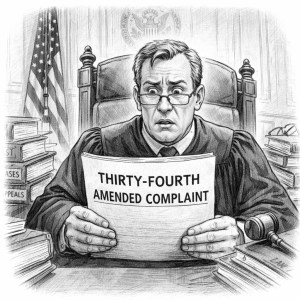
The relation-back doctrine is a procedural mechanism that allows an amended pleading filed after the expiration of a statute of limitations to “relate back” to the filing date of the original complaint. The doctrine treats the amended pleading as if
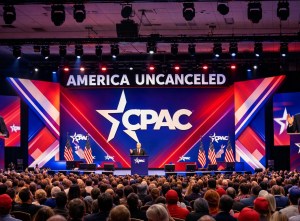
In a recent decision underscoring the limits of defamation law in political contexts, a federal district court dismissed defamation claims brought by the American Conservative Union and its foundation against former employees who allegedly linked the organizations to George Soros,

If your homeowners association has started levying assessments you never agreed to pay, you may have more legal recourse than you think. A recent Virginia Court of Appeals decision demonstrates that not all associations claiming HOA or POA status actually

The ecclesiastical abstention doctrine traces its roots to Supreme Court precedent holding that the First Amendment secures a sphere of institutional autonomy for religious organizations. Under this jurisprudence, churches enjoy freedom from secular intrusion in matters central to their identity,
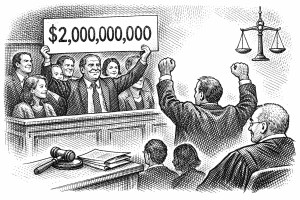
Proof of damages is an essential element to any claim for breach of contract. The plaintiff has the “burden of proving with reasonable certainty the amount of damages and the cause from which they resulted.” (See Sunrise Continuing Care, LLC

Truthful statements are generally not actionable as defamation. A substantially true statement that is factually accurate in all material respects and that does not imply any undisclosed defamatory message is not something upon which a defamation lawsuit may be brought.