

For a decade, a development team that wanted to distribute tokens in the U.S. or to U.S. persons had two realistic options: attempt an SEC registration that, basically, no one could complete, or make a judgment call under the 1946
Latest from The CLS Blue Sky Blog
Davis Polk Discusses OCC and FDIC Changes to Rules for Supervision
The Office of the Comptroller of the Currency (OCC) and the Federal Deposit Insurance Corporation (FDIC and, collectively, the Agencies) issued a joint final rule to define the term “unsafe or unsound practice” for purposes of section 8 of the
What Anthropic’s Antitrust Waiver Says About the Law and Economics of AI
In September 2026, Dario Amodei proposed an unusual response to the race to develop frontier artificial intelligence. If competition pushes leading laboratories to move faster than safety allows, Washington should let them coordinate. The Anthropic chief executive wants outside evaluators
SEC Chair on Plan to Rescind Shareholder Proposal Rule and Modernize Proxy Solicitation
Today [September 16], the Commission issued two proposing releases related to its proxy rules under the Securities Exchange Act of 1934. The proposals reflect two of my highest regulatory priorities. First, ensuring that the Commission does not improperly intrude into
How Generative AI Could Change the Mutual Fund Industry
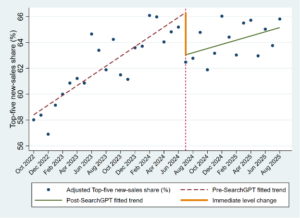
The mutual fund industry has become increasingly concentrated. The five largest fund families managed about 35% of industry assets in 2005, compared with 57% in 2024. One explanation is economic efficiency: Successful managers attract more capital, and larger organizations benefit
Skadden Discusses Delaware Chancery Decision Not to Apply Section 144 Safe Harbors
Key Points
- The Delaware Court of Chancery issued the first opinion analyzing the DGCL Section 144 safe harbors in the context of a challenged merger transaction involving a conflicted director/officer, holding the safe harbors were unavailable at the pleading stage
Why SPACs Need a Deadline
SPACs are public companies designed to die. Ordinary corporations, like Coca-Cola, enjoy perpetual existence under the law. Special-purpose acquisition companies, by contrast, are organized with a termination date from the outset—usually two years, and never more than three under stock
Why Private M&A Deals Die, and What Lawyers Can Do About It
Recent years have seen growing academic interest in why mergers and acquisitions fall apart. Projects by Morgan Ricks and Da Lin and Robert Miller have explored, for example, why public company transactions fail to close after signing. In a new
SEC Chair Speaks at the Investor Advisory Committee Meeting
Good morning, ladies and gentlemen. I regret that contemporaneous business out of town keeps me from joining you in person today, but I would be remiss not to briefly address this group—albeit pre-recorded—and to thank you for your spirited service
What India Can Teach Us About Corporate Governance
The prevailing law and economics account treats the evolution of corporate law as a series of neutral, efficiency-driven adjustments. Scholars who study the Global South describe something messier. Corporate law in any given country is the product of political and