

The prevailing law and economics account treats the evolution of corporate law as a series of neutral, efficiency-driven adjustments. Scholars who study the Global South describe something messier. Corporate law in any given country is the product of political and
Latest from The CLS Blue Sky Blog
Shadow SEC Statement No. 14: Reject the Clarity Act
Both Congress in the Clarity Act and the SEC in Regulation Crypto are moving to redefine the playing field for cryptocurrency. We will address each in a separate statement.
We believe the Clarity Act in the July version is deeply
Arnold & Porter Discusses End of SEC Responses to No-Action Requests on Shareholder Proposals
Exchange Act Rule 14a-8 addresses when a company must include a shareholder’s proposal in its proxy statement for an annual or special meeting ofshareholders. In order to have a proposal included, a shareholder must be eligible and follow certain procedures
Are the Big Four Auditors’ PCAOB Inspection Results Too Good to Be True?
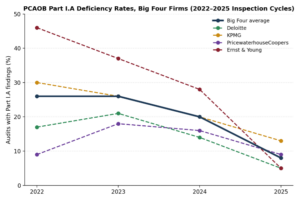
On August 13, 2026, the Public Company Accounting Oversight Board issued its latest inspection reports for the six largest public audit firms: BDO USA, P.C., Deloitte & Touche LLP, Ernst & Young LLP, Grant Thornton LLP, KPMG LLP, and PricewaterhouseCoopers
SEC Commissioner Peirce Discusses Proposed Rescission of Pay-to-Play Rule
Today [September 3], the Commission proposed to rescind Investment Advisers Act rule 206(4)-5, the investment adviser “Pay-to-Play Rule.” I am thrilled that we are proposing to eliminate rather than simply amend the rule, which always has bothered my First Amendment
Shadow SEC Statement No. 13: Insider Trading Institutionalized
Insider trading has long been a furtive contest between traders, desperately hiding their material non-public information, and prosecutors in hot pursuit. In general, discovery implied conviction. But now it may have come out into the open, as high frequency traders
Wachtell Lipton Discusses Delaware Chancery’s Caution Against Reading Between the By-Lines
In a significant decision for public companies facing activism, the Delaware Court of Chancery last week held that a board may not reject a director nomination notice based on disclosure requirements that are not explicitly spelled out in the corporation’s
Who Governs Valuations When Private Assets Reach Retail Investors?
Retail investors are gaining greater exposure to private equity, private credit, private real estate, infrastructure, and other less-liquid assets through retirement funds, wealth platforms, and publicly offered investment vehicles.
As policymakers debate wider access, they should also ask a less
Asset Managers, Presidential Power, and the Risk of Reverse Capture
Giant asset managers have become powerful actors in corporate America, fueling widespread concern that these Wall Street titans will capture the government by translating their economic might into political influence. In a new article, we identify an increasingly pressing
Wachtell Lipton Discusses Record DOJ Penalty for Alleged “Systemic” HSR Violation
On August 26, the Department of Justice announced a proposed settlement to resolve allegations that private equity firm KKR failed to file complete, accurate, and timely premerger filings under the Hart-Scott-Rodino Act in connection with several transactions during 2021 and