

They say one Bad Apple can spoil the bunch. But what can a Happy Apple do? It depends on which one you buy, but you’ll want to make sure you’ve got the right Happy Apple.
One Happy Apples brand involves fresh apples, apple cider, and caramel apples. The other Happy Apple is a cannabis infused drink. Sure, the names are nearly identical, but does the candy apple company have a viable trademark infringement claim against the cannabis drink company? A recent ruling from the Western District of Washington involving this dispute suggests that brand owners may have an uphill battle enforcing their rights against the expanding cannabis industry.
For your consideration, a sample of the companies’ respective products is shown below.

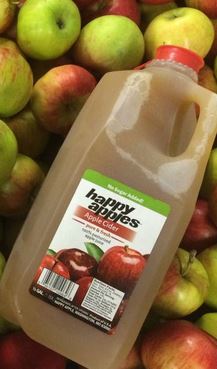
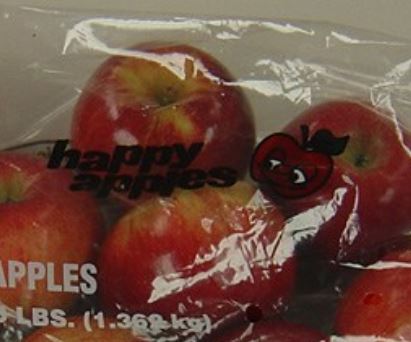
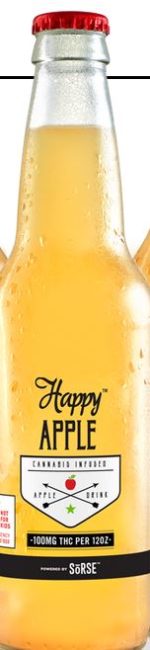
The Happy Apple Company sued Tarukino, LLC (the producer of cannabis beverage) and requested a preliminary injunction. Notwithstanding the fact that both companies were using the nearly identical HAPPY APPLE wording, the court denied the request in an order issued January 9, 2019. In denying the request, the court’s reasoning, if adopted by other courts, could make it more difficult for brand owners to enforce their trademarks against cannabis products.
The court acknowledged that “both products are apple-related but the similarities end there.” When evaluating a claim of infringement, courts rely on a number of factors to determine whether there is a likelihood of confusion. In Washington (part of the Ninth Circuit), the courts follow the Sleekcraft factors.
As part of the analysis, courts look at how similar the marks are as they appear in the marketplace. This means even though the parties use HAPPY APPLES and HAPPY APPLE, the court looks at all of the packaging, including the font used, design elements, presence of house marks or company names, and other information. These facts seemed significant to the decision, as the judge concluded:
While they both contain the words “happy apple” they look markedly different. The mark used by Plaintiffs uses a different font and includes a cartoon of a caramel apple. The product sold by Defendants includes a picture containing two arrows, an apple, and the words “cannabis infused”, similar to a coat of arms.
Notably, the court appears to have only focused on the packaging for the caramel apple. Neither the cider nor the fresh apples include a carton of a candy apple. If I’m being honest though, the cartoon apple on the packaging looks like it may have had a bottle or two of the other Happy Apple.
The court also relied heavily on the significant regulation of cannabis products under Washington state law, reasoning:
cannabis-containing beverages can only be distributed and sold by retail stores licensed and regulated by the Washington State Liquor and Cannabis Board. These retail stores may only sell marijuana, marijuana concentrates, marijuana-infused products, and marijuana paraphernalia. Defendants’ products and Plaintiffs’ products are not likely to be sold in close proximity to each other, and it is unlikely that a purchaser would mistakenly enter a retail store selling marijuana or marijuana-related products and confuse a cannabis-containing apple beverage with the fresh apples, apple cider, or caramel apples sold by Plaintiffs.
At first glance, it seems that the court may be unfairly narrowing the likelihood of confusion as to whether a consumer might confuse the two products. While such a purchase would certainly qualify as consumer confusion, it is not the only type of consumer confusion. Consumer confusion can also occur if a consumer mistakenly believes that there is some type of connection, sponsorship, or other relationship between the Happy Apple cannabis product and the owner of the HAPPY APPLES brand. For example, whether a consumer might mistakenly believe the apples used to make the cannabis beverage were HAPPY APPLES brand apples.
Perhaps the court concluded the highly regulated nature of the industry and the distinctly different channels of trade were simply enough to avoid a likelihood of confusion, especially when comparing how the marks appear in the marketplace.
However, if the highly regulated nature of cannabis products truly carried the day for the defendant, it does not bode well for other trademark owners. All states that have legalized cannabis in any form have maintained strict regulation on how and where such products can be sold. If other courts adopt this court’s analysis, cannabis company defendants arguably begin any trademark infringement lawsuit with a loaded deck.
Of course, this is only a ruling on a preliminary injunction request, not a ruling of non-infringement. It is also possible the court relied on a number of other factors that simply were not referenced in the order. The HAPPY APPLE mark is not necessarily a strong mark, and certainly not well-known like HERSHEY’S or REESE’S. The term APPLE is either generic or descriptive, depending on the context, and HAPPY may not be entitled to a broad scope of protection.
As the cannabis industry continues to grow, there will undoubtedly be many more lawsuits. This is just one of many data points non-cannabis companies must use to determine where to set their trademark enforcement goal posts, and a data point for cannabis companies to use when evaluating new names and trademarks.