

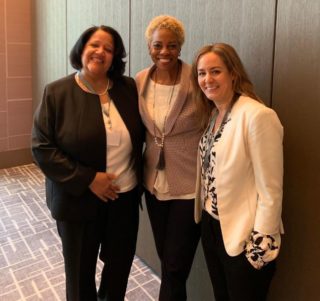
 Once again, Baker McKenzie attorneys, industry thought leaders and key clients from around the world convened (this time in New York) to answer this essential question: What is the future of work?
One consistent theme that permeated many of our discussions can be summed up as: Inclusion or Bust.
What does this mean?
It means that as global employers, we’re moving beyond a singular focus on diversity. As guest speaker Vernā Myers says,
Diversity is being invited to the party. Inclusion is being asked to dance.”
To truly reap the rich rewards of a diverse workplace, companies must invest generously and continuously in inclusion. Many senior business leaders predict that companies that don’t will be left behind and may actually cease to exist entirely in the not too distant future.
Effectuating inclusion and diversity goals within a multinational company requires commitment and grit, and will take humility.
- It means questioning whether your company is exporting a one-size-fits-all policy or practice to places where those principles may not translate culturally, understanding the legal landscape and making informed decisions.
- It involves engaging your people, for example through empowering your employee resource groups, to make a meaningful difference within the organization.
- It necessitates the participation of all – all employees at every level should be encouraged to reflect on their own unconscious or implicit biases.
- And, it will take courage to conduct critical reviews of institutional policies and practices that, upon closer look, may not be creating a level playing field despite good intentions.
4 Actions To Take Now
- Think through how you balance promoting D&I norms from the initiating country (for example, US norms for multinationals headquartered in the US) with global operations. Recognize that diversity will have different meanings globally and consider how that impacts your inclusion strategy.
- Examine how your company is collecting and using diversity data. Beyond understanding your compliance obligations, recognize the value in transparency but also the limitations – data alone does not tell the whole story.
- Watch Vernā’s TED Talk, How to overcome our biases? Walk boldly toward them
- Test your own unconscious bias by taking the Implicit Aptitude Test, or IAT — found here. Each IAT takes approximately 10 minutes.