

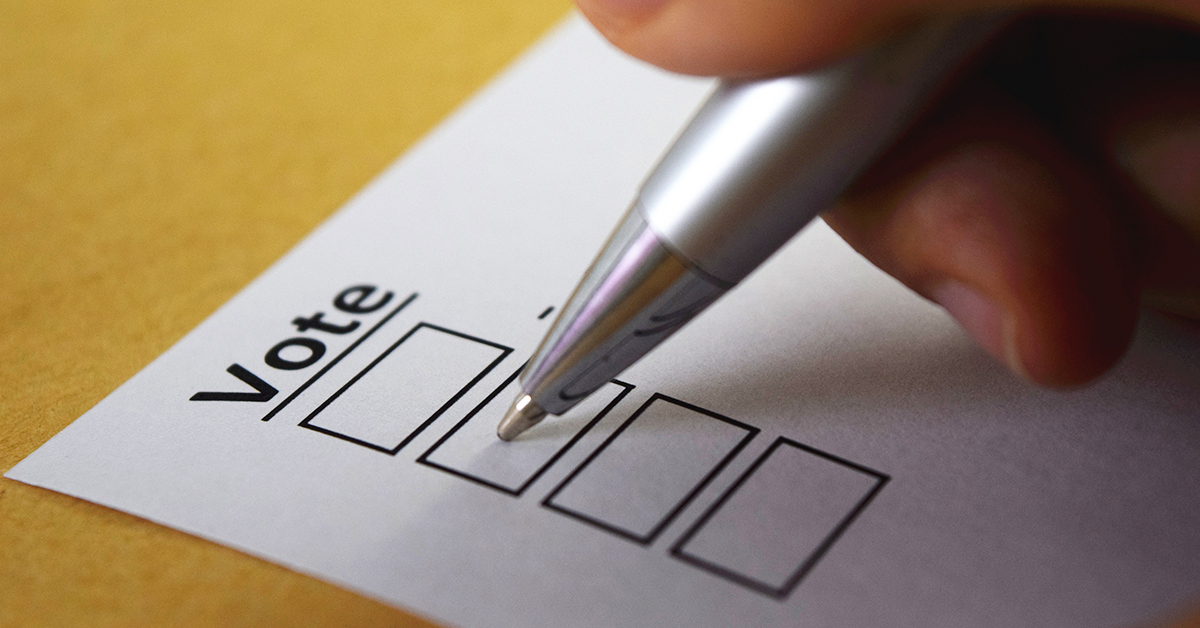
In mid-May the NLRB established a clear rule regarding stray marks on ballots in union representation elections, eradicating years of convoluted and inconsistent precedent. The decision, which applied retroactively, resulted in a union’s failure to amass a majority of the votes and, consequently, a reversal of the Regional Director’s Decision and Certification of Representation.
In a dispute between Providence Portland Medical Center (the “Employer”) and Service Employees International Union Local 49 (the “Union”), the representation election was decided by the narrowest margin, ultimately resulting in 383 votes for representation, and 382 votes against representation. Included in the mix was a single ballot with a clear “X” in the “Yes” box and a dark diagonal line with a smudge mark in the “No” box. The ALJ and Regional Director applied Board precedent and both concluded that the smudge mark on the diagonal line in the “No” box was an “obvious attempt at erasure,” resulting in the ballot being counted in favor of representation.
The Board summarized the history of past decisions dealing with stray marks and recognized that the decisions were inconsistent. One line of decisions, the Caribe line, looked to voter intent, requiring the Board to divine intent from indicia such as whether a stray mark was accompanied by an attempt to erase, scratch over, or otherwise “obliterate” the mark. Another case, Daimler-Chrysler, stood for the view that the Board should avoid speculation and inferences regarding the meaning of stray marks. The Board observed that one view led to impermissible subjectivity, running up costs and prolonging the resolution of the question of representation, while the other supported an objective approach to dealing with stray marks, but failed to establish a hard and fast rule.
In the interests of clarity and predictability, the Board established the bright-line rule that a ballot containing markings in more than one box is void. The Board overruled any conflicting cases and noted that its decision will preserve Board and party resources and expedite the election process as it will no longer be asked to divine voter intent from errant markings. The Board found no injustice in applying this bright-line rule retroactively, because of the inconsistency in past precedent, the issue in the case arose only after the ballot was cast, and, perhaps most importantly, neither party could have been prejudiced by relying on Board precedent because an employee, not the Employer or the Union, cast the ballot (the Board deemed it “highly unlikely” that the employee relied on Board precedent in casting the ballot).
This change in the law brings with it the risk that employees will unknowingly cast void ballots because ballots do not sufficiently warn employees of the effects of stray marks. To address this, the Board revised its official ballot language, in relevant part, to “If you submit a ballot with markings inside, or anywhere around, more than one square, your ballot will not be counted.”
This bright-line rule provides clarity and objectivity to a once murky and subjective practice, and takes the power from the Board to decide representation elections by interpreting stray markings on ballots.