

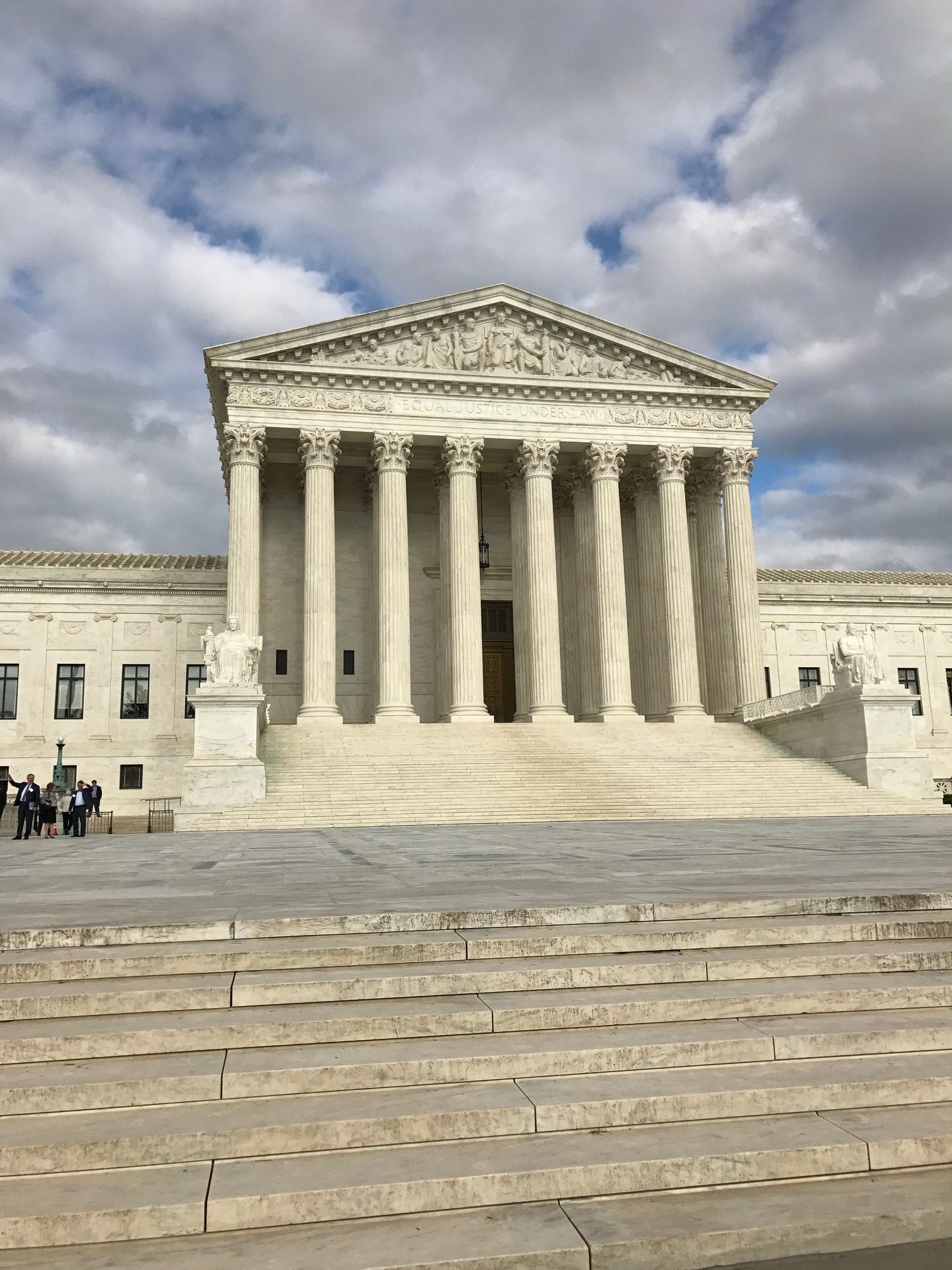
In the most consequential U.S. Supreme Court case in many years, the Court ruled this morning that Title VII prohibits employment discrimination on the basis of sexual orientation or gender identity.
You can download the 6-3 decision in Bostock v. Clayton County, here.
Connecticut has long prohibited employment discrimination on the basis of sexual orientation and gender identity so the court’s decision will have less of an impact here for LGBT workers. In fact, back in 2016 the Connecticut District Court already offered these protections for Title VII cases in this state in a decision that I covered back then.
In states without such protection, the new protections now offered to employees nationwide will be significant.
And moreover, the message that this case is sending is unmistakable too:
The statute’s message for our cases is equally simple and momentous: An individual’s homosexuality or transgender status is not relevant to employment decisions.
The case affirms that Title VII provides broad protections for LGBT workers.
Some of those who supported adding language to Title VII to ban sex discrimination may have hoped it would derail the entire Civil Rights Act. Yet, contrary to those intentions, the bill became law. Since then, Title VII’s effects have unfolded with farreaching consequences, some likely beyond what many in Congress or elsewhere expected.
But none of this helps decide today’s cases. Ours is a society of written laws. Judges are not free to overlook plain statutory commands on the strength of nothing more than suppositions about intentions or guesswork about expectations. In Title VII, Congress adopted broad language making it illegal for an employer to rely on an employee’s sex when deciding to fire that employee. We do not hesitate to recognize today a necessary consequence of that legislative choice: An employer who fires an individual merely for being gay or transgender defies the law.
For Connecticut employers, the case should be welcome news; no more will employers have to navigate inconsistent laws in other states. And having consistent federal laws will make it easier for training purposes too. Employers should update their policies too to make sure this is included in anti-discrimination protections.
My firm will be providing a further alert likely late today and we’ll have more on my firm’s Employment Law Letter blog as well.