

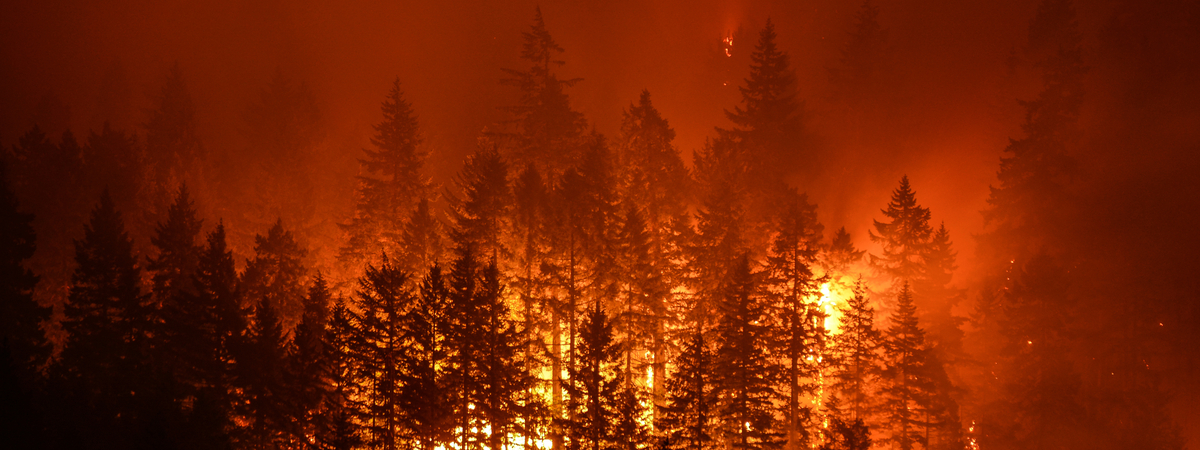
It seems no region of California has been spared from wildfires or the threat of wildfires in 2020. The one-two punch of scorching wildfires and Coronavirus Disease 2019 (COVID-19) has at times created an unwelcome dilemma for some employers in this state: Move; or maintain operations outdoors amid the increasingly high measure of AQI (Air Quality Index); or keep employees indoors where increased activity among larger groups of people could increase the risk of COVID-19 infection. In either outdoor or indoor settings, a California employer has a responsibility to keep its workers safe from unhealthy and hazardous conditions in the workplace caused by wildfire smoke and particulates and to obey COVID-19 restrictions.
In California, an emergency regulation by the Division of Occupational Safety and Health (Cal/OSHA) that requires employers to reasonably anticipate when their employees may be exposed to wildfire smoke exceeding an AQI of 151 for PM2.5, which means particulate matter smaller than 2.5 micrometers. 8 CCR §5141.1. According to the U.S. EPA website airnow.gov, the AQI reached a high of 154 in Irvine, California during the recent Silverado Fire. In large parts of Northern California during the August Complex and Creek Fires, AQI reached Unhealthy and Hazardous levels for multiple days. On those days, employers in affected regions were required to make NIOSH-approved respirators available for all employees to use on a voluntary basis, absent an exemption from the emergency regulation. Cal/OSHA states the provision of N-95 respirators (colloquially referred to as N-95 masks) is the minimum level of protection for wildfire smoke. Employers may find these respirators in short-supply during the pandemic, but this does not in itself excuse non-compliance with workplace safety regulations. Failure to follow regulations may create grounds for an employee or employee representatives like unions to file a complaint with Cal/OSHA based on the unavailability of personal protective equipment (PPE).
As a consequence of the recent and intense fire season, businesses in California may be exposed to increased Cal/OSHA enforcement and litigation. A coalition of unions representing teachers, government employees, and nurses filed a lawsuit in the U.S. Court of Appeals for the Ninth Circuit alleging that OSHA had unreasonably delayed issuing an Infectious Diseases Standard that addresses the risk of COVID-19 infection. This suggests that employees who seek OSHA’s assistance for protection against workplace hazards are increasingly willing to seek a legal remedy to address workplace safety concerns.
Cal/OSHA has conducted over 40 inspections this year resulting in employer violations related to COVID-19. That includes at least one investigation and subsequent fine for not providing appropriate respirators to workers. Similar inspections relating to the shortage of respirators for operations near or in wildfire regions affected by smoke are likely underway.
Under the Labor Code, employers cannot discharge or discriminate against an employee for his or her filing a complaint with Cal/OSHA reporting a workplace injury or illness, or for refusing to work under hazardous conditions. Doing so risks not only a possible individual retaliation claim by an employee but also a claim under the Private Attorneys General Act (PAGA) on behalf of all aggrieved employees.
California businesses located in fire-prone regions can prepare for the next wildfire incident by creating and maintaining an action plan and procuring available personal protective equipment. Early action can protect employees from harmful smoke and particulates, and prepare employers for a Cal/OSHA investigation.