

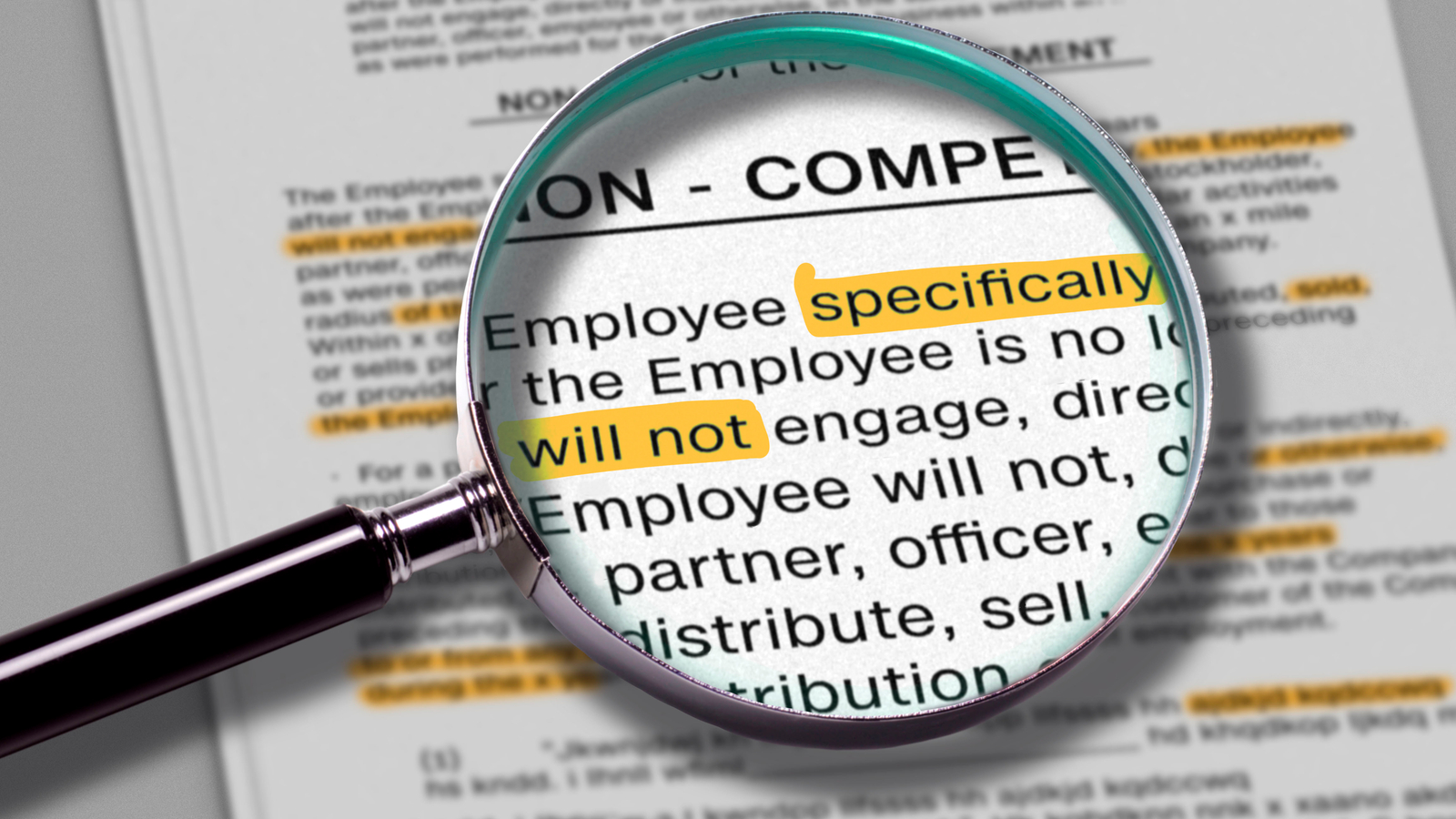
Non-compete agreements have recently become a popular focus of the federal and state governments. Several weeks ago, President Biden issued an Executive Order, “Promoting Competition in the American Economy” which asked the Federal Trade Commission (“FTC”) to exercise the FTC’s statutory rulemaking authority to curtail the unfair use of non-compete agreements and other clauses or agreements that may unfairly limit worker mobility.
Like the federal government, states have taken up similar initiatives with the goal of limiting an employer’s use of non-compete and/or non-solicitation agreements. For example, the Illinois General Assembly recently passed an amendment to the Illinois Freedom to Work Act which would require employers to drastically alter their non-compete and non-solicitation agreements, and their use of the same. The amendment is expected to be signed into law by the Governor and will become effective January 1, 2022.
Among other things, the amendment would:
- Require non-competes and non-solicitation agreements to be supported by “adequate consideration” as defined by the law;
- Define “adequate consideration” as either: (i) two years of continuous employment, or (ii) employment of the individual by the employer for “a period of employment plus additional professional or financial benefits or merely professional or financial benefits that are adequate by themselves.”
- Require employers to (i) advise the employee in writing to consult with an attorney before entering into a non-compete or non-solicitation agreement, and (ii) provide the employee with a copy of that agreement at least 14 calendar days before the employee begins employment or provide the employee at least 14 calendar days to review the agreement.
- Prohibit non-competes with employees who have actual or expected “earnings” of $75,000 per year or less.
- Prohibit non-solicitation agreements with employees who have actual or expected “earnings” of $45,000 per year or less.
The amendment would only apply to non-compete and/or non-solicitation agreements entered into after its effective date – so January 1, 2022. The amendment virtually guarantees that employers who operate in Illinois must re-write their non-compete and non-solicitation agreements. Employers should have those agreements prepared by January 1, 2022.
President Biden’s executive order, and the passage of this amendment by the Illinois state legislature, show that governing bodies are focused on limiting the use of non-compete agreements. Employers should monitor developments in non-compete law and can expect for the law, at least in the short term, to continue to change. Employers should review their non-compete, non-solicitation, and confidentiality agreements to ensure that each is not broader than necessary to protect legitimate business interests. And, employers should refine these agreements so that they protect those interests that are truly important to the business.