

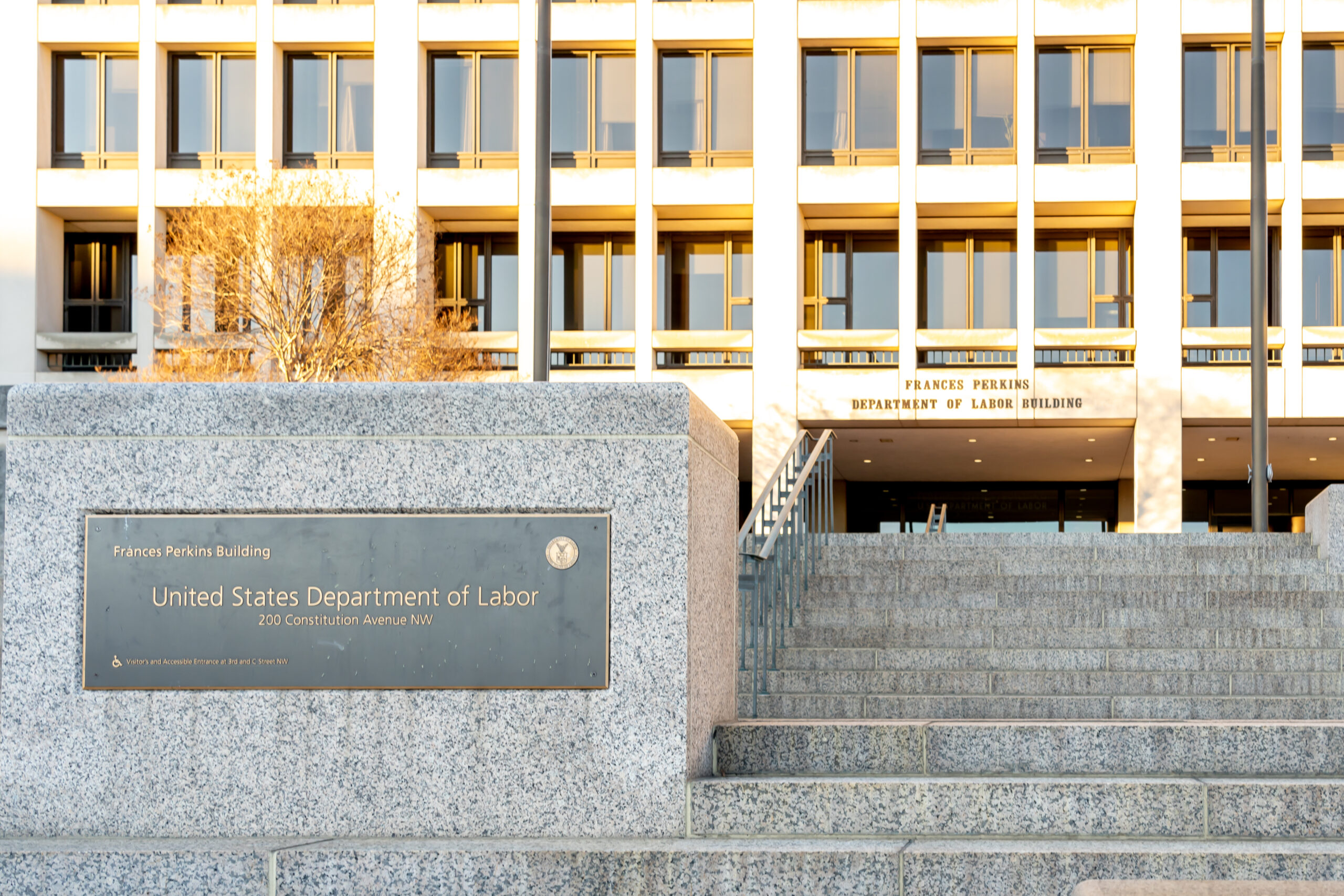
On Thursday, February 27, 2026, the U.S. Department of Labor (DOL) announced a long-anticipated proposed rule to guide the DOL’s analysis of whether a worker is an employee or an independent contractor under the Fair Labor Standards Act (FLSA).
This proposal would rescind the 2024 Rule established under the Biden administration and reinstate a framework like the one issued at the end of the first Trump administration. The DOL had previously announced, on May 1, 2025, that it had paused enforcement of the 2024 Rule. Additionally, the DOL proposed to utilize the FLSA standard to uniformly evaluate worker classification across other federal laws, including the Family and Medical Leave Act (FMLA) and the Migrant and Seasonal Agricultural Worker Protection Act (MPSA).
What is the 2024 Rule?
The 2024 Rule for determining whether a worker is an employee or an independent contractor under the FLSA is based on a “totality of the circumstances” test that considers six factors equally: (1) opportunity for profit or loss depending on managerial skill; (2) investments by the worker and the potential employer; (3) degree of permanence of the work relationship; (4) nature and degree of control; (5) extent to which the work performed is an integral part of the employer’s business; and (6) the skill and initiative required. Additional factors may be considered if they are relevant to whether the worker is economically dependent on the employer or in business for themselves.
What is the proposed rule changing?
The proposed rule marks a return to the 2021 standard, the “economic reality” test—which emphasizes two key factors as most probative in determining independent contractor status under the FLSA:
- Nature and Degree of Control: Does the business control how the work is done?
- Worker’s Opportunity for Profit or Loss: Can the worker affect their earnings through initiative or investment?
Other factors, such as the skill required, the permanence of the relationship, and whether the work is part of an integrated unit of production, are considered but are less important. The proposed new rule also provides 8 specific illustrative examples designed to show how the economic reality factors, especially the two core factors above, would apply in real-world scenarios.
Why the Change?
The Department of Labor stated that the 2024 Rule failed to offer the necessary clarity, included overlapping requirements, and might have had a chilling effect on legitimate independent contractor arrangements—and hindered the ability for parties to enter valid independent contractor relationships. In response, the newly proposed rule seeks to bring greater clarity and predictability to both businesses and workers, safeguard the entrepreneurial nature of independent contractors, streamline compliance for companies (particularly those subject to multiple federal labor laws) and continue to uphold strong protections for employees.
Impact on Employers
The new rule intends to provide employers with clearer and more predictable guidelines for worker classification by emphasizing two main factors, thereby minimizing the risk of misclassification and reducing administrative and legal burdens. It seeks to promote legitimate independent contracting by removing unnecessary obstacles and encouraging flexible work arrangements and innovation. Additionally, the rule is an attempt to standardize compliance across federal laws such as the FLSA, FMLA, and MSPA, and to underscore the importance of ensuring that actual workplace practices—not just contractual language—align with the chosen classification.
What Should Employers Do Now?
Employers should review their worker classifications to ensure alignment with the proposed core factors and actual workplace practices, stay updated on regulatory developments, and prepare for potential changes by updating policies and training HR and legal teams. For questions or compliance support, contact your Husch Blackwell attorneys.