

Skip to content

Menu

LexBlog, Inc. logo
NetworkSub-MenuBrowse by SubjectBrowse by PublisherJoin the NetworkGet StartedSubscribeSupport
Contact Us
Search
Close

Navigating Intellectual Property on the Modern Farm

By Roger McEowen on April 3, 2026
Email this postTweet this postLike this postShare this post on LinkedIn
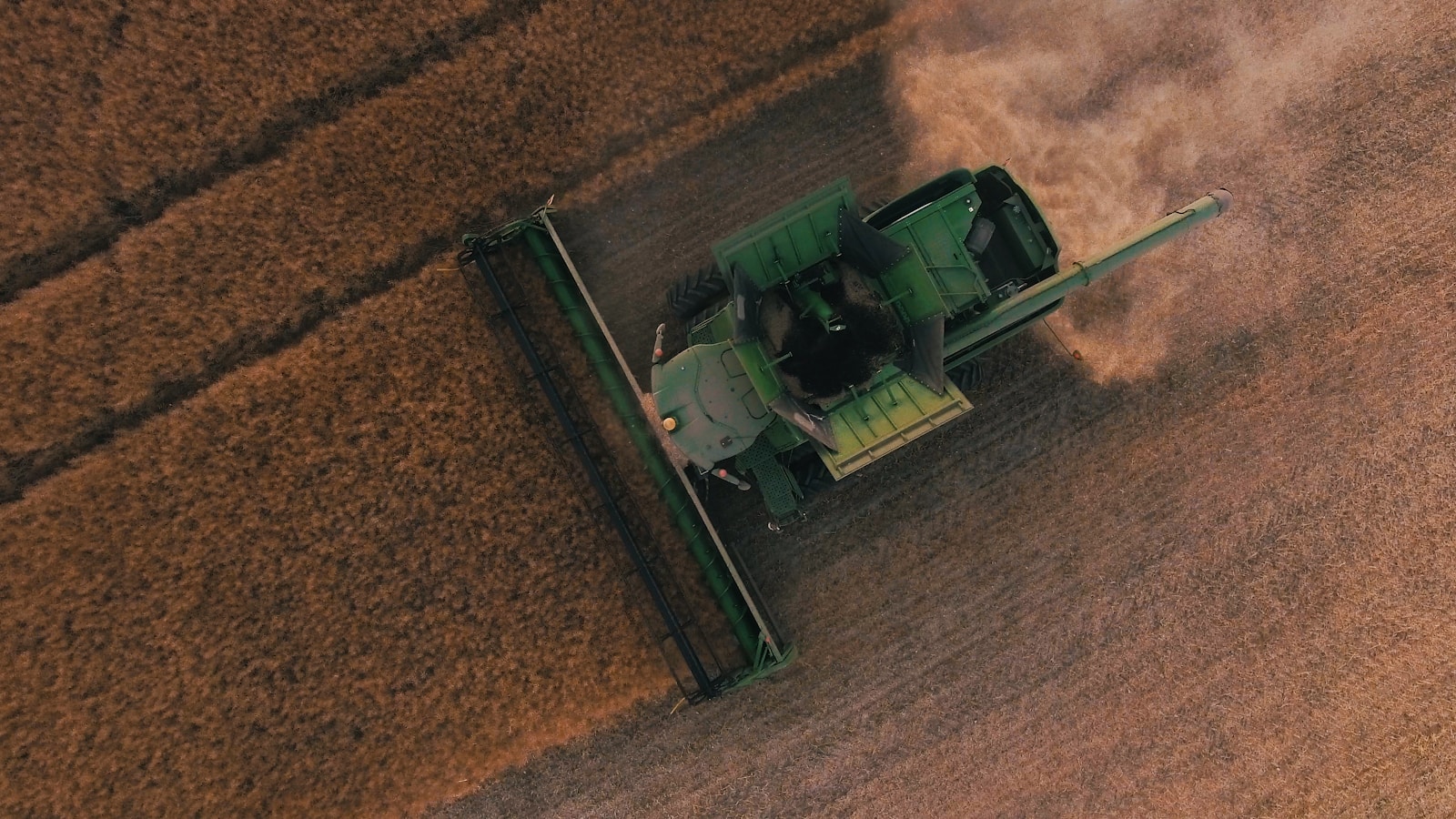
harvest views
Scott Goodwill, Unsplash

Overview

The agricultural landscape is undergoing a digital and biological revolution. Whether it’s a new drought-resistant hybrid, a proprietary algorithm for precision planting, or the “Big Data” harvested by a fleet of autonomous combines, Intellectual Property (IP) has become the silent engine of the modern farm.

However, from a legal and tax perspective, IP is often misunderstood. For many producers, this leads to missed tax deductions or – even worse – unintended tax hits when it’s time to sell. Here is what you need to know to protect your innovations and your bottom line in 2026.

The Return of the “Instant Deduction” (OBBBA)

For the past few years, ag-tech startups and innovative farmers faced a cash-flow hurdle: they had to spread out their research and development (R&D) tax deductions over five years.

Thanks to the One Big Beautiful Bill Act (OBBBA), the rules have shifted back in favor of the innovator:

  • Full Expensing is Back: For tax years starting after December 31, 2024, you can once again fully deduct domestic R&D costs in the year you spend the money.
  • Catch-up Relief: If you had unamortized costs from the “limbo years” (2022–2024), the OBBBA provides ways to claim those deductions now.

Note: This only applies to domestic R&D. If you are sourcing your tech or research from overseas, you are still stuck with a 15-year wait to fully deduct those costs.

Documentation is King: Lessons from the Tax Court

While deducting expenses is great, the R&D Tax Credit provides an actual credit against taxes owed. But a recent 2026 court case (George v. Commissioner) serves as a warning: you can’t just claim a credit for “routine farming.”

To qualify for the credit, your activity must:

  1. Be rooted in hard sciences (biology, chemistry, or engineering).
  2. Involve a process of experimentation intended to eliminate uncertainty.

If you are testing a custom software interface for autonomous equipment or a new biological soil amendment, keep records of your failures. The court wants to see the scientific process, not just the final result.

Seeds and Patents: Why You Can’t Always “Save Seed”

Farmers often ask about the “right to save seed.” The answer depends on which legal shield protects the plant:

Protection TypeCan You Save Seed?Common Use
PVPA (Plant Variety Protection Act)Yes (Limited)Traditional varieties; allows planting on your own acreage.
Utility PatentsNoMost modern “traited” seeds (e.g., herbicide resistance).

The Tax “Narrow Gate”

If you invent a new tool or plant variety and sell the patent, you might qualify for long-term Capital Gain (LTCG) treatment—which means a lower tax rate. However, this is a “narrow gate”:

  • Individuals Only: Corporations and S-Corps cannot access this specific fast-track to capital gains.
  • The Related Party Trap: If you sell your patent to a family-owned entity where you own 25% or more, you lose the tax advantage. The IRS sees this as selling to yourself.

Agricultural Data: The Invisible Asset

Who owns the yield maps and soil health records? The landowner? The tenant? The equipment manufacturer?  In 2026, Ag Data is increasingly treated like a trade secret.

  • If you buy a farm: The data that comes with it is an “intangible asset.” You can usually write off (amortize) the cost of that data over 15 years.
  • If you create the data: You cannot “write off” the value of your own data, but it still has immense value during a sale.

Observation: Don’t rely on handshake deals for digital assets. Ensure your lease or purchase agreements include a Data Use Agreement (DUA) to clarify who owns the digital footprint of the land.

Your 2026 Strategy

To ensure you are being rewarded—rather than penalized—for your innovation, take these three steps:

  1. Audit Your R&D: Separate your routine production costs from your “experimentation” costs to maximize your OBBBA deductions.
  1. Check Your Entity Structure: If you’re developing IP, talk to a pro before incorporating. Moving IP into a corporation can sometimes “lock” your tax benefits.
  1. Formalize Data Ownership: Whether you are a landlord or a tenant, define who owns the yield and soil data in writing.

Intellectual property isn’t just for Silicon Valley anymore; it’s a “farm gate” issue. By staying ahead of these legal shifts, you protect the future of your operation.

Photo of Roger McEowen Roger McEowen

Roger A. McEowen is the Professor of Agricultural Law and Taxation at Washburn University School of Law in Topeka, Kansas.

Through 2015, he was the Leonard Dolezal Professor in Agricultural Law at Iowa State University in Ames, Iowa, where he was also the…

Roger A. McEowen is the Professor of Agricultural Law and Taxation at Washburn University School of Law in Topeka, Kansas.

Through 2015, he was the Leonard Dolezal Professor in Agricultural Law at Iowa State University in Ames, Iowa, where he was also the Director of the ISU Center for Agricultural Law and Taxation (CALT), which he founded.  Under his leadership, CALT utilized no taxpayer funds in its operations and fully funded staff salaries and benefits, as well as office rent, equipment and supplies, and travel costs from funds generated by seminars and other education-related events and materials.  At ISU he also introduced an agricultural law course into the undergraduate curriculum initially as an experimental course, ultimately building the course from the ground-up to almost 100 students in attendance by the spring semester of 2015.  He was also the highest rated speaker at the annual fall CALT tax schools every year through 2015.  Before joining Iowa State in 2004, he was an associate professor of agricultural law and extension specialist in agricultural law and policy at Kansas State. From 1991-1993, McEowen was in the full-time practice of law with Kelley, Scritsmier and Byrne in North Platte, Nebraska.

McEowen also teaches an undergraduate course in agricultural law at Kansas State University, and has been a visiting professor of law at the University of Arkansas School of Law in Fayetteville, Arkansas, teaching in both the J.D. and L.L.M. programs. He has also previously taught at Washburn Law School and the Drake University School of Law Summer Institute in Agricultural Law.

He has published scholarly articles in the Journal of Agricultural Taxation and Law, Indiana Law Review, Drake Journal of Agricultural Law, North Dakota Law Review, Nebraska Law Review, Monthly Digest of Tax Articles, Tax Notes, West’s Social Security Reporting System, Toledo Law Review, Washburn Law Journal, Creighton Law Review, Agricultural Law Update, and the Agricultural Law Digest. He is the author of Principles of Agricultural Law, an 850-page textbook/casebook that is updated twice annually, and a second 300-page book on agricultural law. His Agricultural Law and Taxation Blog, part of the Law Professor Blogs Network, contains approximately 130 detailed and fully annotated articles annually and is the most widely read agriclultural law and taxation blog online.  In mid-2017, Prof. McEowen’s new book, Agricultural Law in a Nutshell, was published by West Academic Publishing Co.  McEowen also authors the monthly publication, “Kansas Farm and Estate Law.” In addition, he co-authors Bureau of National Affairs (BNA) Tax Management Portfolios on the federal estate tax family-owned business deduction and the reporting of farm income, and is the lead author of a BNA portfolio concerning the income taxation of cooperatives.  He is also the Editor of the Iowa Bar Tax Manual, and Estate Planning for Farmers and Ranchers and Family Business Organizations, both Thomson/West publications.

Prof. McEowen conducts approximately 80-100 seminars annually across the United States for farmers, agricultural business professionals, lawyers, and other tax professionals. He also conducts two radio programs each airing twice monthly heard across the Midwest and on the worldwide web.  In addition,his two-minute radio program, “The Agricultural Law and Tax Report,” is heard each weekday by over 2 million listeners on farm radio stations from NY to CA as well as SiriusXM 147. He also can be seen as a weekly guest on RFD-TV where he discusses various agricultural law and tax topics with the RFD-TV hosts.

In 2003, McEowen was named the recipient of the American Agricultural Law Association (AALA) Distinguished Service Award, becoming the youngest recipient in AALA history.  He is also the recipient of the AALA’s award of excellence for professional scholarship. In 2006, McEowen was named the President-Elect of the AALA.

He received a B.S. with distinction from Purdue University in Management in 1986, an M.S. in Agricultural Economics from Iowa State University in 1990, and a J.D. from the Drake University School of Law in 1991.

He is a member of the Iowa and Kansas Bar Associations and is admitted to practice in Nebraska. He is also a past member of the AALA Board of Directors.

Read more about Roger McEowenEmailRoger's Linkedin ProfileRoger's Facebook Profile
Show more Show less
  • Posted in:
    Intellectual Property, Tax
  • Blog:
    Agricultural Law and Taxation Blog
  • Organization:
    Law Professor Blogs Network
  • Article: View Original Source

Call us at 1-800-913-0988 or email sales@lexblog.com.

Facebook LinkedIn Twitter RSS
  • About LexBlog
  • The Field We Built
  • Our Beliefs
  • Our Team
  • Contact LexBlog
  • Disclaimer
  • Editorial Policy
  • Terms of Service
  • Get Started
  • Publishing Solutions
  • Compass
  • Submit a Request
  • Support Center
  • System Status
Copyright © 2026, LexBlog, Inc. All Rights Reserved.
Law blog design & platform by LexBlog LexBlog Logo