
Warning: Alabama, Florida, Georgia, Kentucky, North Carolina, South Carolina, Tennessee, and Virginia.
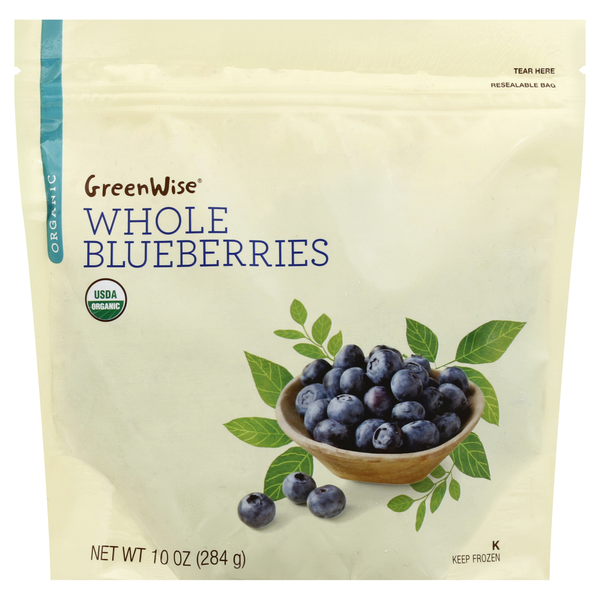
A tip o’ the pen to David Neal at the Miami Herald, who flagged a recall that a lot of people would have skated right past over a holiday weekend. On July 3, 2026, Frutas y Hortalizas del Sur S.A. — the Chilean grower-packer that sells under the Comfrut brand — announced a recall of its 10-ounce GreenWise Organic IQF Blueberries after the product tested presumptively positive for Escherichia coli O145:H28, a Shiga toxin–producing E. coli (STEC). The frozen berries were distributed exclusively to Publix stores across eight states: Alabama, Florida, Georgia, Kentucky, North Carolina, South Carolina, Tennessee, and Virginia.
The recall covers a single lot — lot code 6040 01, with a Best By date of February 9, 2028. According to the company, the recall was prompted by reports of consumers who fell ill after eating the berries, and the notice states there have been 12 confirmed cases of stomach illness between May 11 and June 5, 2026 linked to E. coli O145:H28. Consumers are told to check their freezers and throw out the product.
Read the notice closely and you see the company hedging. The berries may be contaminated; the positive result is described as a “presumptive finding”; the source is still under investigation. That is fine as far as it goes — a company that finds STEC in its product should pull it first and confirm later. But there is a real distance between “we think there may be a problem” and the plain fact sitting one paragraph away: a dozen people were already sick over a roughly four-week stretch, with symptom onsets running from mid-May into early June. The illnesses came first. The recall came July 3.
For the record, O145:H28 is not a benign bug. STEC can cause severe, sometimes bloody diarrhea, and a subset of patients — especially young children, older adults, and the immunocompromised — go on to develop hemolytic uremic syndrome (HUS), a type of kidney failure that can be fatal. “Twelve confirmed cases” is not a number to wave off.
Here is what bothers me. As of this writing, the “12 cases” figure comes from the company — not from a health authority. I cannot find a matching outbreak notice from either the FDA or the CDC. FDA’s Investigations of Foodborne Illness Outbreaks table carries no entry for GreenWise blueberries, no CORE reference number, and no agency case count. CDC’s foodborne outbreak page shows no dedicated notice. There is no publicly disclosed PulseNet cluster ID for this event, and no official hospitalization, HUS, or death tally.
To be fair, the company’s notice says it is “working closely with the appropriate regulatory authorities,” so there may well be a nonpublic FDA interaction already underway. But that is precisely the point: as of publication, no agency has posted anything the public can actually see. Whatever is happening behind the scenes, the silence facing consumers is total.
That gap matters. When a recall says “12 confirmed cases,” the public deserves to know who confirmed them, whether the human isolates are a genetic match to the product by whole genome sequencing, how many people were hospitalized, whether anyone developed HUS, and whether the case count is still climbing. Those are exactly the questions FDA’s CORE and CDC exist to answer. A company press release, however responsibly issued, is not a substitute for a public health investigation — and consumers checking their freezers this weekend are entitled to more than a grower’s two sentences.
E. coli O145:H28 is not an exotic one-off. It has become one of the more persistent STEC serotypes in recent surveillance, and it has an uncomfortable track record of causing clusters that public health investigators never manage to pin to a food:
- 2025 (FDA CORE ref #1303). CDC notified FDA of an O145:H28 cluster (PulseNet ID 2504MLENM) with 11 cases, isolation dates in late March through early April 2025. Three were hospitalized. There was one HUS case and one death attributed to STEC. The vehicle was never identified.
- 2024 (FDA CORE ref #1282). Another O145:H28 cluster, 8 cases, again closed with the food source “not identified.”
- United Kingdom, 2024. A national O145:H28 outbreak grew to nearly 300 cases with 11 HUS cases and two deaths, ultimately traced to lettuce. UK authorities have flagged O145:H28 as one of the most common STEC serotypes they now detect.
Two things jump out from that history. First, when O145:H28 has been solved, the vehicle has usually been fresh produce — leafy greens, salad vegetables — where contamination can enter at the farm through irrigation water or run-off and survive ordinary washing. A frozen blueberry vehicle would be a genuinely notable attribution. Second, when this strain hasn’t been solved, people still died. Orphan clusters are not victimless; they are simply outbreaks where the traceback ran out of road before the source was named.
Which raises the obvious question for FDA and CDC: does this Chilean blueberry lot retrospectively explain an earlier O145:H28 cluster that was closed as “not identified”? That is precisely the kind of connection a real, public investigation — with sequencing data and traceback — is supposed to run down. Right now, no one is telling us whether anyone is even asking.
If you have GreenWise Organic Frozen Blueberries in your freezer, check the bag for lot code 6040 01 with a Best By date of February 9, 2028. If you have it, do not eat it. If you or a family member ate these berries and came down with severe stomach cramps, diarrhea (especially bloody diarrhea), or vomiting, see a doctor and ask specifically about STEC. Symptoms of HUS — decreased urination, extreme fatigue, loss of color in the cheeks and inside the lower eyelids — are a medical emergency.
And to FDA and CDC: a grower in Chile should not be the only voice telling American families how many of them got sick. Twelve confirmed illnesses from a Shiga toxin–producing E. coli strain with a documented history of killing people warrants an outbreak notice, a case count the public can trust, and a traceback that says out loud whether these berries are connected to the clusters that came before. Consumers have earned that. So have the twelve.