
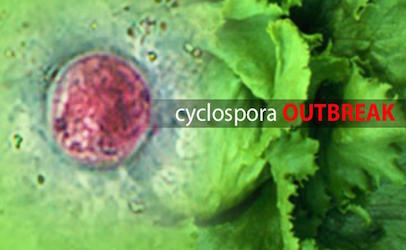
As cyclosporiasis cases continue to rise, with the largest increase occurring in Southeast Michigan, the Michigan Department of Health and Human Services (MDHHS) is providing additional recommendations to help prevent foodborne illness related to fresh produce. As of July 4, 2026, no specific produce grower/supplier, or specific produce type has been identified as the source of the outbreak.
In Michigan, the number of reported cases has risen to 572 as of Saturday, July 4, up from 170 on Tuesday, June 30. Cases remain the highest in Monroe, Lenawee, Washtenaw, Wayne, Shiawassee, Jackson, Oakland and Livingston counties. MDHHS is working with local health departments and the Michigan Department of Agriculture and Rural Development (MDARD) and will update information as it becomes available.
Cyclosporiasis is an intestinal illness caused by the Cyclospora parasite. People can become infected by consuming food or water that contains the parasite. Cyclospora infects the small intestine (bowel) and usually causes frequent, watery and explosive diarrhea. The time between being exposed and becoming sick is usually about one week but can range from two days to two weeks or more. Untreated, the illness may last from a few days to more than a month. Symptoms may go away and then return.
Cyclosporiasis is not usually life-threatening, but dehydration from frequent bouts of diarrhea can cause severe illness, particularly among younger or older people and those who have weakened immune systems.
Previous outbreaks:
The following foods have been specifically linked to previous Cyclospora outbreaks in the United States and Canada:
- Bagged salad mixes and kits (pre-cut lettuce blends with romaine, iceberg, red cabbage, carrots)
- Fresh cilantro (coriander leaves)
- Fresh basil
- Raspberries
- Snow peas
- Green onions (scallions)
Given the large and increasing number of cases in Michigan, MDHHS recommends that entities in Southeast Michigan who are preparing, processing, or serving raw produce, including restaurants and other commercial kitchens, take the following steps to reduce risks of exposure:
Snow peas: Wash under running water and rub the surface. Safest when cooked.
Lettuce/leafy greens: buy whole heads of lettuce (rather than prewashed, bagged lettuce or salad mixes), throw away the outer 2–3 layers of leaves and wash the inner leaves under running water. For leafy greens that can be cooked, cooking is the safest option.
Cilantro, basil: Wash thoroughly under running water, separating the leaves. Safest when cooked.
Green onions: Trim the root end and remove the outer layer, wash thoroughly under running water. Safest when cooked.
Raspberries: Their bumpy surface makes them especially hard to clean; the parasite can hide in the tiny crevices. Safest when cooked (pies, jams etc.). Consider frozen raspberries as an alternative (freezing may reduce but does not guarantee elimination of the parasite).
These recommendations are particularly important for people who have a higher risk of dehydration or weakened immune systems such as patients on chemotherapy, organ transplant recipients, infants and young children and elderly people.
General Rules to Reduce Your Risk:
- Cook when you can. Heating food to 158°F (70°C) or higher kills Cyclospora.
- Wash all fresh produce under clean running water, even if you plan to peel it.
Reminders about routine food safety practices:
- Wash hands with soap and water before and after handling or preparing food.
- Scrub firm fruits and vegetables, such as melons and cucumbers, with a clean produce brush.
- Cut away any damaged or bruised areas on fruits and vegetables before preparing and eating.
- Wash and sanitize utensils and surfaces before and after handling food. Wash and sanitize display cases and refrigerators where fresh produce is stored.
- Wash and sanitize cutting boards, surfaces and utensils used to prepare, serve or store fresh produce.
- Refrigerate cut, peeled or cooked fruits and vegetables as soon as possible.
If you do become ill:
People experiencing gastrointestinal illness, such as sudden and ongoing diarrhea, are encouraged to contact their health care provider and reach out to their local health department. Cyclosporiasis is treated with antibiotics along with rest and drinking plenty of fluids to maintain hydration.