

Notwithstanding the proposed 50% reduction in EPA’s Fiscal Year 2027 budget , the agency has identified reducing Per- and Polyfluoroalkyl Substances (PFAS) Risks to the Public as an Agency Priority Goal (APG). The APGs will guide the agency’s work
Latest from PFAS and Emerging Contaminants - Page 2
State and Federal PFAS Litigation – 2019 to Q1 2026
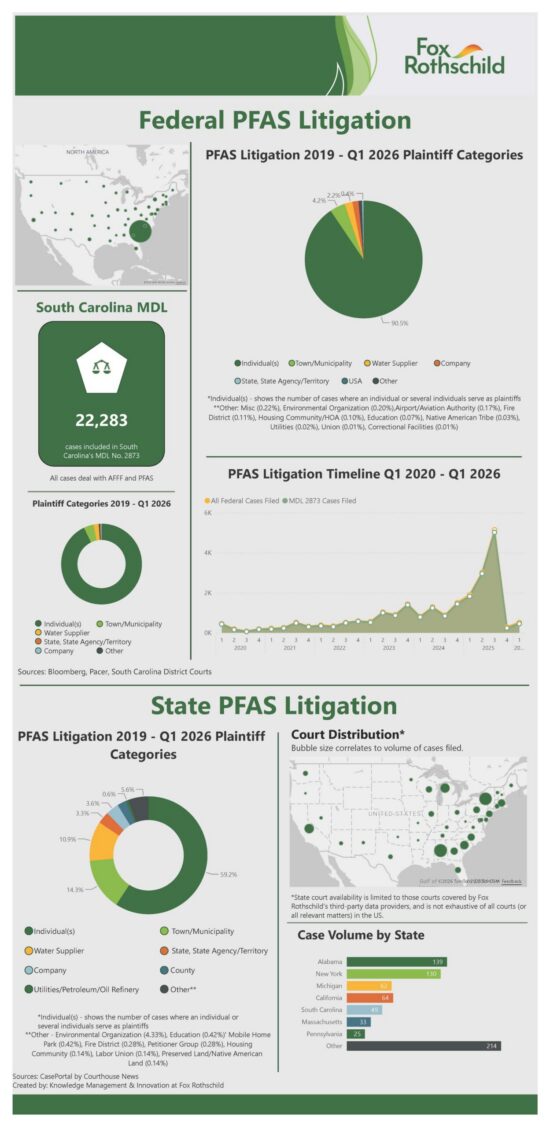
PFAS-related litigation continues to climb and to diversify as to claims and parties. See the attached graphics, updated through the first quarter of 2026. We will continue to update these graphics on a quarterly basis
NJDEP Granted More Time to Support the 3M and DuPont PFAS Settlements
New Mexico Legislature Requests Reevaluation of Key Exemption from PFAS Product Sales Ban Statute
As we’ve discussed in a prior post, among states that have enacted statutory restrictions on sales of products containing intentionally added PFAS, New Mexico has been unique in crafting an exemption for fluoropolymers, which were carved out from the
Parties Trade Post‑Argument Letters Over EPA’s PFAS Hazardous Substance Designation
We previously reported that the U.S. Chamber of Commerce and two other trade groups are challenging EPA’s designation of PFOA and PFOS as hazardous substances under the federal Comprehensive Environmental Response, Compensation, and Liability Act (“CERCLA”). The D.C. Circuit heard
Court Denies EPA’s Motion to Sever and Stay Challenges to MCLs for Four Index PFAS
On March 19, 2026, a three-judge panel of the U.S. Court of Appeals for the D.C. Circuit denied EPA’s request to sever and stay challenges to drinking water standards, known as MCLs, for four PFAS (PFHxS, PFNA, HFPO‑DA, and mixtures
New Jersey Enacts PFAS-in-Products Statute with Category-Based Sales Ban, Labeling for Cookware, and Funding of Source Reduction and Research Programs
On January 12, 2026, before leaving office, New Jersey Governor Phil Murphy signed S.B. 1042, the “Protecting Against Forever Chemicals Act,” into law, thus adding the Garden State to the list of states that have enacted legislative bans on the
Biosolids and PFAS: A Regulatory Patchwork
Biosolids are treated waste solids generated from sewage sludge that have been processed so that they can be applied to land as a fertilizer. Advocates of biosolid use point to its ability to enrich soil without the use of synthetic
Ringing in 2026 with a Look at Newly Effective State Regulation of PFAS in Products

January 1, 2026 was the effective date for a number of state law provisions relating to intentionally added PFAS in certain categories of products. July 1, 2026 will be the effective date for several more. As we have discussed in
State and Federal PFAS Litigation – 2019 to Q4 2025
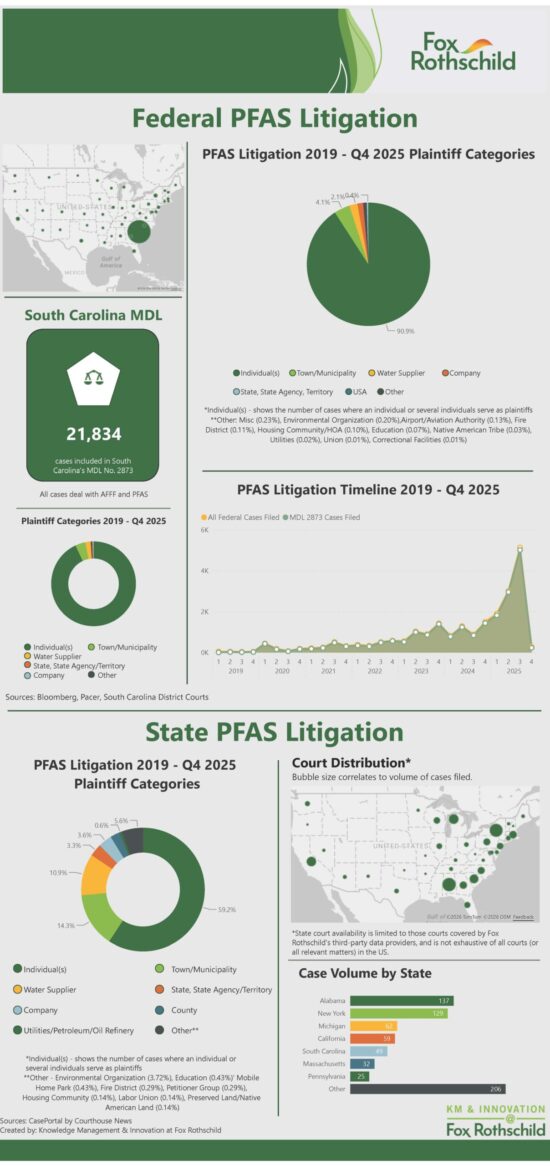
PFAS-related litigation continues to climb and to diversify as to claims and parties. See the attached graphics, updated through the fourth quarter of 2025. We will continue to update these graphics on a quarterly basis