

Confession time: I sometimes go down a Reddit rabbit hole and the “Is This AI?” forum might be one of them.
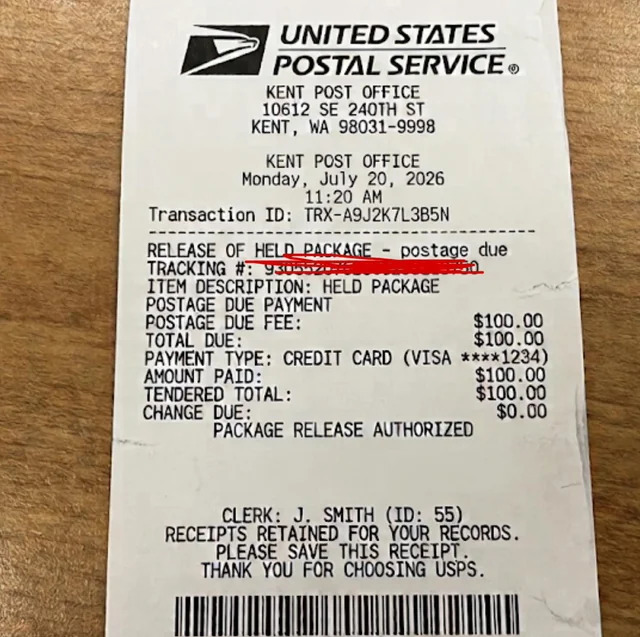
So, a recent post tells a story that should make every employer paying expense reimbursements sit up. An employee submitted a receipt for a package release payment. The tracking number checked out. But something about the receipt looked off.
The poster couldn’t quite identify the problem, so they asked the internet. The commenters spotted it immediately: the fonts were too clean, the formatting too uniform, the wear and tear too perfectly imperfect. The consensus was that the receipt was AI-generated. The poster’s takeaway? “Definitely sounds like I need to get HR involved in this.”
Welcome to the new frontier of expense fraud.
Link to The Scale of the Problem The Scale of the Problem
This is no longer a hypothetical concern. A June 2026 survey by Emburse of 2,000 workers in the U.S. and U.K. found that 40 percent of U.S. employees admitted to using AI to generate a fake receipt for a business expense. Nineteen percent said they fabricated a purchase entirely. Fifteen percent used AI to inflate the value of a real purchase. And 36 percent of those who created fake receipts did so using AI tools paid for by their employer.
Those are crazy stats even if the survey’s basis is a bit sketchy.
The tools that make this possible are free, widely available, and require no technical skill. A text prompt describing a restaurant in a particular city, a date, and a dollar amount can produce a receipt in about 30 seconds that replicates the vendor’s logo, formatting, paper texture, and even the blur of a phone camera. Some AI models even simulate creases and thermal paper fading.
Link to Why Detection Is Hard Why Detection Is Hard
The old tells of expense fraud are disappearing. Altered amounts, mismatched fonts, and blurry photocopies are artifacts of a less sophisticated era. AI-generated receipts do not have those flaws. They are designed from the ground up to look authentic, which means a human reviewer may not catch them, especially at volume.
There are some tells, at least for now. AI-generated receipts sometimes lack valid transaction IDs or tax identification numbers. They may include details that do not match known vendor locations or business hours. The wear patterns can look too uniform. But these artifacts are becoming less common as the underlying models improve.
Link to What Employers Should Do Now What Employers Should Do Now
This is a policy and process problem, not just a technology problem. Employers should consider several concrete steps.
Update your expense reimbursement policy to specifically address AI-generated or digitally fabricated receipts. Make clear that submitting a fabricated receipt, regardless of the method used to create it, is a terminable offense. If your policy references “altered” or “falsified” receipts, consider adding language that covers synthetically generated documents.
Strengthen your audit procedures. Random audits remain useful; receipts that cannot be independently verified through a transaction record deserve closer scrutiny.
Consider shifting to corporate cards where feasible. When an employee uses a company-issued card, the transaction data is generated independently by the payment processor.
And train your managers and finance staff to recognize the signs of AI-generated documents. Receipts that look “too perfect,” lack normal printing imperfections, or contain inconsistencies in vendor details like store numbers or addresses should be flagged.
Link to The Bottom Line The Bottom Line
AI has made many things easier. Unfortunately, fabricating expense receipts is one of them. Employers who have not revisited their expense policies in light of these tools should do so now. The technology is only going to get better, and the old controls are not keeping pace.